
TikTok Reference to Video vs CapzAi in 2026
TikTok's new Reference to Video feature gives advertisers tighter control over AI-generated scenes, but it does not replace clipping, captions, localization, or repurposing workflows.
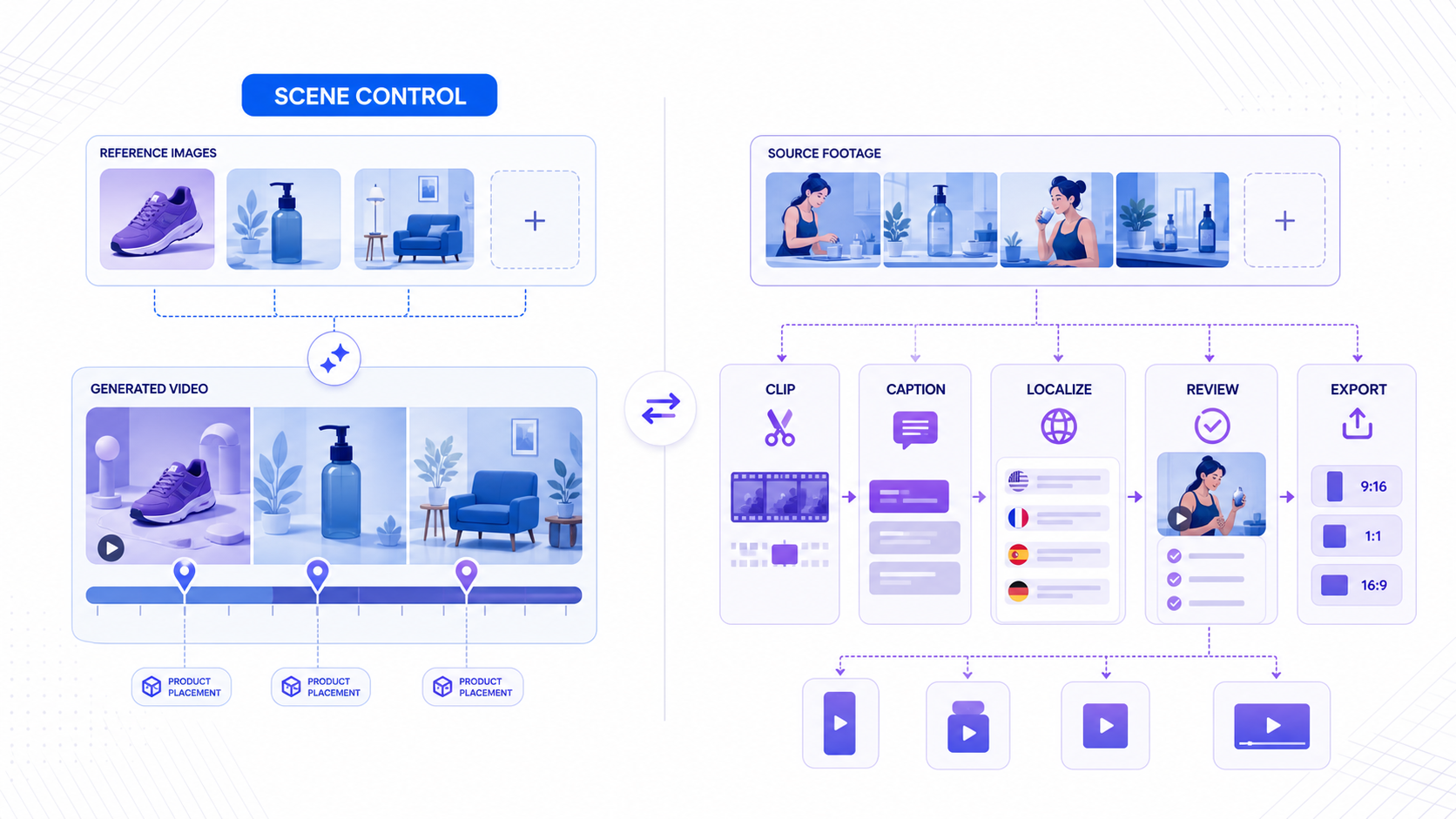
TikTok announced Reference to Video on May 13, 2026 at TikTok World '26. In TikTok's official wording, the feature lets advertisers prompt the exact images and products they want at specific moments of an AI-generated video, giving them more control over the output.
That is a meaningful product change.
It shows TikTok is pushing beyond lightweight generative prompts into something more structured. Instead of asking for a general video and hoping for a usable result, advertisers can anchor specific scenes and products into the timeline.
That sounds closer to editing. But it still is not the same job as clipping, captioning, localizing, and shipping short-form content from real footage.
That is why TikTok Reference to Video and CapzAi are worth comparing.
The short answer
TikTok Reference to Video is for generating new ad or creative video scenes with tighter prompt control.
CapzAi is for turning existing source material into publish-ready short-form assets through clipping, captions, localization, review, and export.
One starts with prompts and desired moments.
The other starts with actual footage and the need to make it perform across platforms.
Why Reference to Video matters
Reference to Video matters because it reflects where major platforms think the next layer of AI video control should go.
The first generation of AI video tools focused on "make me a video."
The next generation is moving toward:
- scene-level control
- better brand consistency
- exact product placement
- more predictable timeline structure
That is the strategic significance of TikTok's May 13, 2026 announcement.
For advertisers running TikTok-first creative, it reduces one of the biggest frustrations with generative video: the gap between the prompt you wanted and the scene sequence you actually received.
Where TikTok Reference to Video wins
Reference to Video has three obvious strengths.
1. Better control inside AI generation
If you are producing synthetic ad creative, the ability to specify which image or product appears at a given moment is useful. It reduces randomness.
2. Faster concept production
For concept testing, variant generation, and ad ideation, AI-generated scenes can be faster than organizing a full shoot or re-editing raw footage.
3. Strong fit for TikTok-first advertisers
Reference to Video sits in Symphony Creative Studio, so it aligns with a broader ad workflow rather than a pure editing workflow.
That matters if your creative team is optimizing campaign concepts before a human production pipeline kicks in.
Where Reference to Video stops
The key limitation is simple: it is still a generation tool.
Most creator and brand video operations are not built entirely around generating fresh scenes from prompts. They are built around repurposing footage that already exists:
- UGC shoots
- product demos
- podcasts
- interviews
- webinars
- founder videos
- testimonials
- livestream recordings
When the source content already exists, the job is not "generate a better scene." The job is:
- find the best moments
- cut them into self-contained clips
- add captions that drive retention
- adapt for mobile safe zones
- localize if needed
- export versions for each platform
Reference to Video does not replace that workflow.
AI generation and AI repurposing are different categories
This is where many teams get confused.
Platform AI announcements often sound like they are competing with every other video tool. In practice, they usually optimize for one narrow step.
Reference to Video optimizes the scene-generation step.
CapzAi optimizes the repurposing-and-finishing step.
Those are adjacent categories, not identical ones.
TikTok Reference to Video vs CapzAi
| Workflow area | TikTok Reference to Video | CapzAi |
|---|---|---|
| Primary job | Generate new AI video scenes with more control | Repurpose existing footage into short-form assets |
| Starting asset | Prompt, reference images, products | Podcast, demo, UGC, interview, webinar, recording |
| Timeline value | Control what appears at specific moments | Find and shape the moments already worth posting |
| Caption layer | Not the point of the feature | Core part of the workflow |
| Localization | Secondary or external | Built into the finishing flow |
| Best output use | TikTok-first ad concepting | TikTok, Reels, Shorts, multilingual distribution |
The cleaner way to think about it is this: Reference to Video helps you create scenes. CapzAi helps you create posts.
Why the caption layer still decides performance
A generated visual sequence can be impressive and still fail as a short-form post.
That is because performance usually depends on more than scene control:
- the hook has to land immediately
- the spoken or on-screen idea has to be understandable without effort
- captions have to remain readable on small screens
- the clip has to feel native after export
This is why creator teams still spend so much time in the finishing layer. A scene is not automatically a publishable short.
CapzAi is built for that layer. Related reads:
- Short-form video automation stack
- How to turn a podcast into 30 TikTok clips
- Sound-off visual storytelling with captions
Existing footage usually has more economic value
This is the practical reason repurposing tools remain important.
Many businesses already have a large archive of valuable source material. Every webinar, interview, product walkthrough, customer story, or shoot day contains clips that can be reused.
The economic question is not always, "How do we generate more scenes?"
It is often, "How do we unlock more value from footage we already paid for?"
That question points much more directly to clipping and repurposing than to fresh AI generation.
Why cross-platform distribution changes the comparison
TikTok's new feature is announced in a TikTok ad-creation context. That is fine if TikTok is the only destination that matters.
But many real teams need:
- one version for TikTok
- one variation for Instagram Reels
- one cleaner version for YouTube Shorts
- translated subtitle versions for another region
Once that becomes the requirement, the problem is less about generating a scene and more about operational finishing.
CapzAi stays closer to that operational reality.
Which teams should use Reference to Video?
Reference to Video makes the most sense if:
- you are testing AI-generated ad concepts
- you need tighter control over product placement in synthetic scenes
- your workflow begins before there is any recorded footage
- your creative bottleneck is ideation rather than editing
That is a real use case, especially for paid social teams.
Which teams should use CapzAi?
CapzAi is the better fit if:
- your team already has source footage
- you want to turn longer material into multiple shorts
- captions are part of your retention strategy
- you care about multilingual reuse
- you need review before export
- your final distribution includes more than one platform
That describes a large share of modern creator, media, and brand teams.
The practical hybrid workflow
There is also a sensible combined approach.
Use Reference to Video when you need synthetic ad concepts or fast campaign variations.
Use CapzAi when real footage starts to outperform the concepts and you want to turn that footage into durable short-form assets:
- Generate concept angles or product-story variants.
- Observe which messaging direction resonates.
- Shoot or collect real footage around the winners.
- Clip that footage in CapzAi.
- Add captions, localization, and final exports.
That sequence treats AI generation as concept acceleration, not as a replacement for short-form finishing.
Bottom line
TikTok's May 13, 2026 Reference to Video launch is important because it gives AI-generated video more structure and more marketer control. That will make synthetic creative more usable.
But it does not remove the need for clipping, captioning, localization, and export workflows built around existing footage.
If your team needs more control over AI-generated scenes, Reference to Video is relevant.
If your team needs a repeatable way to turn raw recordings into publish-ready TikToks, Reels, and Shorts, CapzAi is still solving the more common daily problem.
That is the real distinction. One tool helps you prompt the timeline you want. The other helps you ship the footage you already have.
Related articles
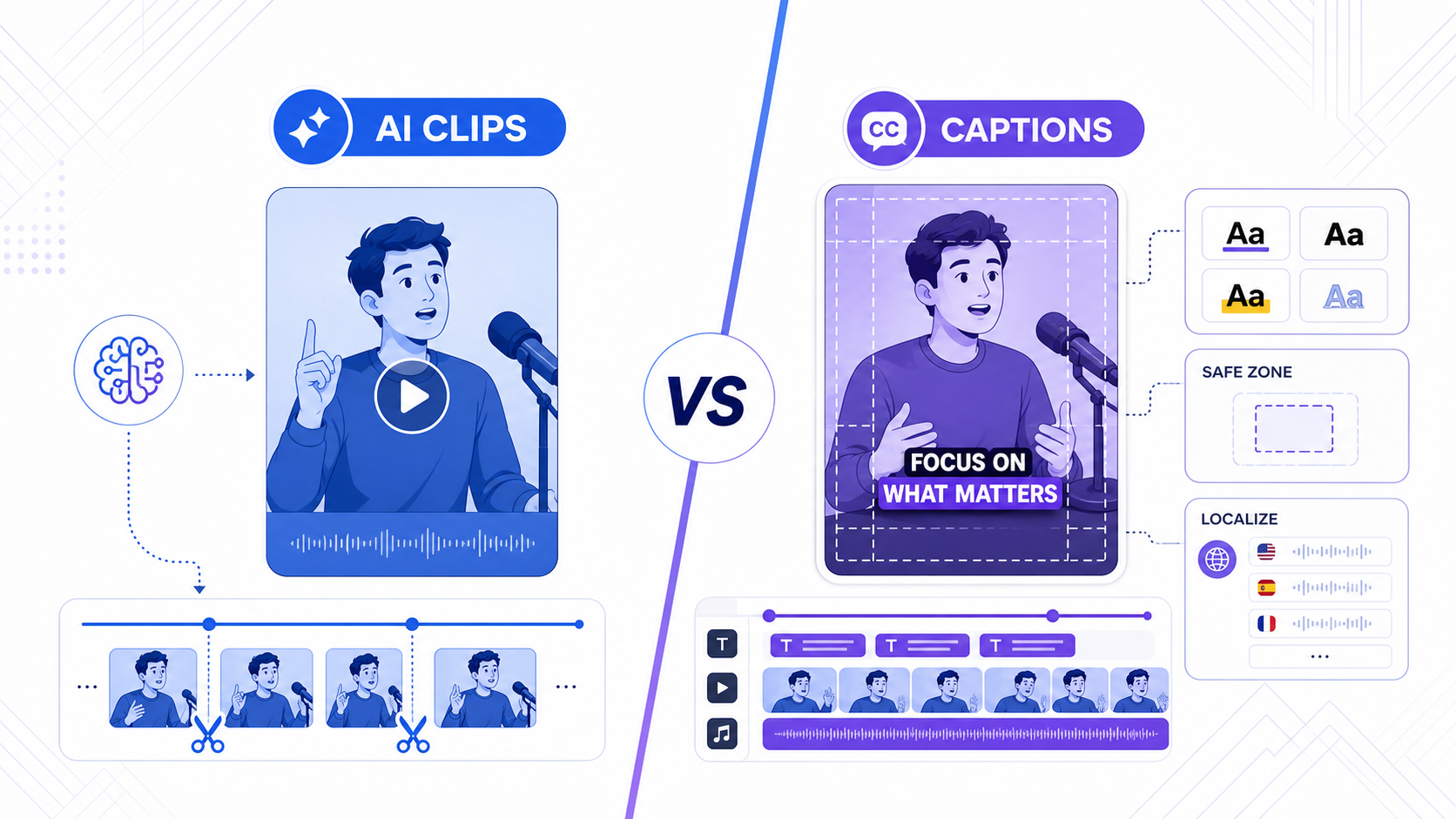
TikTok Smart Split vs CapzAi: Which AI Clipping Workflow Is Better in 2026?
TikTok Smart Split makes native clip extraction easier, but serious creators still need better caption control, exports, and multilingual workflows.
Read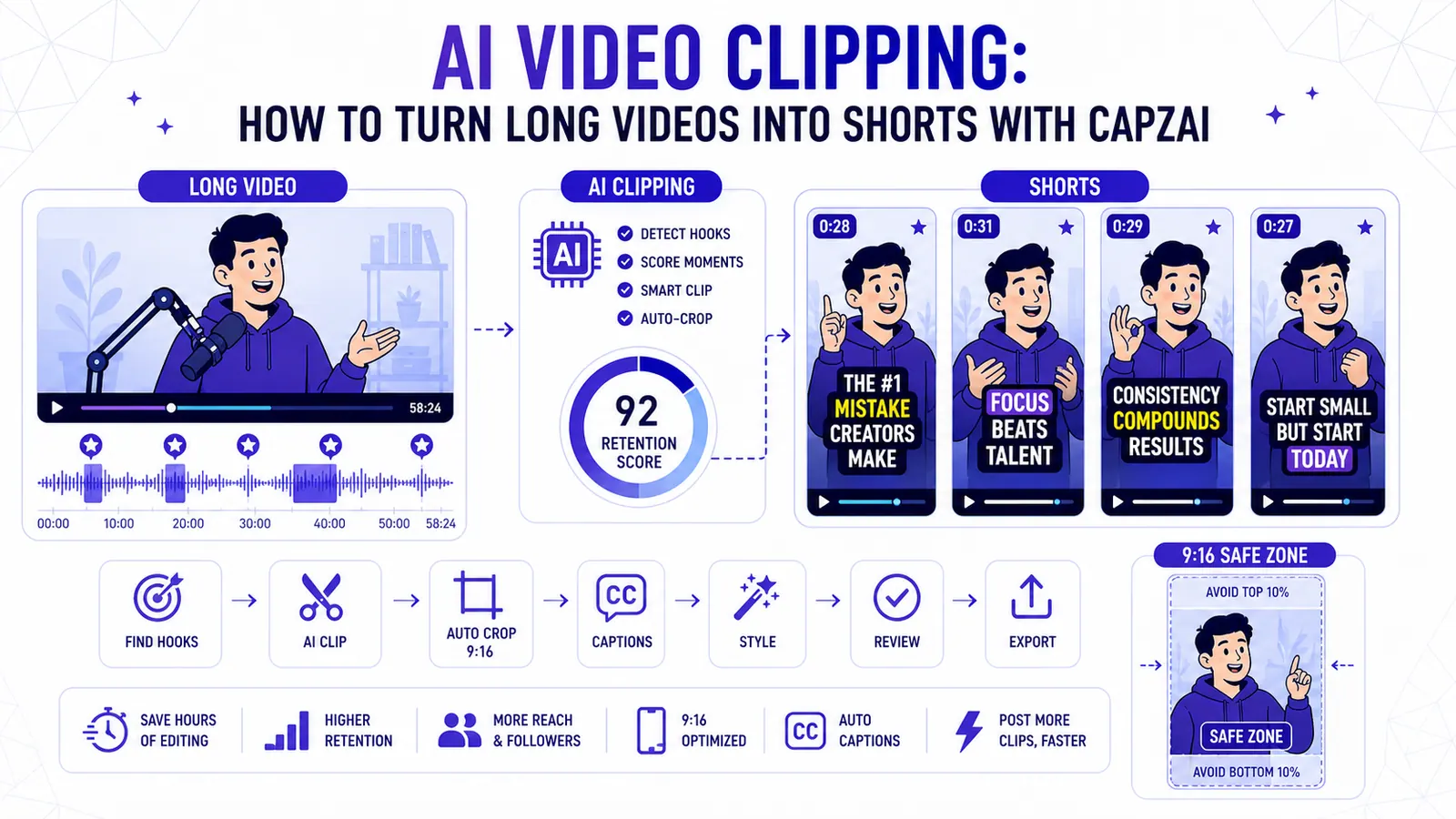
AI Video Clipping: How to Turn Long Videos into Shorts with CapzAi
A practical guide to AI video clipping for creators who want to turn podcasts, webinars, livestreams, and tutorials into publish-ready short-form clips.
Read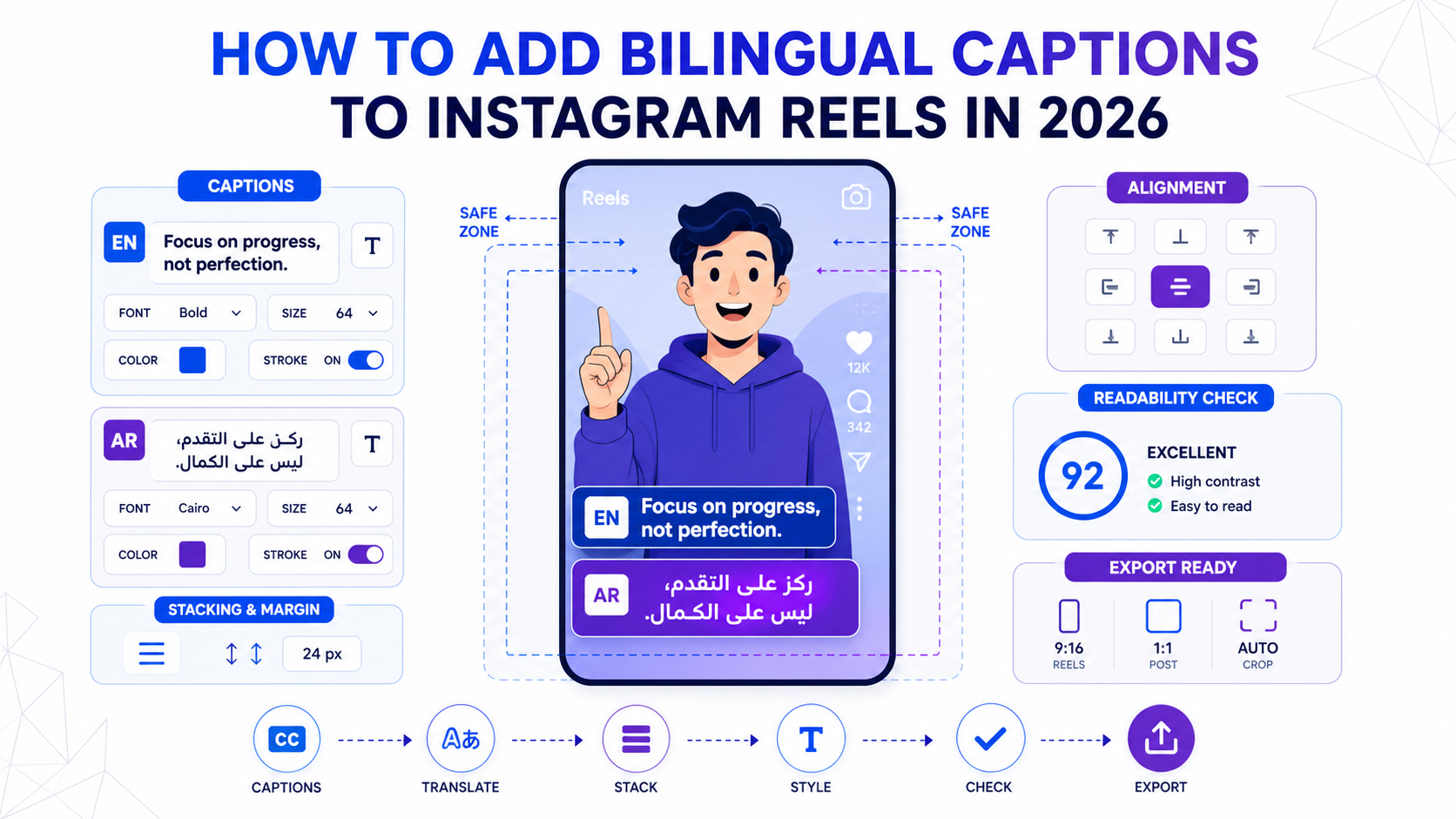
How to Add Bilingual Captions to Instagram Reels in 2026
A practical workflow for bilingual Reels captions that stay readable, fit safe zones, and work across English, Arabic, French, and other short-form language pairs.
Read