TikTok Symphony AI Dubbing vs CapzAi in 2026
TikTok's official AI dubbing tools make multilingual publishing easier, but many creators still need stronger captions, review control, and cross-platform exports.
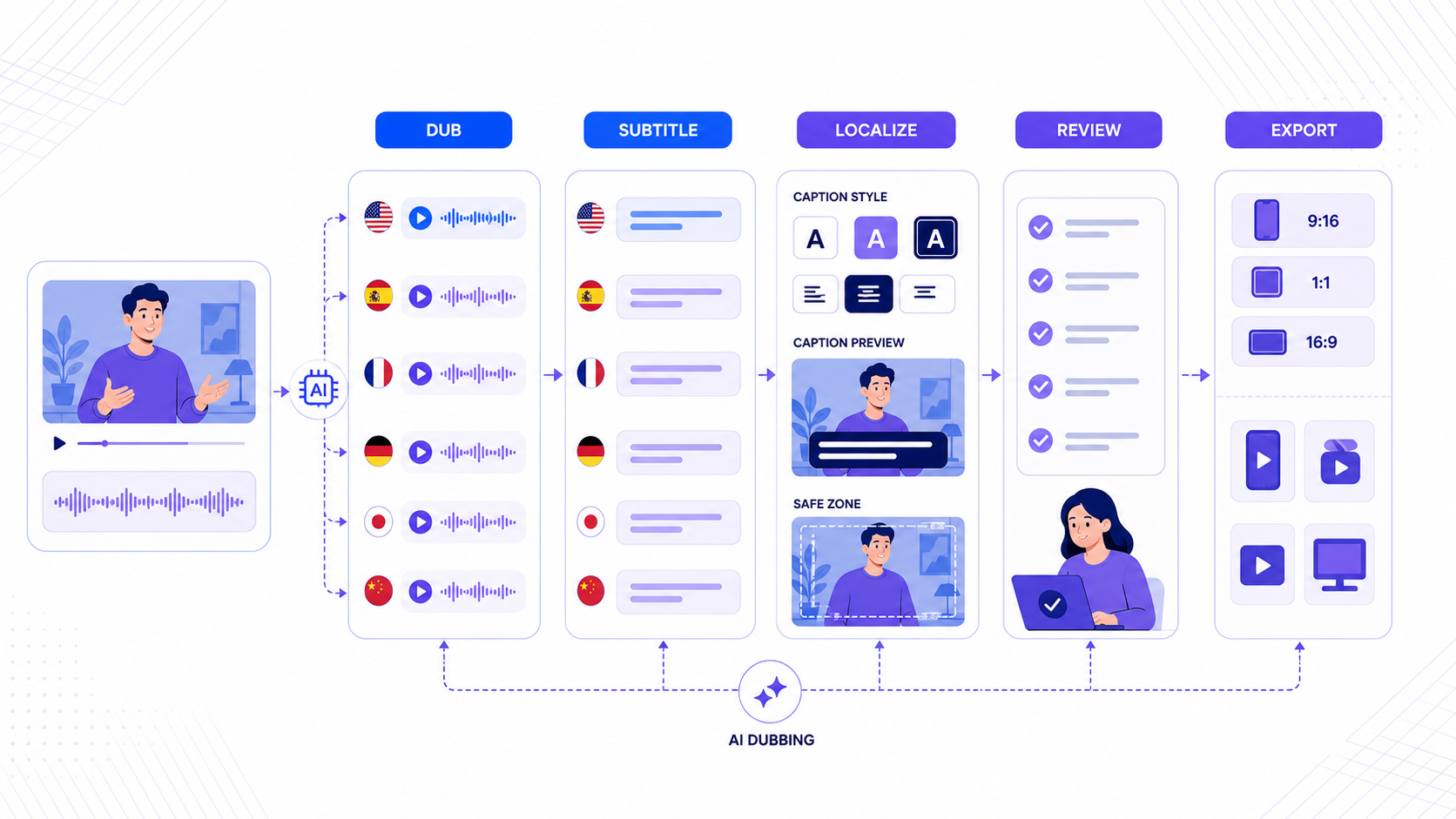
TikTok made an important move on June 17, 2024 when it introduced Symphony AI Dubbing as part of its Symphony suite. In TikTok's official newsroom post, the company said the tool can detect the source language, transcribe the video, translate it, and produce dubbed output in 10 or more languages and dialects.
That announcement matters more in 2026 than it did at launch.
It confirmed that multilingual short-form video is no longer a specialist workflow. Platforms now want translation and dubbing to feel native. For creators, agencies, and brands, that raises the baseline expectation. If a platform can localize a video for you, the next question is no longer whether translation is possible. The next question is whether the result is actually ready to publish everywhere you need it.
That is where TikTok Symphony AI Dubbing and CapzAi start to separate.
The short answer
TikTok Symphony AI Dubbing is useful when your main goal is to localize TikTok-first content quickly inside TikTok's own ecosystem.
CapzAi is the better fit when you need the multilingual layer to connect with a real short-form finishing workflow:
- styled captions that still look strong after translation
- review before export
- better control over line breaks and safe zones
- localization for more than one destination platform
- a workflow that treats dubbing, subtitles, clipping, and export as one system
The distinction is simple. TikTok is solving native reach. CapzAi is solving publish-ready multilingual output.
Why TikTok's dubbing launch still matters
Many product announcements fade after launch. This one did not.
Symphony AI Dubbing matters because it sits inside a larger TikTok direction. On October 28, 2025, TikTok introduced Smart Split for automatically clipping longer videos into shorter ones inside TikTok Studio Web. On May 13, 2026, TikTok World '26 added new AI control layers such as Reference to Video and Creator AI Search.
Taken together, those dates show the pattern clearly:
- June 17, 2024: TikTok adds AI dubbing.
- October 28, 2025: TikTok adds native AI clipping.
- May 13, 2026: TikTok adds more AI generation and creator tooling.
TikTok is building an increasingly complete in-platform production stack.
That is exactly why the CapzAi comparison is worth making. Once native tools become good enough to start the job, specialist tools need to prove they finish the job better.
Where TikTok Symphony AI Dubbing wins
TikTok's official dubbing tool has three clear strengths.
1. Native workflow proximity
The closer a feature is to the destination platform, the less friction there is for creators. If your team already lives inside TikTok, a native translation layer removes handoffs.
2. Faster first-pass localization
For creators testing demand in more than one language, TikTok's built-in dubbing is a fast way to see whether a concept travels before investing more time.
3. Lower mental overhead
A native toggle is easier than stitching together transcript tools, translators, voice models, subtitle styling, and export checks. That convenience matters for solo creators and lean social teams.
Those are real advantages. They are also mostly advantages of speed.
Where TikTok Symphony AI Dubbing stops
The limitations show up the moment multilingual output becomes part of a production system instead of a one-off experiment.
1. Translation quality is only part of the publishing problem
A dubbed voice can make a video understandable. It does not automatically make the clip feel polished.
Short-form performance still depends on:
- whether captions remain readable
- whether the translated text fits the screen cleanly
- whether line breaks land in natural places
- whether the pacing still feels native after translation
- whether the output is usable beyond TikTok
That is why localization and editing cannot really be split apart for serious teams.
2. Captions are still a retention layer
Even in dubbed videos, captions matter. A lot of viewers still watch with sound low, off, or partially on. Good subtitle timing and emphasis do more than improve accessibility. They sharpen the hook and make the message legible fast.
If translated captions expand awkwardly, collide with interface chrome, or lose emphasis, the result can feel cheap even when the dub itself sounds acceptable.
CapzAi is stronger here because the caption layer is part of the workflow, not an afterthought. Related reads:
- AI caption style guide
- TikTok captions sizes, fonts, and safe zones
- How to add Arabic subtitles the right way
3. TikTok-native is not the same as cross-platform
This is the biggest practical separator.
If your video only needs to work on TikTok, TikTok's own tool becomes more compelling.
If the same asset needs to become:
- a TikTok
- an Instagram Reel
- a YouTube Short
- a French version
- an Arabic subtitled version
- a dubbed variant for another market
then a platform-native dubbing step is only one piece of the stack.
CapzAi is better when one winning idea needs to turn into many finished assets.
TikTok Symphony AI Dubbing vs CapzAi
| Workflow area | TikTok Symphony AI Dubbing | CapzAi |
|---|---|---|
| Best use case | Native multilingual TikTok publishing | Finished multilingual short-form workflow |
| Main strength | Fast built-in dubbing inside TikTok's ecosystem | Captions, review, localization, export in one flow |
| Caption styling | Secondary to the dubbing action | Core part of the product |
| Cross-platform reuse | TikTok-first | TikTok, Reels, Shorts, multilingual republishing |
| Review before final export | More limited | Stronger preview and correction loop |
| Best buyer | TikTok-first creator or brand | Multilingual creator, editor, agency, or repurposing team |
The main point is not that CapzAi has "more features." The point is that it is designed around the steps that happen after the first translation pass.
Why review control matters more in 2026
As native AI tools improve, the bottleneck shifts. Teams spend less time producing a rough multilingual draft and more time deciding which drafts deserve cleanup and distribution.
That changes the economics of the workflow.
For many teams, the better habit is:
- generate a draft
- inspect the captions
- fix the phrasing and pacing
- approve the markets that make sense
- export the versions worth shipping
That logic fits CapzAi's workflow better than a native tool that is mainly optimized for speed inside one platform.
Which creators should use TikTok Symphony alone?
TikTok Symphony AI Dubbing alone makes sense when:
- TikTok is your main distribution channel
- you care more about fast experiments than polished multilingual finishing
- your team can accept native defaults for subtitles and layout
- you do not need to produce multiple platform-specific exports from the same source
That is a valid setup for many creators. It is just not the end state for teams building repeatable content systems.
Which creators should use CapzAi instead?
CapzAi is the better primary workflow when:
- you repurpose longer recordings into multiple shorts
- caption quality affects your brand
- your translated videos need review before publish
- you localize for MENA, Europe, or multilingual diaspora audiences
- you need one workflow that can serve TikTok, Reels, and Shorts
That is usually the more realistic setup for agencies, podcasters, educators, B2B teams, coaches, and UGC brands.
The practical hybrid workflow
For many teams, the best answer is both.
Use TikTok's native tooling to test multilingual demand quickly. Then move the clips that actually prove themselves into a specialist workflow.
A clean operating model looks like this:
- Publish or test the first localized version natively.
- Watch which topics or hooks travel across languages.
- Take the winners into CapzAi.
- Refine captions, subtitle placement, and line breaks.
- Export versions for TikTok, Reels, Shorts, and any market-specific handoff you need.
That keeps native speed without locking the finished asset into native limitations.
Bottom line
TikTok was right to ship Symphony AI Dubbing on June 17, 2024. It made multilingual short-form video feel much more normal. TikTok was also right to keep expanding its AI production stack through October 28, 2025 and May 13, 2026.
But for many creator teams, dubbing is still not the whole job.
The real work starts after the first translated draft exists: caption cleanup, safe-zone checks, multilingual review, cross-platform reuse, and deciding which assets deserve final export.
That is where CapzAi remains useful.
If your multilingual workflow is starting to feel bigger than one platform, the right comparison is not "native or specialist." It is where native speed should stop and where your actual production workflow should begin.
Related articles
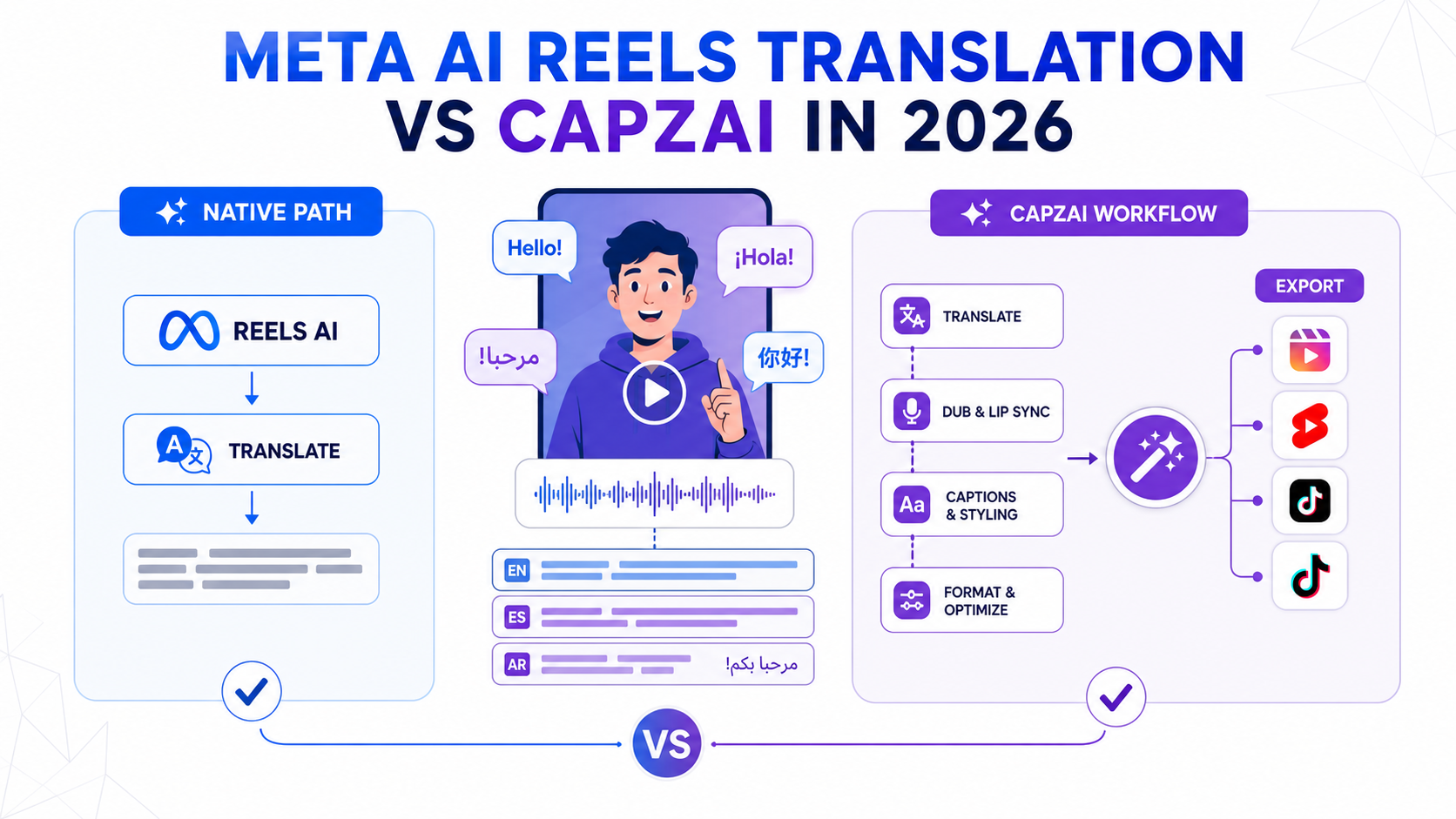
Meta AI Reels Translation vs CapzAi: What Multilingual Creators Still Need in 2026
Meta AI made Reels translation, dubbing, and lip sync more accessible, but most serious short-form teams still need stronger captions, broader language support, and cross-platform exports.
Read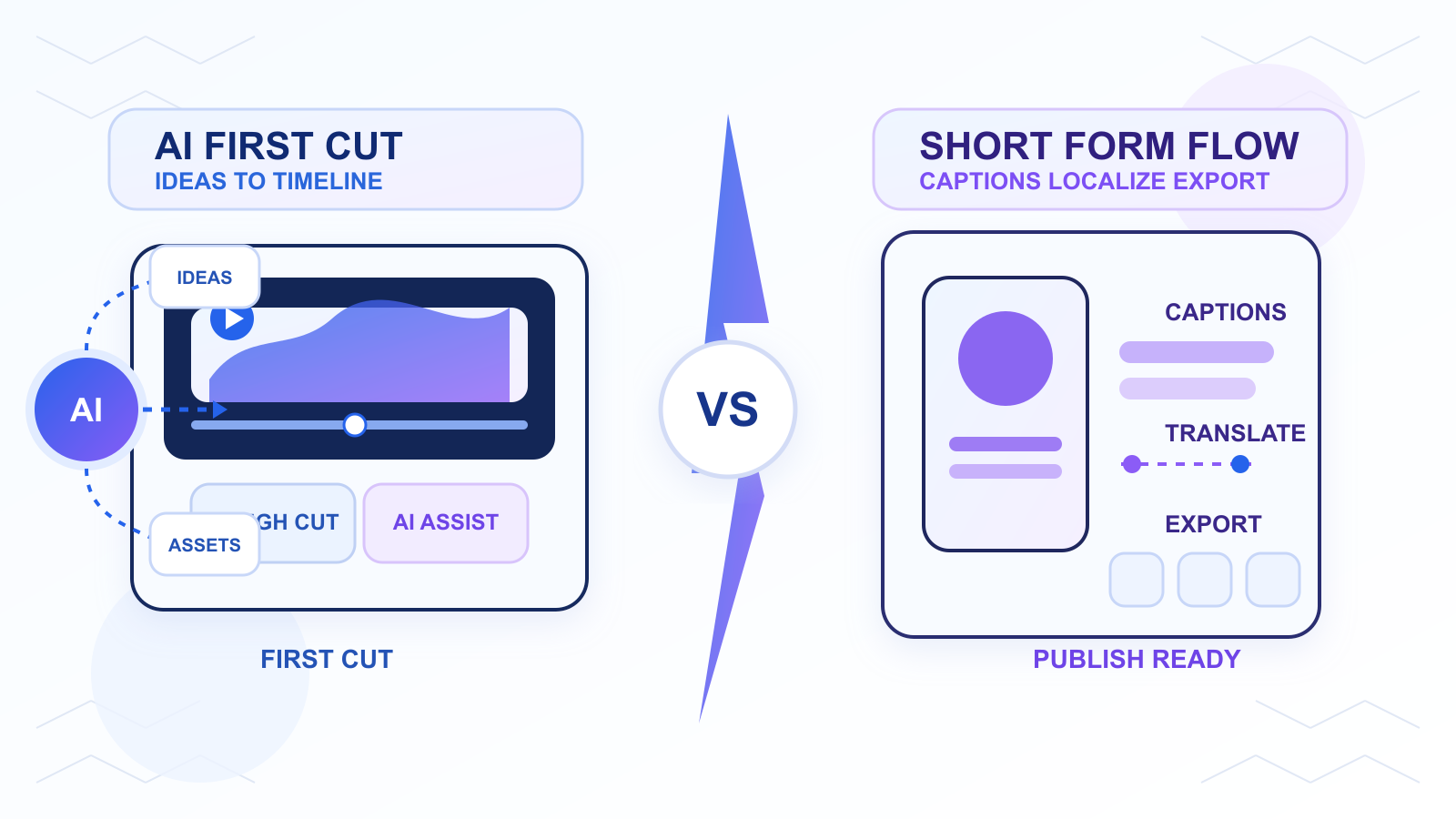
Adobe Firefly Video Editor vs CapzAi in 2026
Adobe is pushing agentic video creation and first-cut editing inside Firefly, but short-form teams still need a faster system for clipping, captions, localization, and export.
Read
YouTube Shorts Reimagine vs AI Clipping in 2026
YouTube's new Reimagine remix tool opens a fresh creation path for Shorts, but it does not replace clipping, captions, or localization workflows.
Read