Meta AI Reels Translation vs CapzAi: What Multilingual Creators Still Need in 2026
Meta AI made Reels translation, dubbing, and lip sync more accessible, but most serious short-form teams still need stronger captions, broader language support, and cross-platform exports.
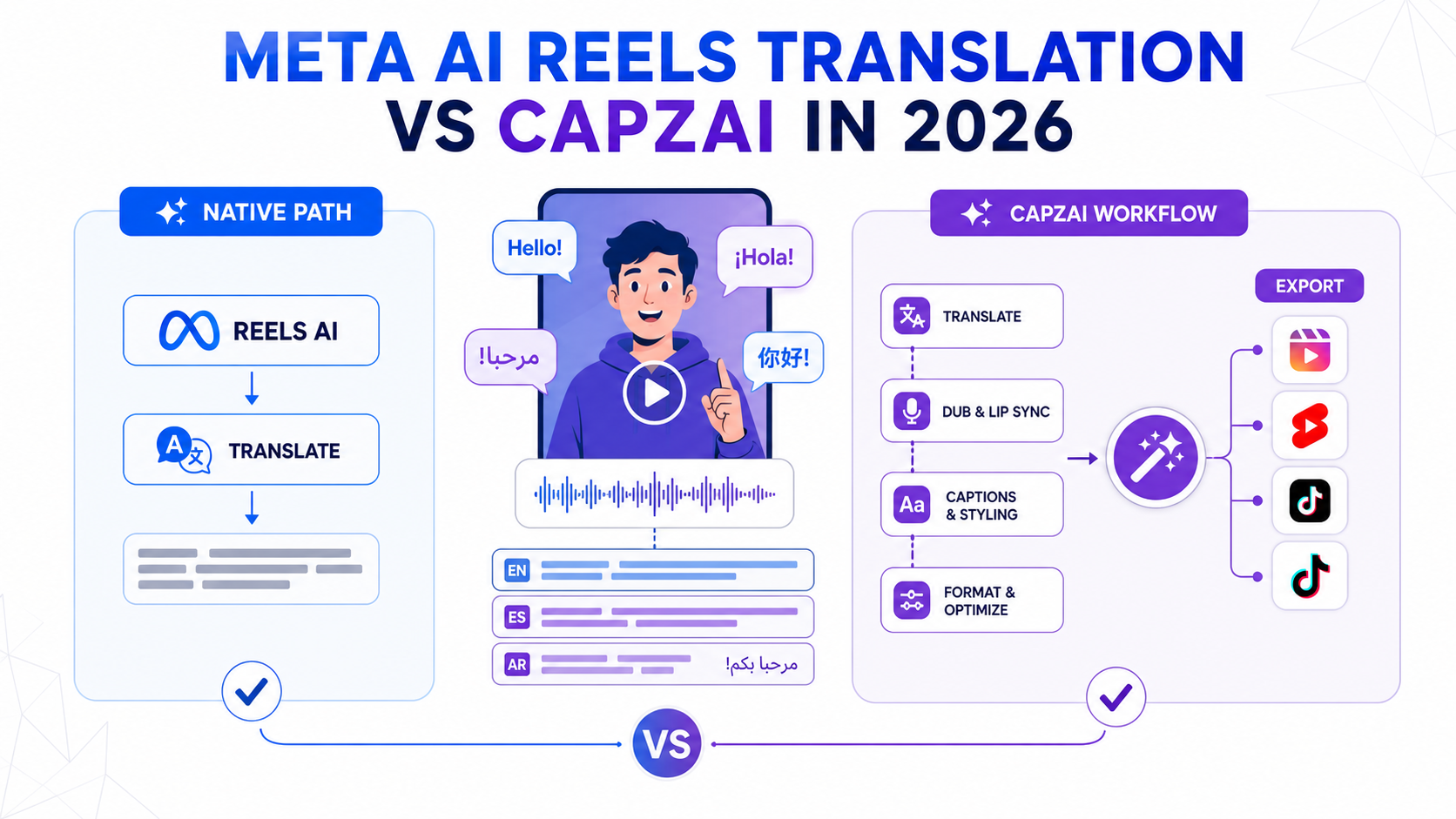
Meta moved multilingual Reels closer to the mainstream on October 9, 2025, when it said creators could translate, dub, and lip-sync reels with Meta AI across English, Spanish, Hindi, and Portuguese. On January 16, 2026, Meta announced a rollout into Bengali, Tamil, Telugu, Kannada, and Marathi as well. Then, on April 22, 2026, Meta said Edits would keep improving captions, including bilingual captions, as part of its next-year roadmap.
That sequence matters because it changes the default expectation for creators. Translation is no longer a niche workflow handled only by specialist tools. It is becoming a native platform feature.
The wrong conclusion is that specialist tools no longer matter.
The better conclusion is that the job has changed. Native translation helps a creator reach more people inside Reels. A specialist workflow still matters when the same clip needs stronger captions, better language coverage, safer layout control, and clean exports beyond Meta's ecosystem.
The short answer
Meta AI Reels translation is useful when your main goal is to publish public Reels faster inside Instagram and Facebook.
CapzAi is the stronger choice when your bottleneck is finishing quality:
- word-level captions that feel native to short-form
- Arabic, Darija, and RTL layout support
- review and revision before final export
- one workflow for Reels, TikTok, YouTube Shorts, and multilingual reuse
If your team only needs native reach inside supported Meta surfaces, Meta AI is worth using.
If your team is building a repeatable multilingual content engine, Meta AI is only one layer of the stack.
What Meta AI gets right
Meta's rollout is strategically important for three reasons.
First, it makes translation normal. In its October 9, 2025 announcement, Meta framed Reels translation as a free way for creators to reach some of its biggest markets. That means multilingual discovery is no longer reserved for large publishers or agencies.
Second, Meta is making translated Reels feel more native. The official rollout says Meta AI can preserve the sound and tone of the creator's voice, and can optionally lip sync the translated audio to the speaker's mouth movements. That reduces the obvious "machine dub" feeling that turned earlier workflows into a gimmick.
Third, Meta is tying creation tools together. Its June 11, 2025 launch of AI video editing in the Meta AI app, Meta.AI web, and Edits shows the broader product direction: capture, transform, publish, and increasingly localize inside one family of tools.
If you are a solo creator who lives inside Instagram, that is real value.
Where Meta AI still stops short
Native translation does not automatically solve multilingual short-form production.
1. Language coverage is still selective
Meta has expanded fast, but the supported set is still narrower than what many cross-border creators need. The January 16, 2026 update added several Indian languages, which is meaningful. But it still leaves obvious gaps for teams working in Arabic, Darija, or mixed-script MENA workflows.
That matters because language support is not only about dubbing. It is also about subtitle direction, punctuation behavior, line breaks, and whether the text feels natural in-feed.
If your growth plan includes GCC, North Africa, or diaspora audiences, how to add Arabic subtitles the right way is still a different problem than simply turning on a translation toggle.
2. Reels translation is not the same as caption control
Native translation can help viewers understand you. It does not automatically give you the subtitle style that drives retention.
Short-form captions are part of the edit. They carry pacing. They emphasize the hook. They keep comprehension high when people watch without sound. For many teams, that means word-level timing, reusable presets, safe-zone positioning, and the ability to rework translated line lengths before export.
Meta's April 22, 2026 Edits update is notable precisely because it says caption upgrades and bilingual captions are still in progress. That tells you the caption layer is important, but not solved.
CapzAi is built around that finishing layer. Related reads:
3. Native does not mean cross-platform
Meta's tools are strongest when the final destination is Instagram or Facebook.
That is fine if your strategy is platform-specific. It is limiting if the same source clip needs to become:
- an Instagram Reel
- a TikTok with different caption spacing
- a YouTube Short with cleaner search phrasing
- a dubbed or subtitled variant for another market
This is where specialist tooling keeps its value. The asset you publish is not just a translated Reel. It is a finished short-form file that has to survive reposting.
4. Review workflow still matters
A native translation feature is attractive because it removes friction. But high-volume teams still need review steps:
- Is the hook still sharp after translation?
- Did the line breaks become too long?
- Does the translated text collide with UI?
- Should this market get dubbing, subtitles, or bilingual captions?
CapzAi's pay-on-export model fits this reality better than an all-or-nothing render flow. You can generate, inspect, revise, and only export what deserves to ship.
Meta AI Reels translation vs CapzAi
| Workflow area | Meta AI Reels translation | CapzAi |
|---|---|---|
| Best use case | Native discovery inside Instagram and Facebook | Polished multilingual short-form production |
| Translation output | Dubbed and optionally lip-synced Reels in supported languages | Subtitle translation, dubbing, caption styling, and export workflow |
| Arabic and Darija | Limited relative to MENA-first needs | Stronger fit for Arabic, Darija, RTL, and transliteration |
| Caption styling | Improving, but not the core differentiator | Central part of the workflow |
| Cross-platform reuse | Meta surfaces first | Reels, TikTok, Shorts, and reusable exports |
| Review before final output | Native convenience | Edit, inspect, reposition, then export |
This is not a "winner takes all" category.
Meta is making the first multilingual step easier. CapzAi is stronger at the finishing layer after that step.
Which creators should use Meta AI alone?
Meta AI alone makes sense if:
- your audience lives mostly on Instagram or Facebook
- your languages are inside Meta's currently supported rollout
- you prioritize speed over caption design depth
- you do not need Arabic, Darija, or advanced bilingual layouts
For creators in that situation, the native option removes friction and should be part of the workflow.
Which creators should use CapzAi instead?
CapzAi is the better primary workflow if:
- captions are part of your brand identity
- you repurpose long videos into many short clips
- you publish across more than one short-form platform
- you localize into Arabic, Darija, French, or mixed-script audience segments
- you want to translate only the winners, not every draft
That is the more common setup for agencies, B2B teams, podcasters, UGC creators, and multilingual brands.
The practical hybrid workflow
The strongest real-world answer is often both.
Use Meta AI when you want the fastest native test inside Reels. Let the platform help you gauge whether the idea travels in another language.
Then use CapzAi when the clip proves itself and needs to become a durable asset:
- Pick the Reel with early traction.
- Rework the captions for sound-off clarity.
- Create the Arabic, Darija, French, or English variant you actually need.
- Export clean versions for Reels, TikTok, and Shorts.
- Reuse the same concept in your broader multilingual video localization playbook.
That hybrid approach keeps native speed without giving up finishing quality.
Bottom line
Meta AI made a meaningful shift between October 9, 2025 and April 22, 2026: Reels translation expanded, lip-sync dubbing became easier to access, and Edits signaled deeper caption work ahead.
That does not eliminate the need for specialist workflows. It raises the bar for them.
In 2026, the winning short-form teams will not ask whether native translation exists. They will ask a better question:
Where should the native platform stop, and where should our real production workflow begin?
For many multilingual creators, that handoff point is still captions, RTL support, translation nuance, and cross-platform finishing. That is exactly where CapzAi remains useful.
If your Reels strategy is starting to outgrow one-platform publishing, try the workflow that blends native discovery with polished multilingual exports. You will keep the speed of Meta's rollout without giving up the control serious short-form production still requires.
Related articles
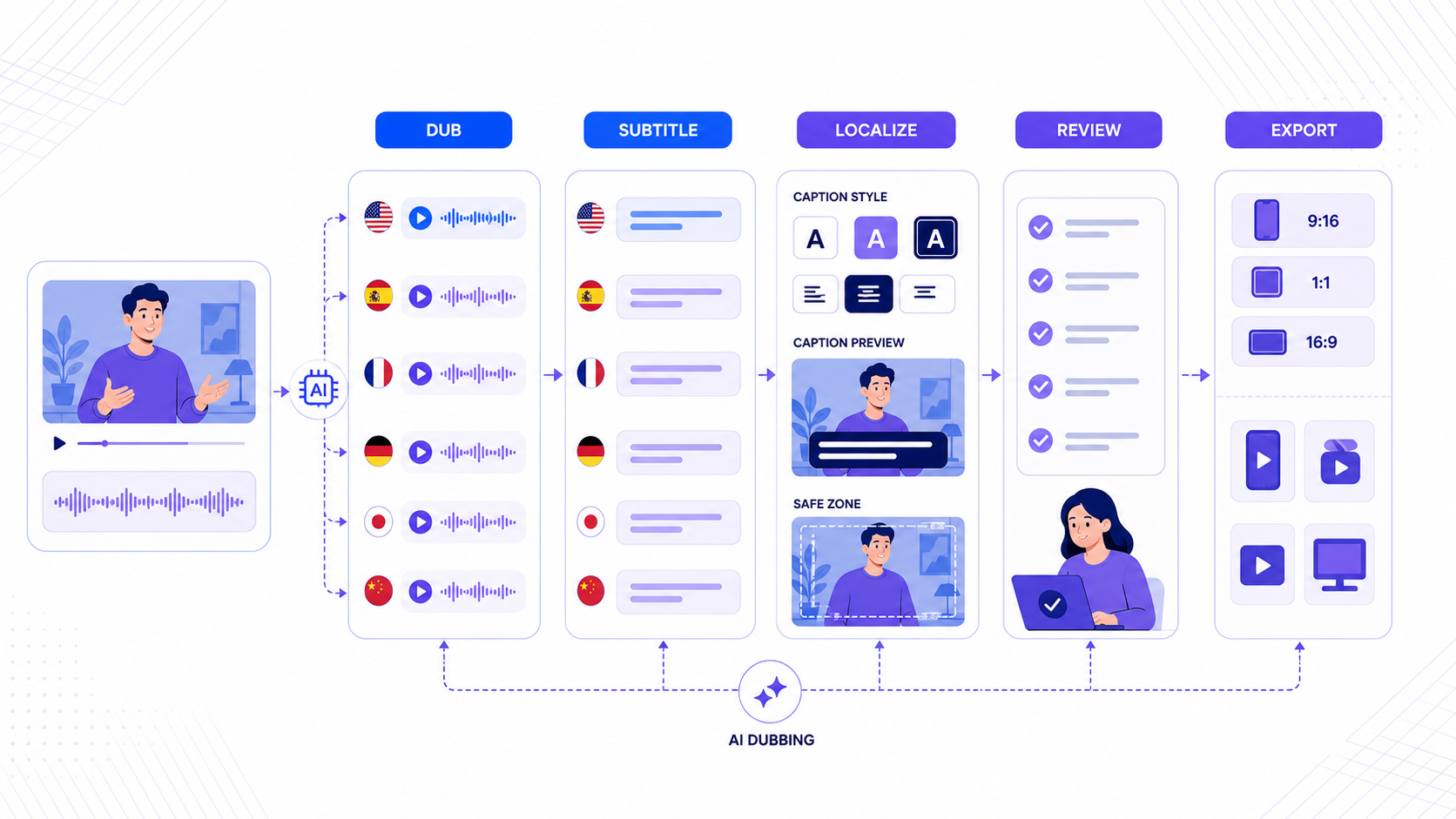
TikTok Symphony AI Dubbing vs CapzAi in 2026
TikTok's official AI dubbing tools make multilingual publishing easier, but many creators still need stronger captions, review control, and cross-platform exports.
Read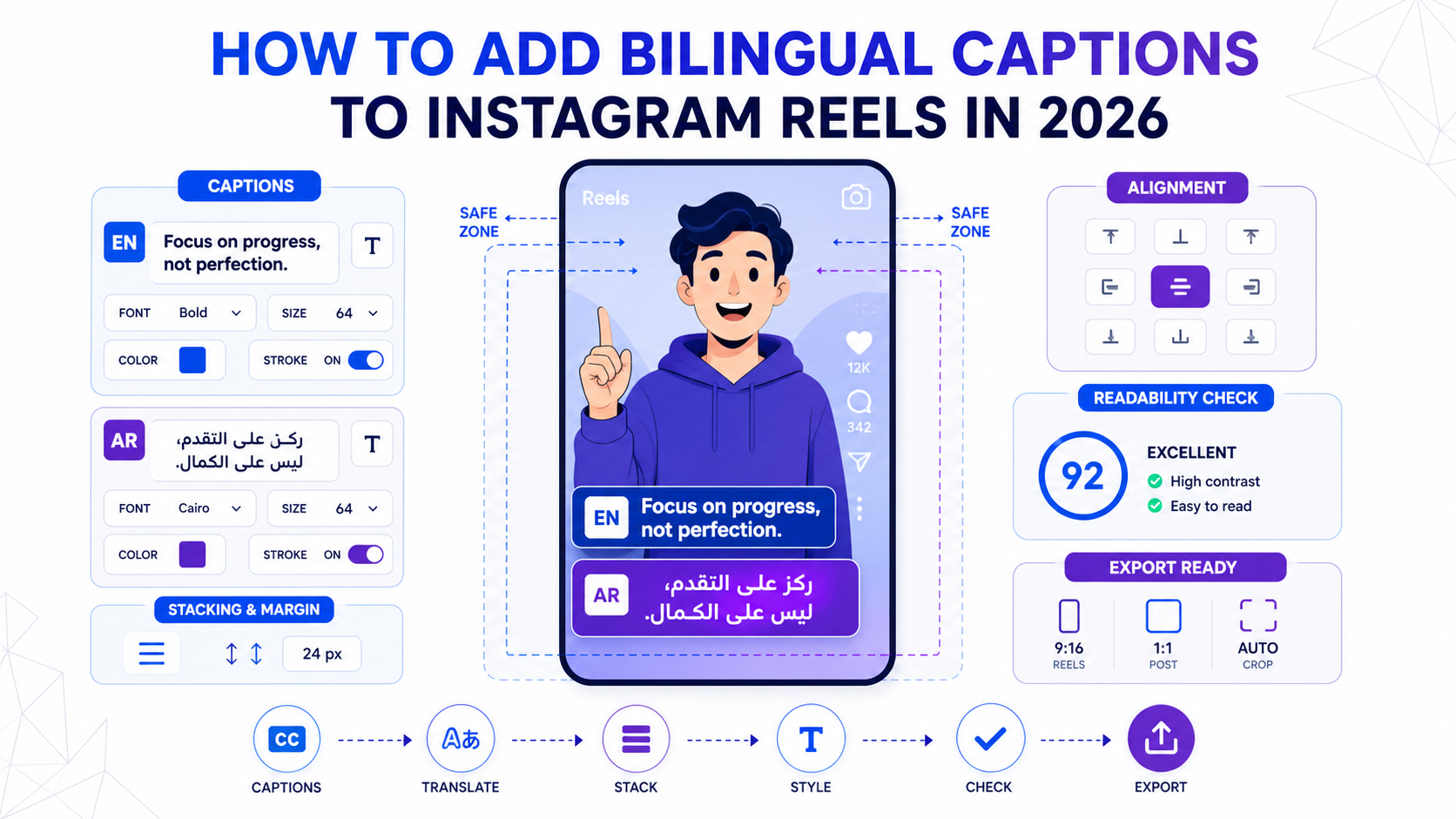
How to Add Bilingual Captions to Instagram Reels in 2026
A practical workflow for bilingual Reels captions that stay readable, fit safe zones, and work across English, Arabic, French, and other short-form language pairs.
Read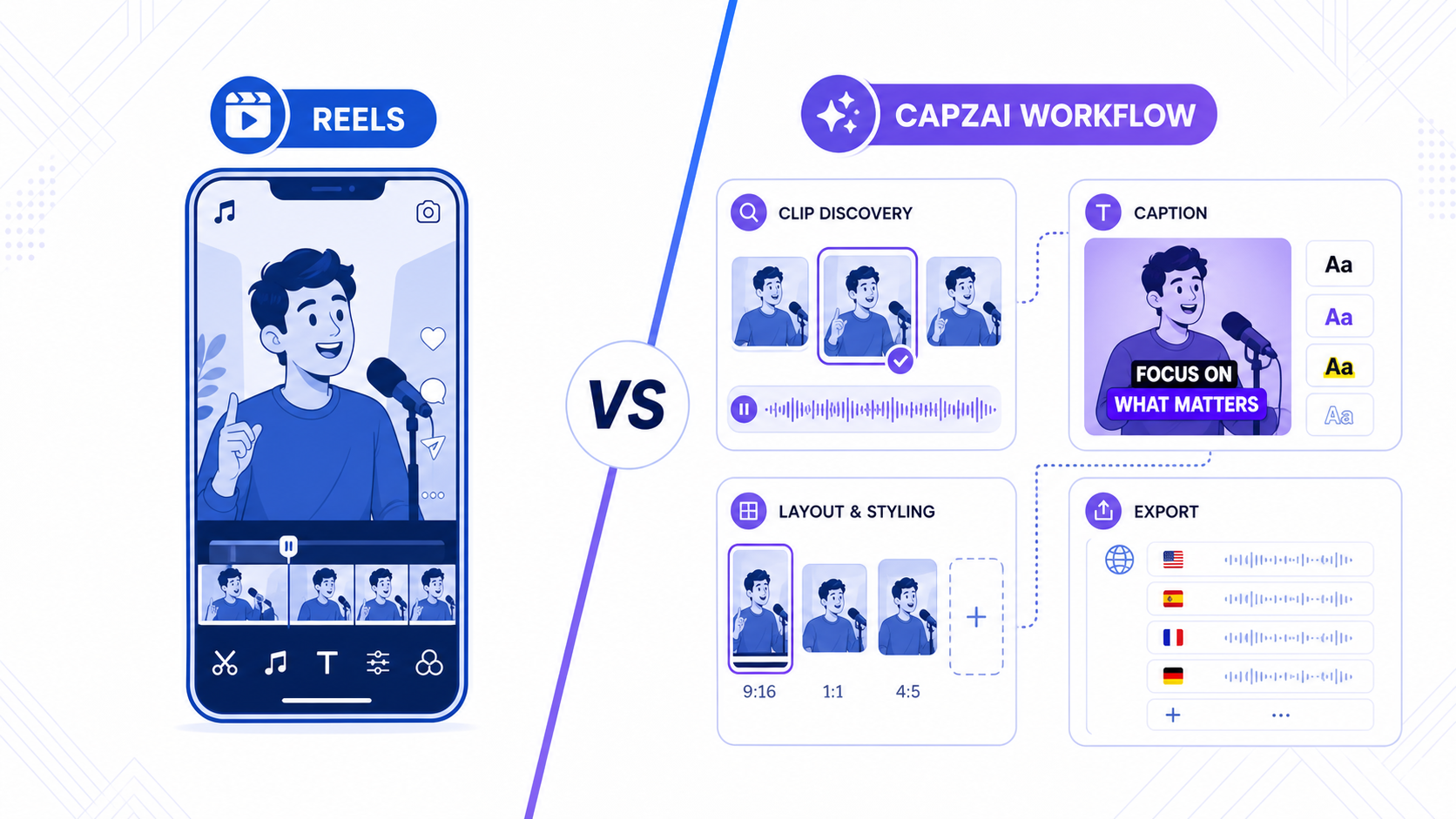
Instagram Edits vs CapzAi: Which Reels Workflow Makes More Sense in 2026?
Instagram Edits is becoming a serious native creation app, but many Reels teams still need stronger captions, clipping, and multilingual finishing.
Read