YouTube Shorts Reimagine vs AI Clipping in 2026
YouTube's new Reimagine remix tool opens a fresh creation path for Shorts, but it does not replace clipping, captions, or localization workflows.
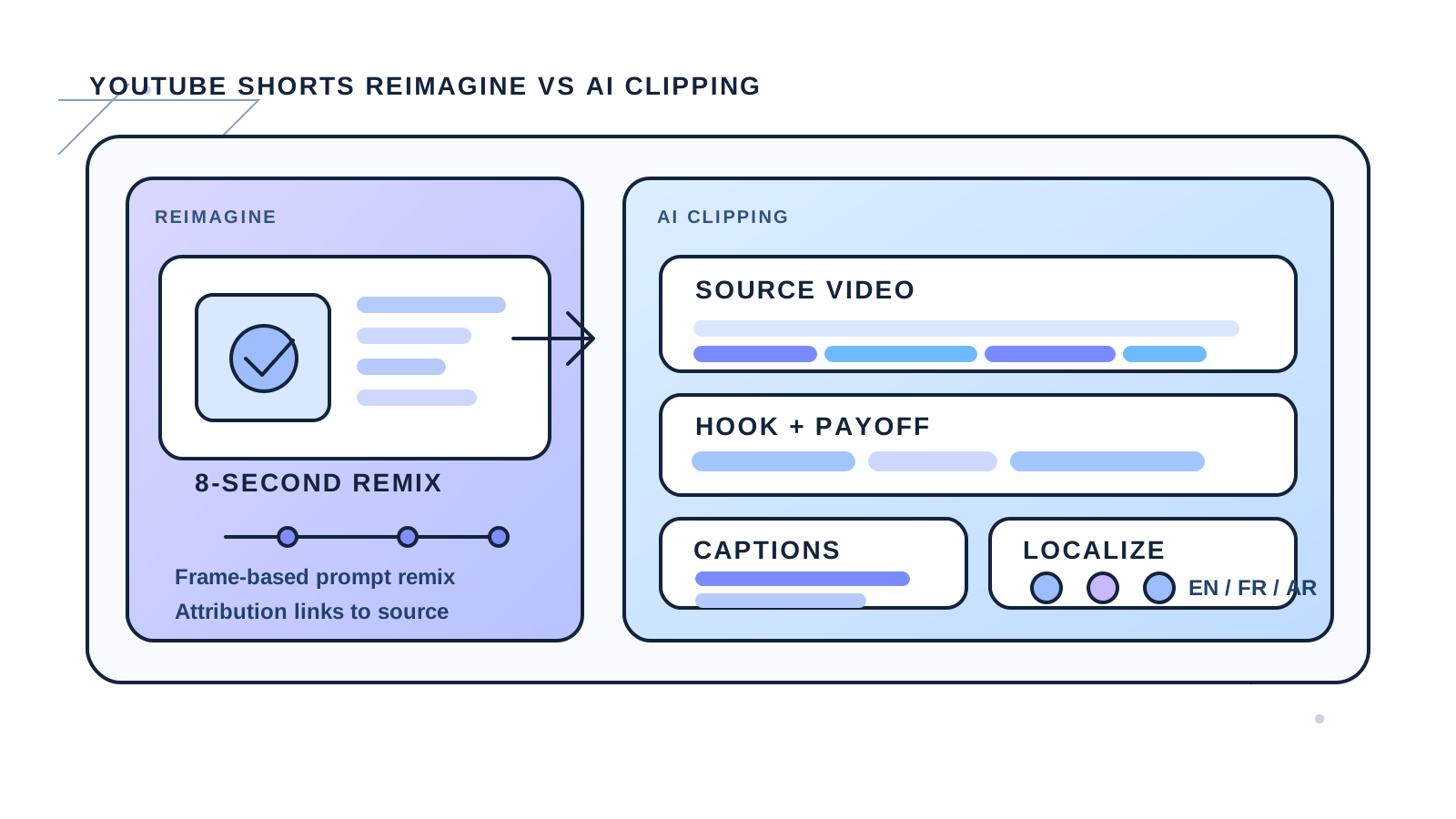
YouTube added a meaningful new creation path for Shorts on March 18, 2026 when it launched Reimagine. In YouTube's words, the feature lets users transform a single frame from an eligible Short into a new eight-second clip powered by Veo, with Gemini-suggested or custom prompts and direct links back to the original work.
That matters because it shifts YouTube Shorts further toward AI-assisted remixing, not just lightweight editing.
It also creates a comparison problem for creators. Once a platform ships a native AI creation feature, people start asking whether they still need separate clipping and caption tools.
For most serious Shorts workflows, the answer is yes.
Reimagine is useful, but it solves a different job from AI clipping.
The short answer
Use Reimagine when you want to spin an existing Short into a new visual idea quickly.
Use AI clipping when you need to turn long-form footage into self-contained, publish-ready Shorts with hooks, captions, and clear editorial structure.
These tools can live in the same workflow, but they should not be confused with each other.
What YouTube actually launched on March 18, 2026
The official YouTube post is very specific about the scope:
- Reimagine works from a single frame in an eligible Short.
- It creates a new eight-second clip.
- It can use up to two photo references from the user's gallery.
- It accepts either suggested prompts or custom prompts.
- Every Reimagined Short links back to the original.
That last detail is important. YouTube is building an AI remix feature that keeps attribution attached to the source content.
This is not the same as clipping a 30-minute podcast into six vertical Shorts. It is closer to AI-assisted derivative creation inside the Shorts ecosystem.
Reimagine vs AI clipping at a glance
| Category | YouTube Shorts Reimagine | AI clipping workflow |
|---|---|---|
| Starting asset | An existing eligible Short | A long video, interview, podcast, demo, webinar, or source clip |
| Core job | Remix or extend an idea | Find complete moments and shape them into Shorts |
| Output size | Eight-second generated clip | Variable social clip length |
| Attribution model | Links back to the original Short | You own and repurpose your source footage |
| Caption workflow | Not the main feature | Usually a core retention layer |
| Localization | Not the main feature | Often part of the finishing workflow |
| Best use case | Creative remixing and audience participation | Consistent publishing from source footage |
The cleanest way to think about this is simple: Reimagine starts after a Short already exists. AI clipping often starts before the Short exists at all.
Where Reimagine is genuinely useful
Reimagine fits the native Shorts culture well because Shorts already rewards remix behavior, trends, and fast idea iteration.
It is strong for:
- turning a memorable frame into a new joke, concept, or visual twist
- letting audiences participate in a creator's idea
- giving a finished Short a second life through remix
- creating fast experimental content without opening a desktop editor
If you are a creator who already posts frequently on Shorts, that native convenience matters. YouTube has been steadily expanding its creation tooling. Its 2025 Shorts tool updates introduced a stronger editor, timed text, photo-to-video, and more AI-assisted creation. Reimagine extends that direction.
Where Reimagine stops
The limits show up when your workflow begins with source footage instead of a finished Short.
Most creator businesses do not start with "I have one frame from an eligible Short and want a new eight-second variation."
They start with:
- a 45-minute interview
- a podcast episode
- a product walkthrough
- a UGC shoot
- a coaching session
- a webinar recording
The problem there is not remixing. The problem is editorial extraction.
You need to find the moment with a clear hook, enough setup, a clean payoff, and standalone meaning. Then you need to caption it, position the text safely, and often adapt it for more than one platform.
Reimagine does not do that job.
Why AI clipping is still the bigger production layer
AI clipping exists because long-form footage is expensive to waste.
A good clipping workflow helps you:
- identify high-potential moments inside a longer recording
- avoid fragments that sound exciting but lack context
- create clips with a real beginning, middle, and end
- add captions that improve comprehension in sound-off viewing
- export only the strongest versions
That is why clipping is closer to a publishing engine than a novelty feature.
If your team publishes Shorts every week, the workflow bottleneck is usually not "how do we make eight more seconds from a frame?" It is "how do we turn one source video into several clips that deserve to be posted?"
Related reading: context-aware AI video clipping and YouTube Shorts repurposing workflow.
The caption layer is still missing from the native remix story
Native creation tools often look more complete than they are because the creation moment is visible, while the finishing work is hidden.
For Shorts teams, captions still matter because they help:
- communicate the hook in the first seconds
- improve sound-off comprehension
- create visual pacing
- preserve clarity when reposting outside YouTube
YouTube's help documentation confirms the Shorts editor includes timeline review and editing tools, but caption styling and multilingual finishing are still not the core product story. That leaves a gap for tools built around the finishing layer itself.
CapzAi sits in that gap. It is not trying to replace YouTube's native remix experience. It is trying to make the export-ready clip better.
Reimagine is a remix layer, not a repurposing layer
This distinction is where many teams make the wrong tooling decision.
Remix layers help you generate fresh creative variations from already-social content.
Repurposing layers help you extract value from source material you already own.
Those are both useful, but they drive different economics.
Reimagine can increase idea velocity inside Shorts.
AI clipping can increase the output you get from every recording session, podcast, interview, or client shoot.
For most creator businesses, the second category affects revenue more directly because it changes how much usable content comes out of each production cycle.
A practical workflow that uses both
The best answer is often not either-or.
A practical 2026 Shorts workflow looks like this:
- Record the source video with a clear topic and strong audio.
- Use a clipping workflow to find self-contained Short candidates.
- Add captions and check safe-zone placement before export.
- Publish the strongest Shorts.
- If one Short becomes a strong creative seed, use Reimagine to make a derivative version or invite audience participation.
That sequence treats Reimagine as a growth extension, not as the main editing system.
When CapzAi makes more sense than Reimagine
CapzAi is the better fit when your content operation depends on:
- long-to-short repurposing
- caption quality as part of retention
- multilingual versions
- cross-posting to Reels, TikTok, and Shorts
- reviewing candidates before committing to export
That is a much more common workload for agencies, brands, podcasters, educators, consultants, and creator teams than pure remix creation.
CapzAi also fits better when you care about owning the workflow from source footage through finished deliverable, instead of only creating an in-platform variation.
The bigger platform signal
Reimagine matters beyond its specific feature set because it confirms where platforms are heading.
YouTube wants creation to happen closer to distribution.
Meta wants creators using Edits and posting more original content.
TikTok is pushing native long-to-short assistance through Smart Split.
In other words, platforms are teaching users to expect AI help at the point of publishing.
That raises the bar for external tools. A third-party product has to do something the native layer still does poorly.
For CapzAi, that differentiator is not "we also have AI." It is better repurposing, captions, localization, and export control.
Final verdict
YouTube Shorts Reimagine is real, current, and strategically important. As of March 18, 2026, it gives Shorts creators a native way to turn a frame into a new eight-second AI clip while preserving attribution back to the source.
But Reimagine is not a replacement for AI clipping.
It is a remix feature.
If your workflow starts with finished Shorts and you want more creative variations, Reimagine is useful.
If your workflow starts with long-form footage and you need short-form outputs that are captioned, structured, and ready to publish, AI clipping is still the more important production layer.
That is where CapzAi remains the stronger fit.
Related articles
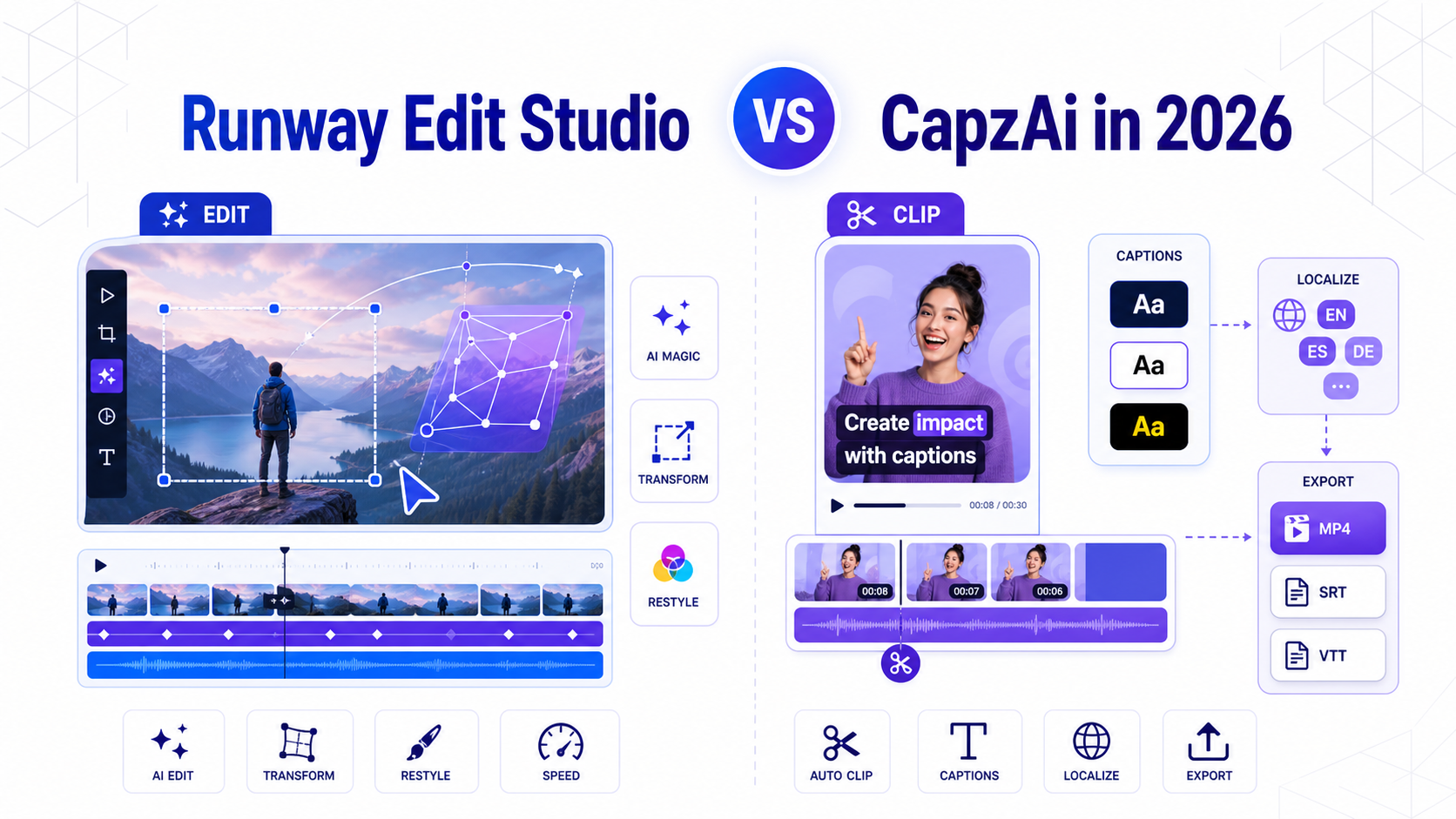
Runway Edit Studio vs CapzAi in 2026
How Runway's new Aleph 2.0 editing workflow compares with CapzAi for short-form clipping, captions, localization, and creator production speed.
Read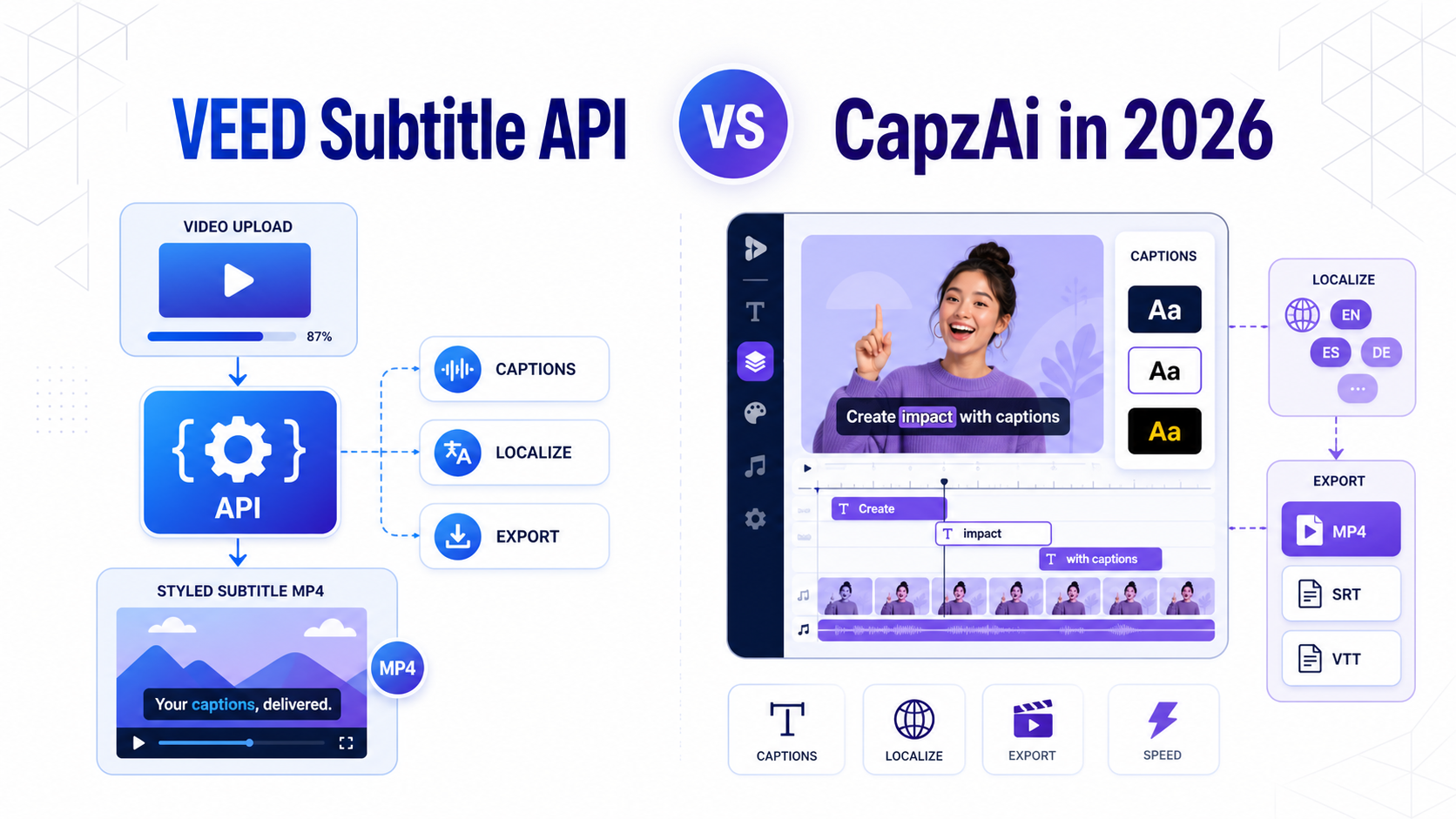
VEED Subtitle API vs CapzAi in 2026
A practical comparison of VEED's new Subtitle API and CapzAi for styled captions, localization, export workflows, and creator-speed publishing.
Read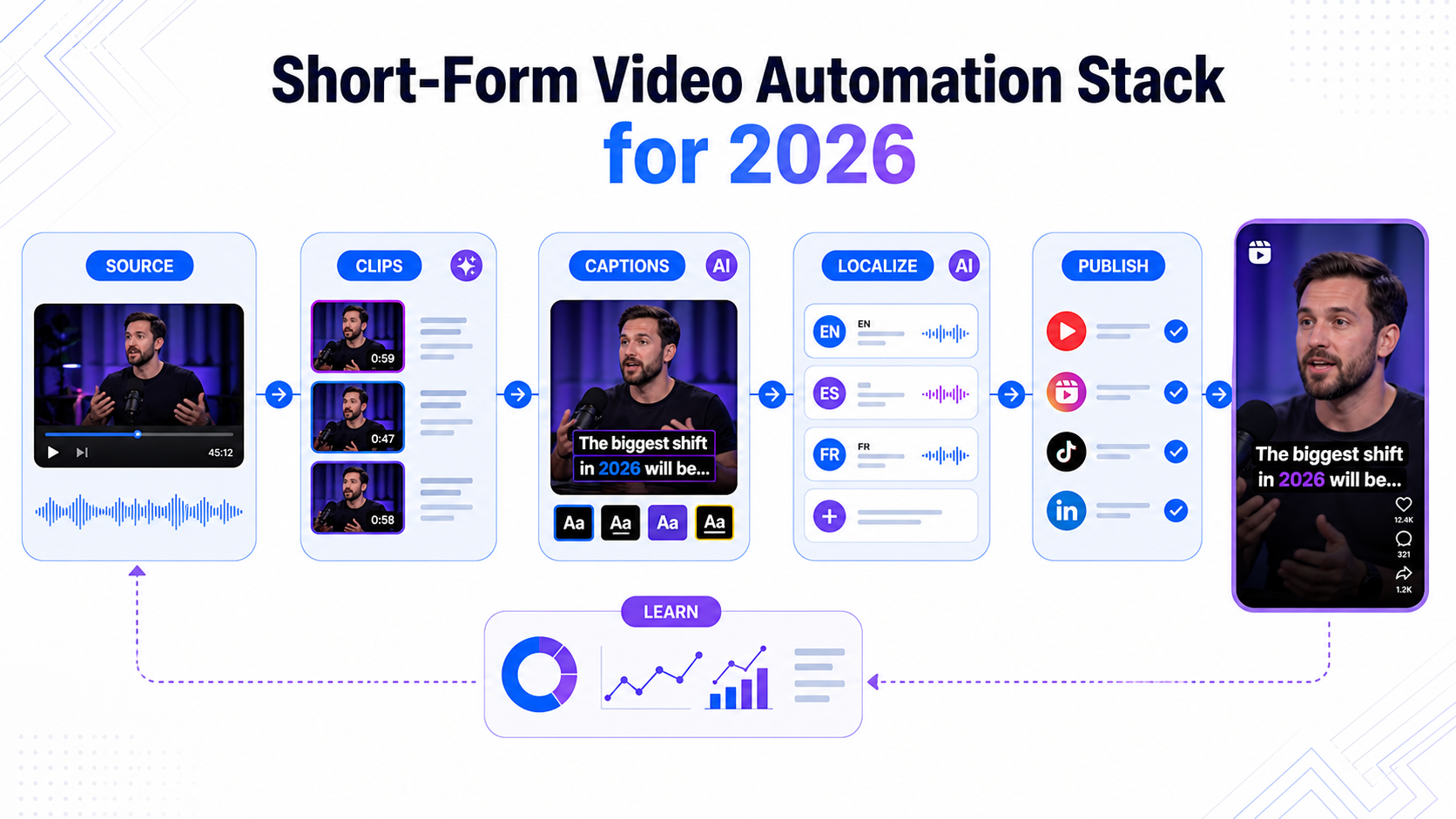
Short-Form Video Automation Stack for 2026
A practical short-form video automation stack for creators and teams turning long videos into captioned, translated, publish-ready clips.
Read