Adobe Firefly Video Editor vs CapzAi in 2026
Adobe is pushing agentic video creation and first-cut editing inside Firefly, but short-form teams still need a faster system for clipping, captions, localization, and export.
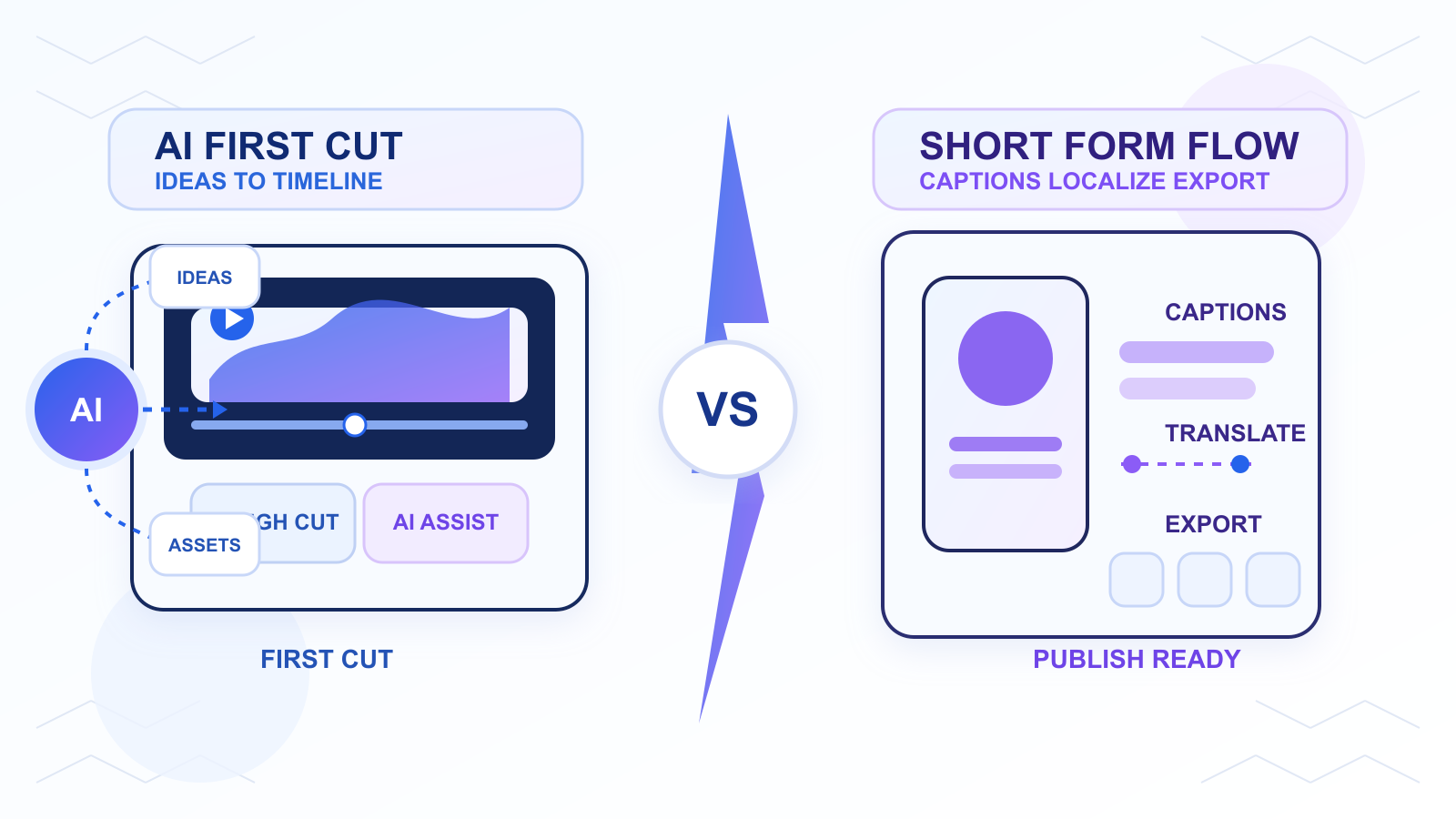
Adobe is making a serious push to own more of the AI video workflow.
On February 25, 2026, Adobe introduced Quick Cut in Firefly, describing it as an AI-powered first-cut tool that turns raw clips into a structured edit. Then on April 15, 2026, Adobe announced Firefly AI Assistant and new Firefly Video Editor upgrades, positioning Firefly as a conversational, all-in-one creative AI studio for video, image, and audio workflows.
That sounds broad because it is broad.
But broad creative tooling and short-form production throughput are not the same thing.
If you are comparing Adobe Firefly Video Editor vs CapzAi in 2026, the cleanest way to think about it is this:
- Firefly helps creators ideate, assemble, and modify video inside Adobe's expanding AI studio.
- CapzAi helps creators turn footage into social-ready clips with captions, localization, dubbing, and export discipline.
The Short Answer
Choose Adobe Firefly Video Editor if your main need is fast ideation, AI-assisted first cuts, or creative variation inside a larger Adobe workflow.
Choose CapzAi if your main need is to repurpose source footage into finished short-form assets for Reels, TikTok, Shorts, and multilingual publishing.
The overlap is real, but the production bottleneck is usually different.
What Adobe Actually Shipped
Adobe's February 25, 2026 Firefly announcement matters because it frames AI editing as a timeline accelerator instead of only a generation engine.
According to Adobe's launch post, Quick Cut helps creators move from raw clips to a structured first cut in minutes. In the April 15, 2026 Adobe announcement, the company expanded that story with Firefly AI Assistant, saying users can describe an outcome in natural language while the assistant orchestrates multi-step workflows across Firefly, Premiere, Photoshop, Lightroom, Express, and more.
Adobe also highlighted Firefly Video Editor upgrades including:
- studio-quality audio improvements
- advanced color controls
- Adobe Stock integration
- a conversational assistant layer for multi-step creative tasks
That is an important market signal. Adobe wants Firefly to become the front door for AI-assisted creation across its ecosystem.
Adobe Firefly Video Editor vs CapzAi at a Glance
| Category | Adobe Firefly Video Editor | CapzAi |
|---|---|---|
| Primary job | Ideation, first cuts, creative editing, AI-assisted production | Short-form clipping, captions, localization, and export |
| Best source type | Raw clips, creative concepts, multi-app Adobe projects | Podcasts, interviews, webinars, demos, talking-head video, UGC |
| Core interaction | Prompting, conversational editing, timeline assembly | Upload, review, clip, style, translate, dub, export |
| Creative variation | Strong Adobe focus | Secondary |
| Caption workflow | Part of a broader suite | Core workflow layer |
| Localization | Possible through Adobe tools, but not the main product story | Core CapzAi value |
| AI clipping from long video | Not the clearest Firefly promise | Central use case |
| Social-ready finishing | Partial | Core |
| Best buyer | Adobe-heavy creative teams | Creators, agencies, and social teams shipping at volume |
Where Firefly Wins
Firefly is the stronger choice when the problem starts before the clip is ready.
Examples:
- you need a first cut from messy raw footage
- you want to brainstorm visual directions quickly
- you need AI-generated supporting assets around a campaign
- your editors already live inside Adobe's environment
- you want a conversational layer that can coordinate several Adobe tools
That is especially relevant for brand teams, creative studios, and editors who already think in terms of Adobe workflows instead of platform publishing workflows.
If your team is already paying for Creative Cloud and the bottleneck is getting from blank timeline to rough cut, Adobe's direction makes sense.
Where CapzAi Wins
CapzAi wins later in the pipeline, where many social teams actually lose time.
That usually means:
- finding usable short-form moments inside longer footage
- applying readable word-level captions
- adjusting safe-zone placement for vertical video
- translating subtitles into other languages
- checking Arabic or other RTL layouts before export
- deciding which versions deserve a final render
This is not the same job as building a first cut.
A rough edit is useful, but a rough edit does not automatically become a strong Reel, TikTok, or Short. The finishing layer still matters, and that is where CapzAi is more focused.
Related reading: short-form video automation stack for 2026.
Why This Comparison Matters Now
Adobe is not the only company compressing the editing workflow.
Meta's one-year Edits update on April 22, 2026 pointed to upgrades such as bilingual captions, speed curves, and more customizable editing tools. YouTube launched Reimagine for Shorts on March 18, 2026 to let eligible Shorts become new 8-second AI-powered remixes. The category is moving fast toward native creation, faster assembly, and AI-assisted remixing.
That makes the market easier to misunderstand.
Creators often compare every AI video product against every other AI video product as if they all solve one generic "editing" problem. They do not. In practice, the stack is separating into layers:
- ideation and first-cut tools
- visual transformation tools
- clipping and selection tools
- captions and subtitle styling tools
- localization and dubbing tools
- final export and publishing tools
Firefly is pushing into ideation and first-cut territory. CapzAi is strongest in clipping, captions, localization, and short-form finishing.
The Hidden Cost of Choosing the Wrong Layer
If you choose Firefly when your real bottleneck is social finishing, your team still has to solve:
- short clip selection
- subtitle readability
- multilingual QA
- dubbing decisions
- platform-safe layouts
- repeatable exports
If you choose CapzAi when your real bottleneck is concepting and rough assembly, you may still want another tool to handle upstream creative iteration.
That is why "all-in-one AI video editor" messaging can be misleading. The right comparison is not feature count. It is where your team actually burns operator time every week.
A Practical Way to Use Both
For many teams, the best answer is not Firefly or CapzAi. It is Firefly and CapzAi at different stages.
One practical flow looks like this:
- Use Firefly or your normal editor to build the raw concept or rough cut.
- Export the footage that contains the usable ideas.
- Bring that footage into CapzAi to generate short-form candidates.
- Apply caption styling, translation, dubbing, and export controls.
- Publish only the strongest versions.
That reflects how AI video production is actually evolving. More layers are becoming automated, but not all layers should be handled by the same tool.
Who Should Choose Firefly
Adobe Firefly Video Editor is the better pick if:
- your team already works inside Adobe every day
- you need AI help with first cuts and creative assembly
- you care about cross-app creative orchestration
- your main problem is getting from idea to rough edit faster
Who Should Choose CapzAi
CapzAi is the better pick if:
- your workflow starts with long or source footage
- captions are part of retention, not an afterthought
- you repurpose videos into multiple shorts
- you localize into multiple languages
- you need a tighter review loop before export
Related reading: how to dub video with AI while keeping voice energy and multilingual video localization playbook.
Final Verdict
Adobe Firefly Video Editor is a strong signal that AI video tooling is moving closer to conversational editing and faster first cuts. For Adobe-native teams, that is useful.
CapzAi solves a different and often more urgent problem for creator businesses: turning footage into short-form clips that are captioned, localized, and ready to publish.
So the real question is not which tool sounds more advanced.
The real question is whether your bottleneck is upstream creative assembly or downstream social-video finishing.
If it is the first, Firefly is the stronger fit.
If it is the second, CapzAi is the stronger fit.
Related articles
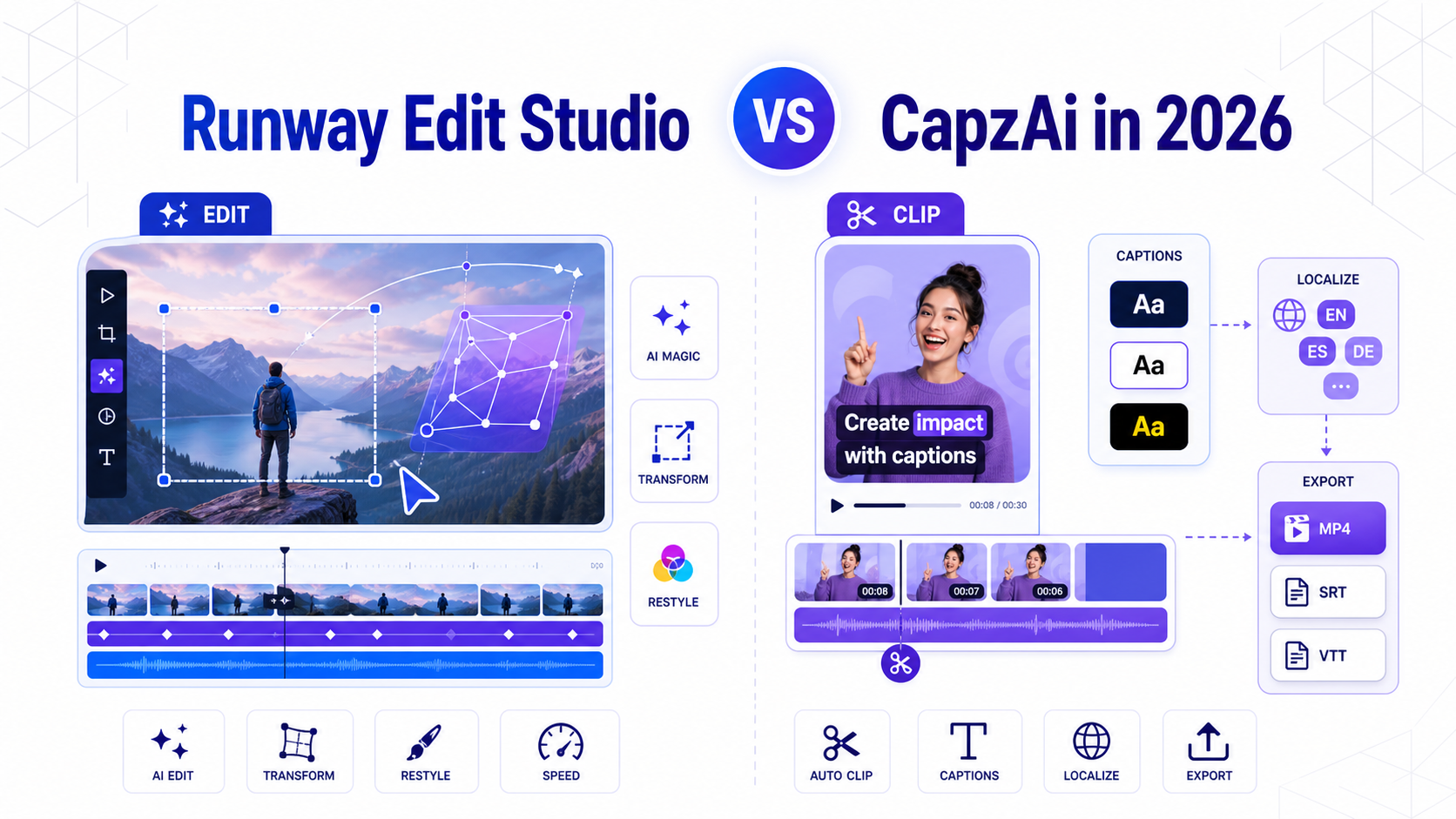
Runway Edit Studio vs CapzAi in 2026
How Runway's new Aleph 2.0 editing workflow compares with CapzAi for short-form clipping, captions, localization, and creator production speed.
Read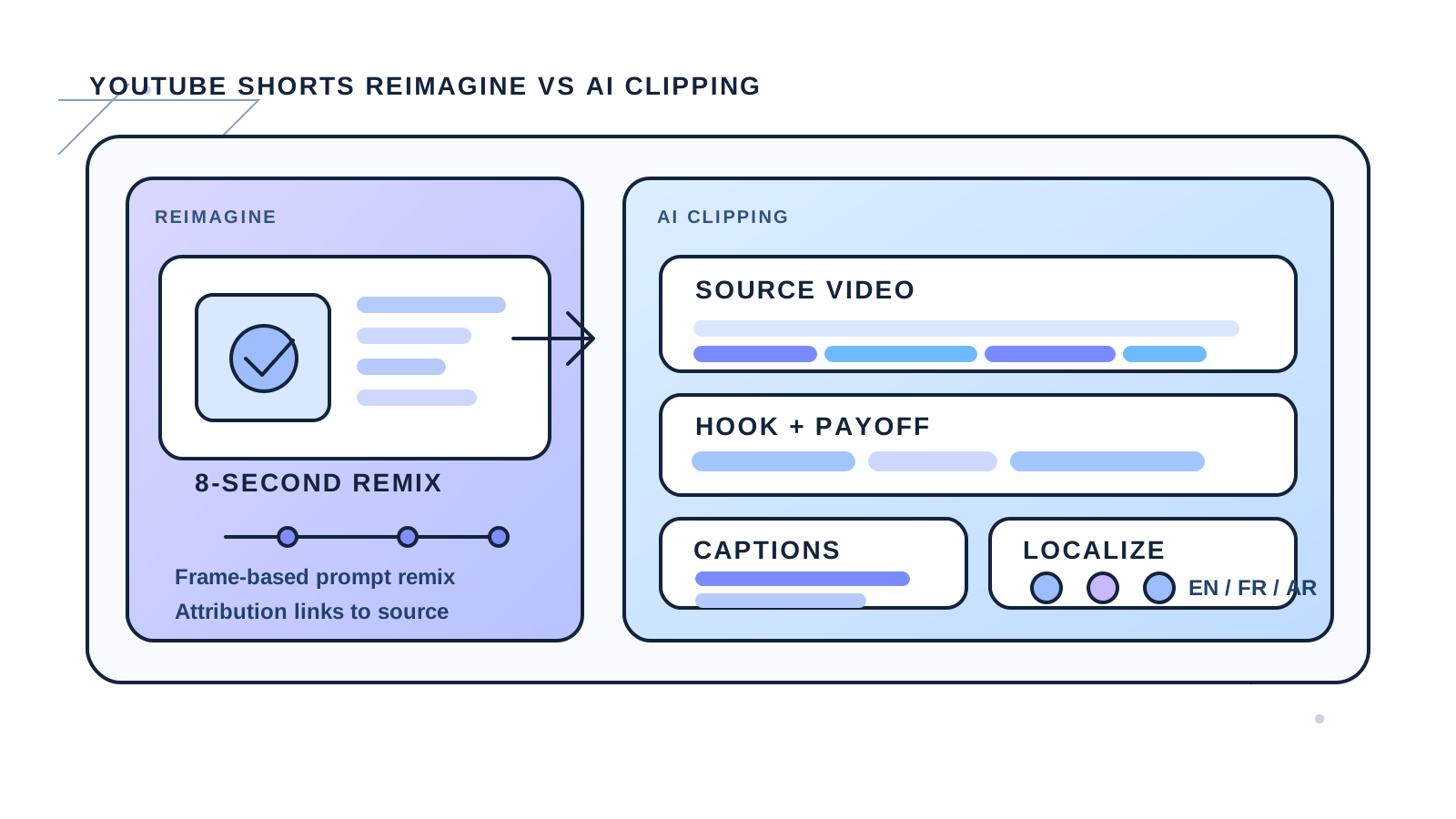
YouTube Shorts Reimagine vs AI Clipping in 2026
YouTube's new Reimagine remix tool opens a fresh creation path for Shorts, but it does not replace clipping, captions, or localization workflows.
Read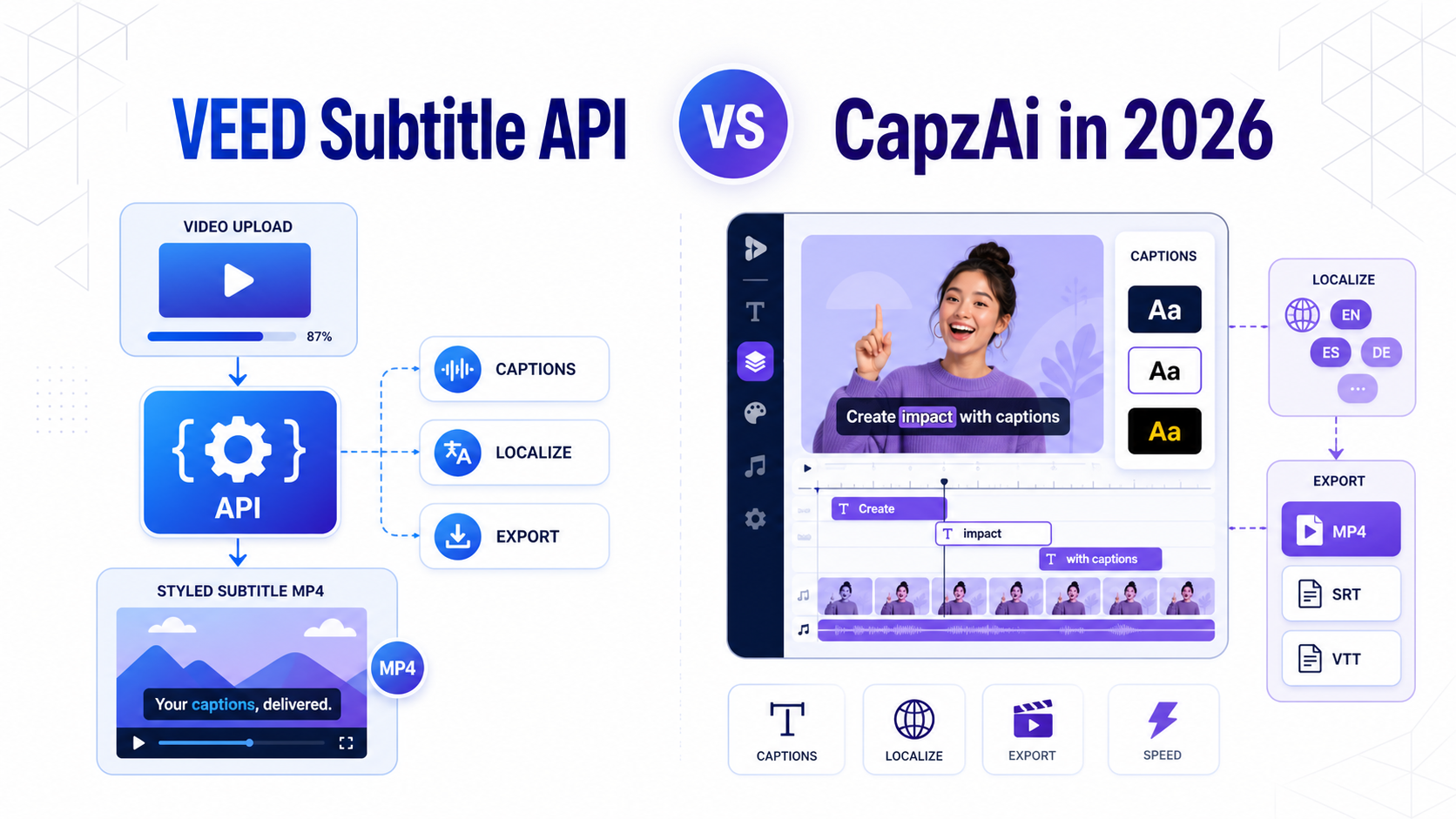
VEED Subtitle API vs CapzAi in 2026
A practical comparison of VEED's new Subtitle API and CapzAi for styled captions, localization, export workflows, and creator-speed publishing.
Read