Runway Edit Studio vs CapzAi in 2026
How Runway's new Aleph 2.0 editing workflow compares with CapzAi for short-form clipping, captions, localization, and creator production speed.
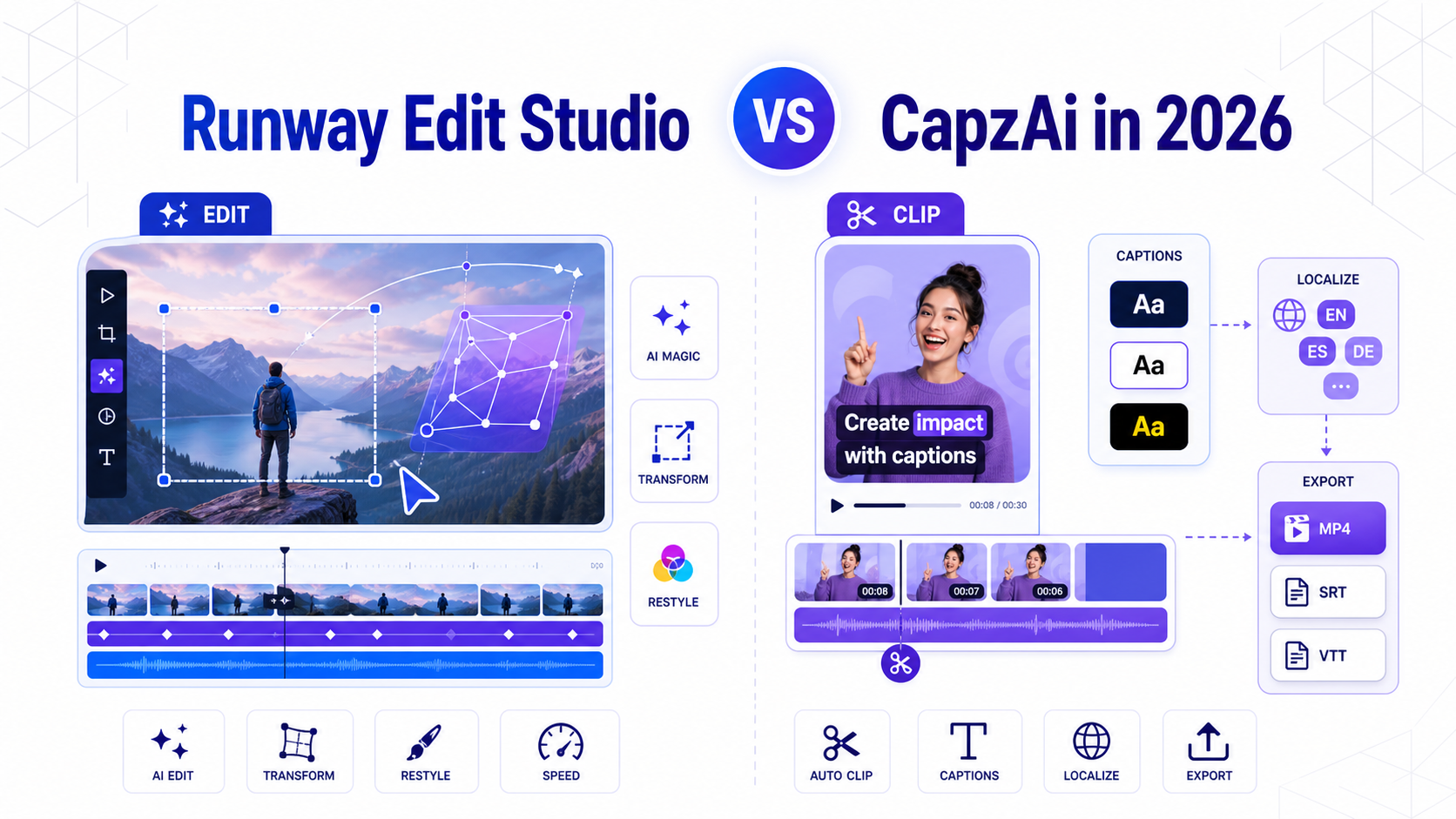
Runway's latest launch is a strong sign that AI video is shifting away from pure generation and toward practical editing.
On May 21, 2026, Runway launched Aleph 2.0 and Edit Studio. In the official announcement, Runway says creators can now edit up to 30 seconds of 1080p video, preserve more of the original footage, define changes from an edited reference frame, and apply edits across multiple shots.
That is a meaningful update. It pushes AI video closer to post-production instead of prompt-only generation.
But it also creates a common comparison mistake. Some creators will look at Runway Edit Studio, CapCut, Adobe Firefly Quick Cut, TikTok Smart Split, and CapzAi as if they all solve the same problem.
They do not.
If you are comparing Runway Edit Studio vs CapzAi in 2026, the cleanest framing is this:
- Runway helps you transform what the footage looks like.
- CapzAi helps you turn footage into short-form content that is ready to publish.
The Short Answer
Choose Runway Edit Studio if your bottleneck is visual transformation.
Choose CapzAi if your bottleneck is repurposing, captions, localization, and delivery for Shorts, Reels, TikTok, and multilingual social workflows.
The overlap is real, but the jobs are different.
What Runway Actually Launched
Runway's announcement is unusually clear about the product position.
According to the launch post, Aleph 2.0 and Edit Studio add:
- support for clips up to 30 seconds at 1080p
- more targeted edits with stronger preservation of the source video
- image-level control so a creator can define the desired result from a frame edit
- multi-shot editing across relevant cuts
Runway also says Edit Studio is designed for marketing teams, filmmakers, and small businesses that need to change footage they already have instead of generating an entirely new clip.
That last point matters. Edit Studio is not mainly about finding the best moment, building subtitle pacing, or localizing a talking-head clip into Arabic. It is about changing the footage itself.
Runway Edit Studio vs CapzAi at a Glance
| Category | Runway Edit Studio | CapzAi |
|---|---|---|
| Primary job | Transform existing footage | Repurpose footage into short-form deliverables |
| Best for | Visual changes, scene edits, campaign variants | Clipping, captions, translation, dubbing, exports |
| Core interaction | Prompt plus frame-based visual edit control | Upload plus editorial workflow and AI agent |
| Footage preservation | Major focus of Aleph 2.0 | Not the main product story |
| Caption workflow | Secondary or external | Core workflow |
| Translation and localization | Not a main product promise | Core CapzAi value |
| AI clipping from long videos | Not the main use case | Central use case |
| Short-form export workflow | Partial | Core |
| Best buyer | Creative teams reshaping visuals | Creators, agencies, and social teams shipping at volume |
Where Runway Edit Studio Wins
Runway is the better choice when the creative problem is visual, not editorial.
Examples:
- change the environment of an existing clip
- update wardrobe or scene details for a campaign variation
- relight a shot without a reshoot
- restyle footage for a new mood
- apply a consistent transformation across several cuts
That is where Aleph 2.0's promise of more precise preservation matters. Runway is trying to reduce the usual AI-editing problem where the model changes too much of the original footage.
If you already have the right clip and the right script, but the asset itself needs a stronger visual treatment, Runway is aligned with that need.
Where CapzAi Wins
CapzAi wins when the video itself is fine, but the content pipeline is slow.
That usually means:
- you recorded a podcast, webinar, interview, tutorial, or talking-head video
- you need strong short-form candidates from longer footage
- you need word-level captions that match a creator style
- you need subtitles translated for more than one audience
- you need an export that fits actual social publishing conditions
This is a different problem from changing the weather in a shot or turning a frame into a new environment.
Most short-form teams are not blocked because they cannot restyle footage. They are blocked because they cannot efficiently turn one source asset into many finished clips with hooks, captions, clean pacing, and localized versions.
That is where CapzAi belongs.
Related workflow: short-form video automation stack for 2026.
Why This Comparison Matters More in 2026
The market is getting more segmented, not less.
In February 2026, Adobe introduced Quick Cut in Firefly, describing it as an AI-powered first cut that helps creators move from raw clips to a structured edit quickly.
TikTok previously introduced Smart Split, which pushes long-to-short clipping into a platform-native creator workflow.
VEED launched its Subtitle API, which turns subtitle rendering into a programmable backend service.
Those launches point in the same direction: the market is dividing into specialized automation layers.
- first-cut and editing layers
- clipping and selection layers
- caption rendering layers
- localization layers
- final publishing layers
Runway is clearly pushing into the editing layer. CapzAi is strongest in the clipping-plus-caption-plus-localization layer.
The Hidden Cost of the Wrong Tool
The wrong tool does not only waste subscription spend. It wastes operator attention.
If you buy Runway when the real bottleneck is social publishing, your team still has to solve:
- clip selection
- subtitle readability
- hook emphasis
- language localization
- safe-zone placement
- export consistency across channels
If you buy CapzAi when the real bottleneck is changing the look of the footage itself, you will still need another system for advanced AI visual edits.
This is why "all-in-one AI video editor" messaging can be misleading. The most important question is not feature count. It is where your team loses hours each week.
A Better Mental Model
Think of Runway as a footage transformation engine.
Think of CapzAi as a short-form finishing and distribution engine.
A creator business often needs both types of capability, but not at the same stage.
One practical stack looks like this:
- Use your normal camera or editor to create the source asset.
- Use Runway if the footage itself needs visual changes or campaign variants.
- Use CapzAi to identify strong moments, apply captions, translate, dub, and export platform-ready versions.
That is not a hedge. It is a more accurate picture of how the category is separating.
Who Should Choose Runway
Runway Edit Studio is the better pick if:
- your team already knows which clip it wants
- the footage needs visual modification
- you are producing ad variations or post-production changes
- you care more about scene transformation than caption workflow
Who Should Choose CapzAi
CapzAi is the better pick if:
- you are repurposing long videos into shorts
- captions directly affect retention and readability
- you publish into multiple languages
- you need a creator-friendly review loop
- your success depends on finishing more social assets, not changing the original footage
Related reading: context-aware AI video clipping and how to dub video with AI while keeping voice energy.
Final Verdict
Runway Edit Studio is one of the clearest signs that AI video editing is maturing beyond simple generation. Aleph 2.0 looks useful for teams that need controlled visual changes to existing footage.
CapzAi solves a different and often more common creator problem: turning footage into clips that are captioned, localized, and ready to publish.
So the choice is not really about which platform is more advanced.
It is about which production bottleneck you need to remove first.
If your problem is footage transformation, Runway is the stronger fit.
If your problem is short-form throughput, captions, and multilingual publishing, CapzAi is the stronger fit.
Related articles
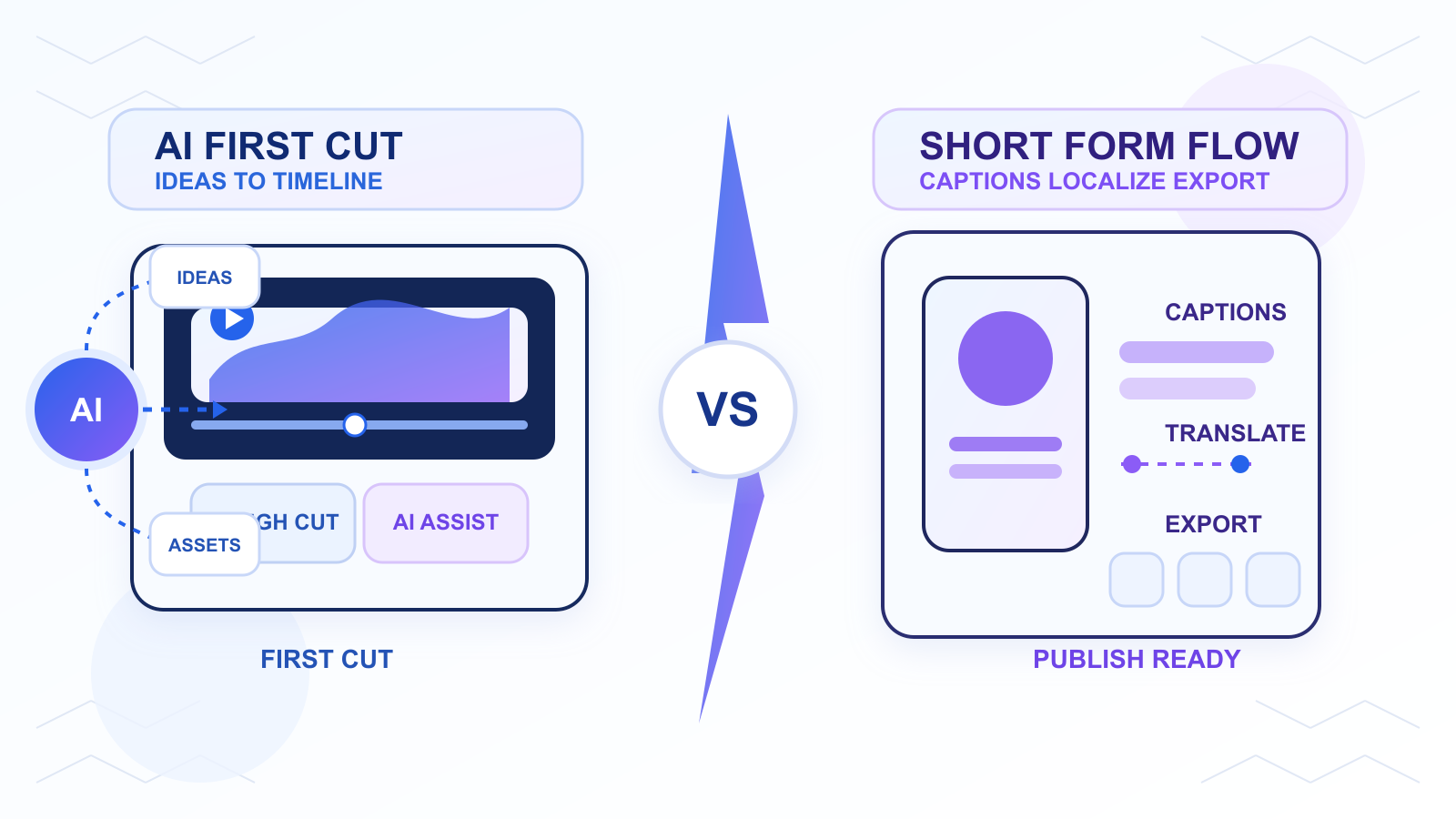
Adobe Firefly Video Editor vs CapzAi in 2026
Adobe is pushing agentic video creation and first-cut editing inside Firefly, but short-form teams still need a faster system for clipping, captions, localization, and export.
Read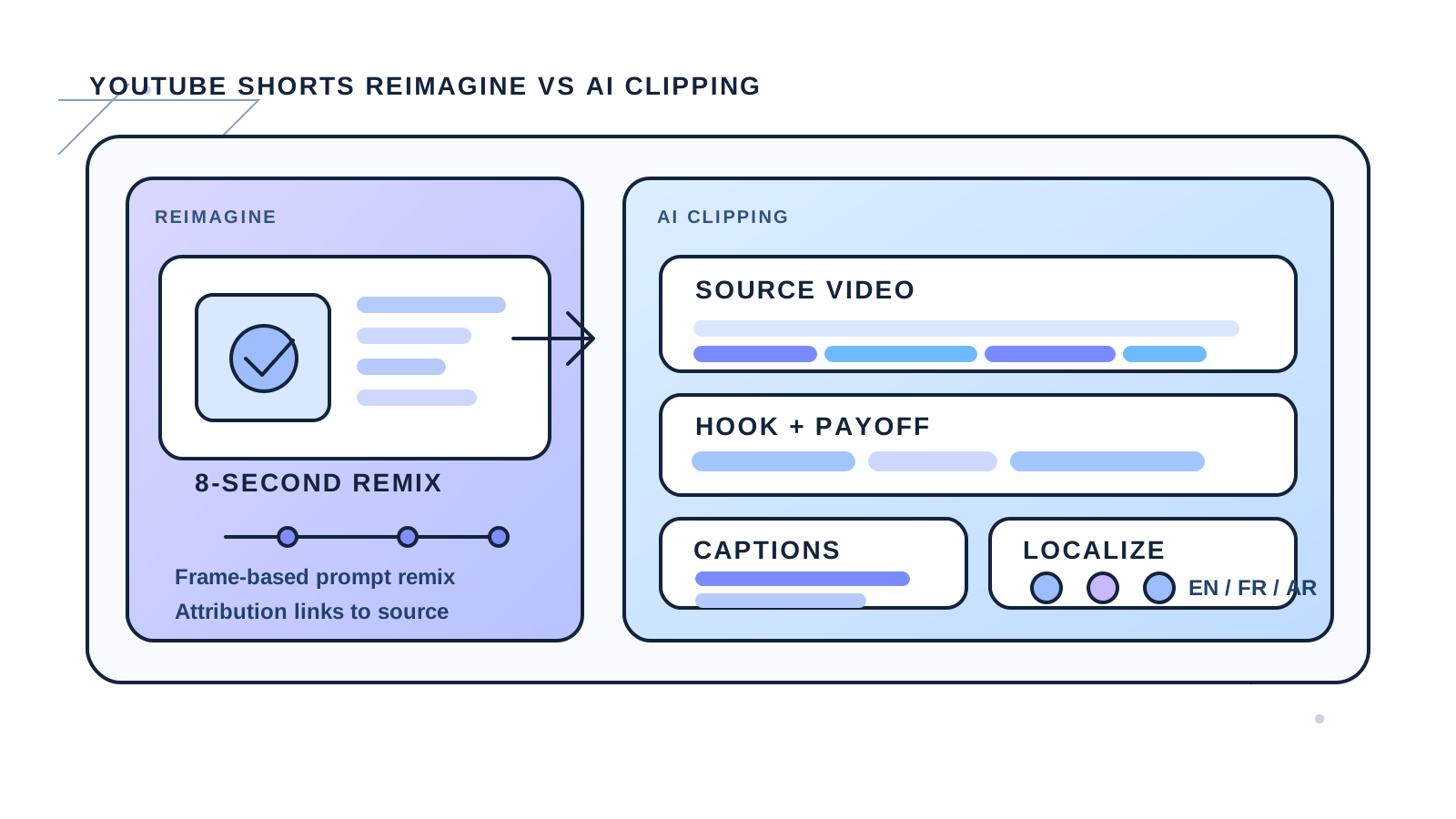
YouTube Shorts Reimagine vs AI Clipping in 2026
YouTube's new Reimagine remix tool opens a fresh creation path for Shorts, but it does not replace clipping, captions, or localization workflows.
Read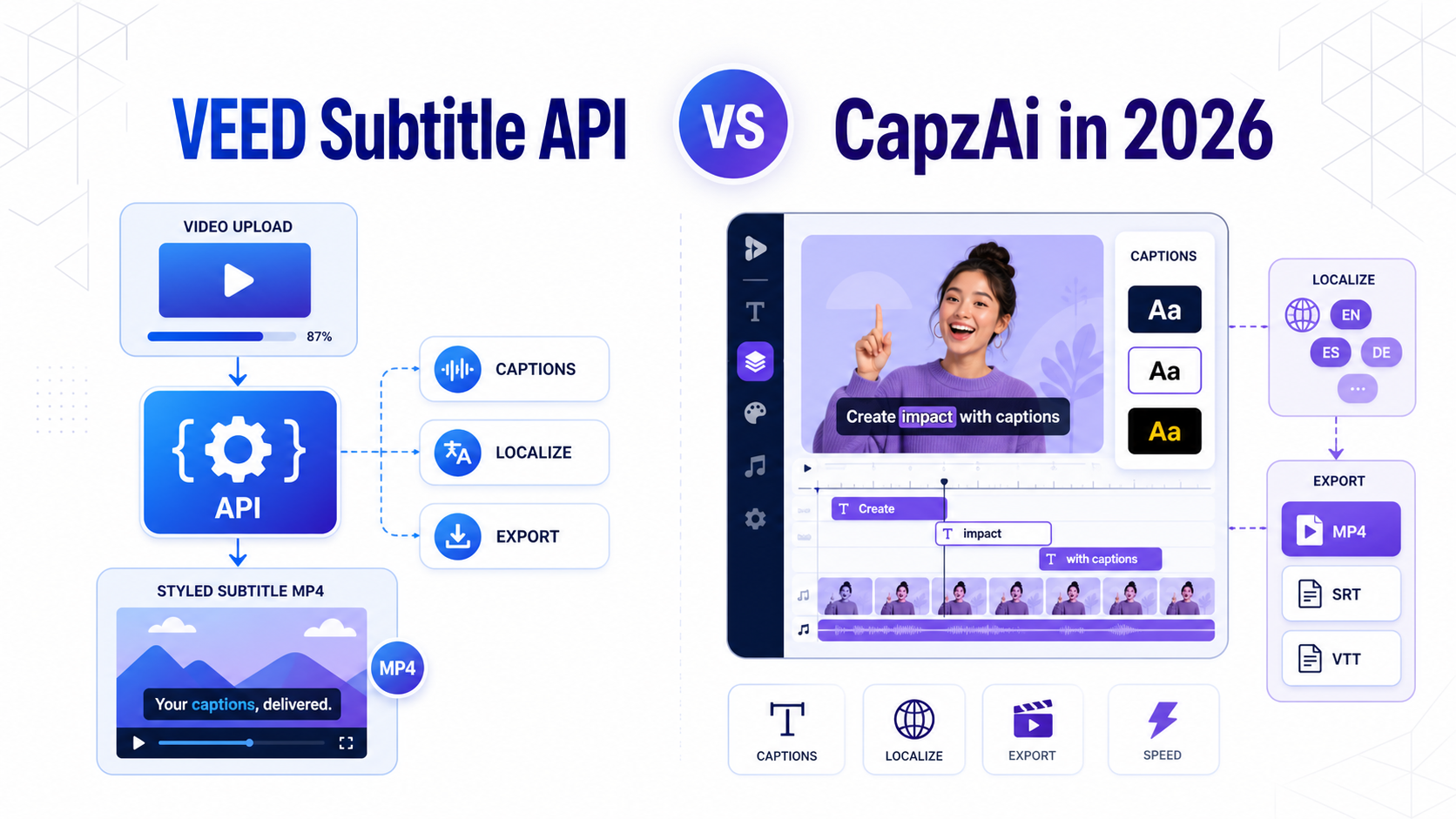
VEED Subtitle API vs CapzAi in 2026
A practical comparison of VEED's new Subtitle API and CapzAi for styled captions, localization, export workflows, and creator-speed publishing.
Read