Caption Language Trends 2026: What Creators Are Translating Into
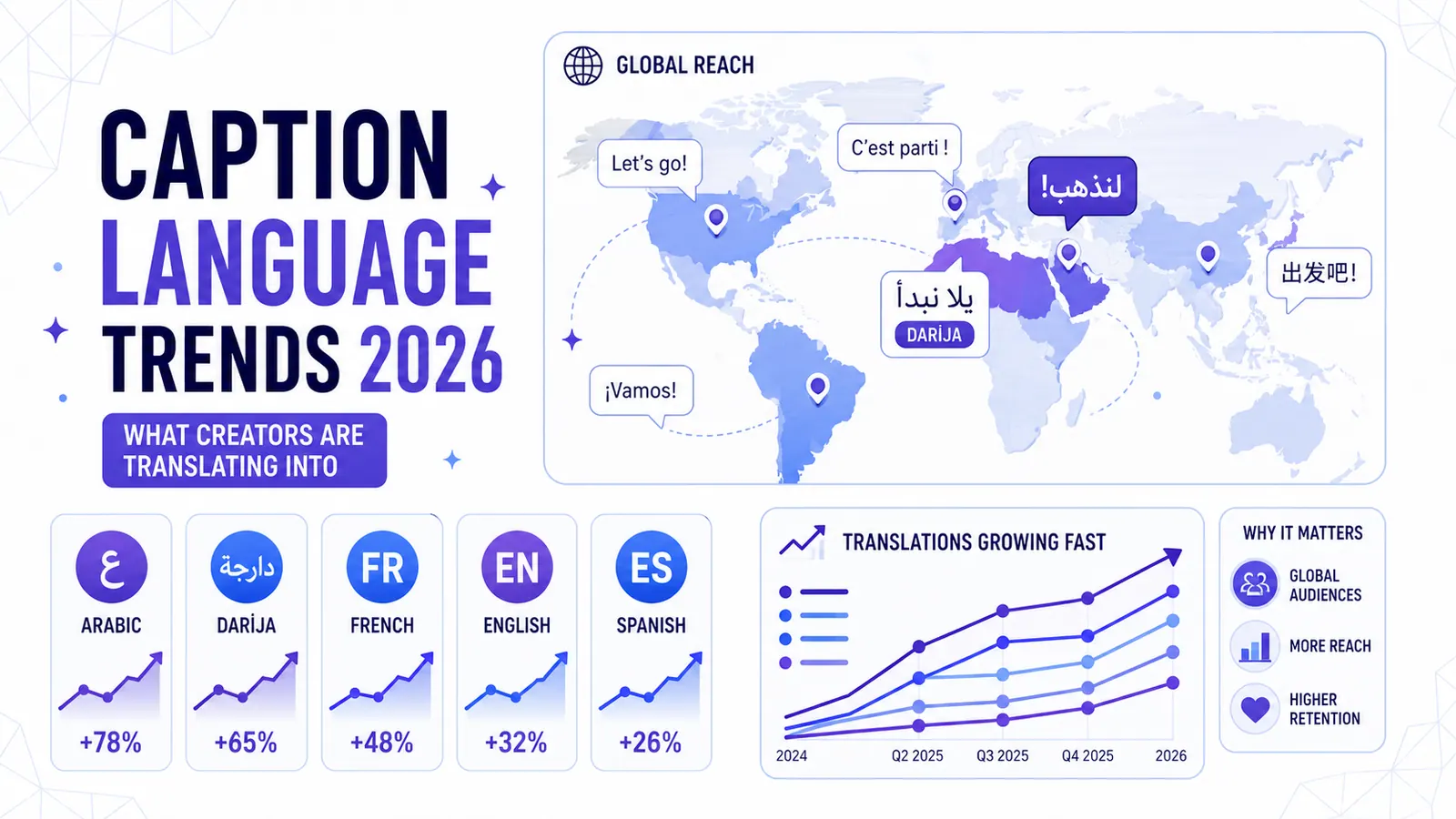
CapzAi data reveals a massive shift toward Arabic, Darija, and French translations as short-form creators chase unmonetized international audiences.
We process thousands of hours of video every month at CapzAi. Creators upload long podcasts and daily vlogs. They also process talking-head tutorials.
They use our AI to clip these videos into short-form assets. Then they translate the text. By tracking the target languages our users select, we see exactly where the creator economy is placing its bets.
The patterns from the first half of 2026 are clear. English remains the dominant source language, but target languages have shifted. Creators no longer just translate into Spanish or German.
They move aggressively into markets with high mobile penetration and specific dialect requirements. They want audiences in Riyadh and Casablanca. They are also targeting Dakar and Dubai.
Creators are doubling their output without recording new footage. They rely on AI voice dubbing and word-level captions to make older videos feel native to new regions.
We also see a complete abandonment of traditional subtitle formats in favor of hyper-kinetic text. Here is what our internal usage data reveals about video localization.
The MENA Growth Spurt: English to Arabic and Darija
Breaking the English Ceiling
Two years ago, a London creator making personal finance videos only targeted English speakers. Today, that same creator translates every video into Arabic. The Middle East and North Africa (MENA) region has staggering daily video consumption rates.
Saudi Arabia and the UAE consistently rank near the top globally for time spent on TikTok. However, English proficiency across the broader MENA region varies wildly.
If a video relies entirely on spoken English, it hits a hard ceiling. Adding Arabic captions removes that limit. We see this acutely in education and finance niches. Tech creators experience it too.
A coding tutorial filmed in Chicago finds a massive secondary audience in Cairo. The creator simply applied an Arabic text overlay.
Solving the RTL Technical Challenge
The technical hurdles that used to prevent this are gone. Arabic is a right-to-left (RTL) language.
Video editors like Premiere Pro traditionally handled RTL text poorly. They required frustrating workarounds or third-party plugins.
CapzAi built native RTL layout support from day one. Creators just select Arabic from the dropdown. The text aligns correctly, and punctuation sits in the right place.
The Surge of Moroccan Darija
More interestingly, we see a massive spike in localized dialects. Standard Arabic is formal. People do not speak it in casual conversation.
They speak regional dialects. Moroccan Darija is the standout trend for 2026.
Darija blends Arabic and French. It also incorporates Amazigh vocabularies. It is notoriously difficult for legacy translation tools to parse. We trained our systems specifically to handle it.
Creators in Europe are now translating English content directly into Darija. They want to capture the highly engaged North African diaspora.
A fitness influencer in Paris can speak English and run the video through CapzAi. They generate perfect Darija captions in our "viral pop" preset. The engagement rates on these highly localized videos routinely beat the English originals.
French: The Surprise B2B Language for Africa
Targeting Dakar and Abidjan
When people think of French translation, they usually picture audiences in France or Quebec. Our data tells a different story. The bulk of French translations on CapzAi are currently aimed at West and North Africa.
Senegal and Ivory Coast have booming tech sectors. Morocco shares this entrepreneurial growth. The business language in these regions is French.
We see B2B creators translating heavily into French to reach professionals in Dakar and Abidjan. They make videos about SaaS marketing. Other popular topics include supply chain logistics and remote team management.
Low-Effort LinkedIn Arbitrage
LinkedIn is the primary distribution channel for this content. The videos are usually professional talking heads.
A creator uploads a ten-minute market analysis. They use our auto-clipping tool to find the best distinct points.
They generate captions using our "classic" preset, which favors clean typography like 64pt Inter Bold. Finally, they translate the text into French. This strategy requires very little extra effort but opens up a completely uncrowded market.
Most American B2B creators ignore Francophone Africa. The ones who localize their content face zero competition. We observe creators landing enterprise consulting contracts simply because they were the only ones explaining AI workflows in French on LinkedIn feeds in Casablanca.
Low-Risk Experimentation
The pricing model encourages this experimentation. CapzAi operates on pay-on-export pricing at 20 credits per minute.
Creators do not pay a massive monthly subscription just to test a new language market. They spend a few credits to export a one-minute French clip.
If it bombs, they lose pennies. If it hits, they scale up.
The Rise of Bilingual Captions
Retaining Mixed Audiences
A strict translation often alienates a portion of the audience. If you replace English text entirely with Arabic, you lose the English speakers.
To solve this, creators are adopting the bilingual caption format. This involves displaying two languages on the screen simultaneously.
The most common pairing we see is Arabic script stacked below a Latin transliteration or English translation.
Engaging the Gen Z Diaspora
This format caters specifically to the Gen Z diaspora. Many young people of Arab descent living in Europe or North America understand spoken Arabic. However, they struggle to read the formal script quickly.
By providing the Latin transliteration alongside the Arabic, creators serve two distinct groups. They reach native readers in the Middle East and the diaspora audience in the West simultaneously.
Prompting the AI Agent
Creating this layout manually takes hours. You have to sync two separate text tracks perfectly. Our users handle it through the CapzAi Agent.
They open the chat-to-edit interface and type a command. "Add an English translation track above the Arabic track, make the English text 40pt Helvetica in gray, and keep the Arabic text in yellow."
The AI Agent executes the styling immediately. This dual-text approach also satisfies the algorithms.
Visual density keeps viewers engaged. Two lines of text changing simultaneously force the viewer to pause and read. Watch time increases, and the algorithm pushes the video to more feeds.
Check out how to style dual-language tracks for a deeper look at the exact settings top creators use.
The Death of Sentence-Level Subtitles
The End of Static Text
Standard subtitles are dead for short-form video. Netflix-style text sitting quietly at the bottom of the frame kills retention on mobile feeds.
We see our users actively avoiding traditional subtitle formats. Over 90 percent of the renders on CapzAi utilize word-level karaoke styling.
The psychology is straightforward. Mobile feeds are high-stimulation environments, and static text is boring.
When the text changes color exactly as the word is spoken, it creates a visual rhythm. The eye tracks the active word. The brain locks onto the synchronization between the audio and the visual change. You cannot look away easily.
Viral Presets and Visual Momentum
Creators rely on our five viral presets to achieve this. The "karaoke" preset highlights the active word in a bright primary color while surrounding words remain dimmed.
The "viral pop" preset bounces the active word forward. The "docu" preset offers a more restrained typewriter effect.
The "creative" preset allows for heavy drop shadows and custom font imports.
Bridging the Translation Gap
Word-level styling is especially critical for translated content. If a viewer listens to an English voice but reads French text, the cognitive load is high.
Highlighting the exact translated word as the English equivalent is spoken helps bridge the gap. It makes the video feel cohesive rather than dubbed.
This trend is absolute. If you are still rendering static sentence-level blocks for TikTok, you are sacrificing watch time.
The platforms reward visual momentum. Word-level highlighting provides this momentum without requiring flashy editing or expensive B-roll.
Caption-First Production Styles
Framing for Text
Historically, captions were an afterthought. You shot the video and edited the footage. Then you slapped text on at the end for accessibility.
In 2026, we see a massive wave of caption-first production. Creators are shooting video specifically to serve the text overlay.
They frame their shots differently. They leave massive amounts of negative space in the center or top third of the screen.
They know the CapzAi text engine will fill that space with 80pt bold text. They keep physical movements minimal to avoid distracting from the words.
Rhythmic Scripting
Pacing has also changed. Creators speak in rhythmic bursts and pause deliberately.
They know that a two-second pause allows the current caption block to linger before the next sentence clears it. Scripts are now written based on how the words will look visually.
A short, punchy sentence looks better in the "viral pop" preset than a long, rambling paragraph.
The Creator as Background Element
This approach turns the creator into a background element. The text becomes the primary visual focus.
This is incredibly effective for educational content. The viewer essentially reads a highly stylized flashcard while a human face provides secondary context.
We built our auto-clipping engine to recognize this specific pacing. When a creator uploads a long video, the AI looks for these deliberate cadences.
It isolates the high-impact statements that will look best as word-level text blocks. The creator then hops into the projects dashboard to review the clips and apply their chosen translation.
Cross-Border Arbitrage: Who Translates Where
Exporting Local Expertise
The flow of translation is not one-directional. We track distinct language-pair patterns based on creator geography.
We call this cross-border content arbitrage. Creators look for markets where their specific knowledge is scarce and use translation to bridge the gap.
Consider a creator based in Lagos, Nigeria. They produce high-quality tutorials on mobile app development in English.
We see these specific creators translating their output into French and Hausa. They distribute the English versions to the US and UK markets.
They push the French versions to Francophone West Africa and target the Hausa versions locally. They build three distinct channels from a single source video.
Arbitraging Production Costs
Conversely, we see creators in Casablanca starting with French or Arabic source material. They use our AI voice dubbing tool to generate an English voiceover.
They apply English word-level captions over the new audio. They are arbitraging their local production costs against high-paying US audience CPMs.
Scaling Without Marginal Cost
This is the core mechanic of the modern creator economy. You create the raw material once. You use software to bend that material into new shapes for new regions.
A single hour of recording yields twenty clips across four languages. The marginal cost of reaching a new country is nearly zero.
We see finance creators translating strictly into languages associated with high-income expat communities. We see gaming creators translating into every language we support just to push for raw view volume. The strategy dictates the language pairs.
CPMs and the Monetization Argument
Escaping Saturated Algorithms
Why go through the effort of translating a TikTok video? Multilingual creators report significantly better monetization.
Our internal observations suggest a clear revenue advantage for creators who localize. A creator relying solely on English limits their total addressable market. The English-speaking algorithmic feeds are highly saturated, and competition for views is brutal.
When a creator translates that exact same video into Arabic, they enter a less crowded feed. They accumulate views faster and diversify their audience base. If the US TikTok algorithm suppresses their content, their Middle Eastern viewership remains unaffected.
Balancing View Volume and Pay Rates
Platforms pay different rates depending on the viewer's geography. US views generally command higher CPMs.
However, the sheer volume of cheap views available in uncrowded international markets often offsets the lower per-view rate. Generating ten million views in Egypt might pay the same as one million views in California. Translation allows creators to aggregate massive view counts across multiple secondary markets.
Scaling Brand Deals
Brand deals also scale with language capability. A sponsor selling a digital product loves a creator who can guarantee distribution in three distinct regions.
The creator charges a premium. They provide the sponsor with localized versions of the ad read baked directly into the video using our dubbing and captioning tools.
You do not need a massive team to execute this strategy. You just need twenty minutes and a reliable AI studio. Our users handle entire localization workflows during their morning coffee.
What 2027 Brings: Predictions for Video Text
Dynamic Audio and Text Swapping
The current trends will accelerate. The friction associated with translation is gone. The next phase involves deeper integration between text and audio. Visual elements will also merge into this workflow.
We expect real-time dubbing to become standard. You will not have to export a separate video file for each language.
The video player itself will swap the audio and the caption track based on the viewer's phone settings. CapzAi is preparing our backend text structures to support these dynamic delivery systems.
Hyper-Local Dialect Parsing
Hyper-local dialect support will deepen. Translating into standard "Arabic" will feel as outdated as translating into "European."
Creators will demand specific regional text variations. They will target a neighborhood in Beirut differently than a suburb in Doha. We are continually refining our language models to parse these microscopic dialect shifts.
Text as the Visual Engine
Finally, we anticipate AI-generated B-roll that reacts directly to the text track. Currently, the text highlights as the word is spoken.
Soon, the background image will shift based on the specific noun the karaoke preset just highlighted. The caption will dictate the entire visual composition of the video.
The text is no longer just an accessibility feature. It acts as the core visual engine of the video.
If you ignore new languages and bold text styles, you abandon an enormous audience. Take your best-performing video from last month, translate it into a language you do not speak, and post it. The results will prove the strategy.
Related articles
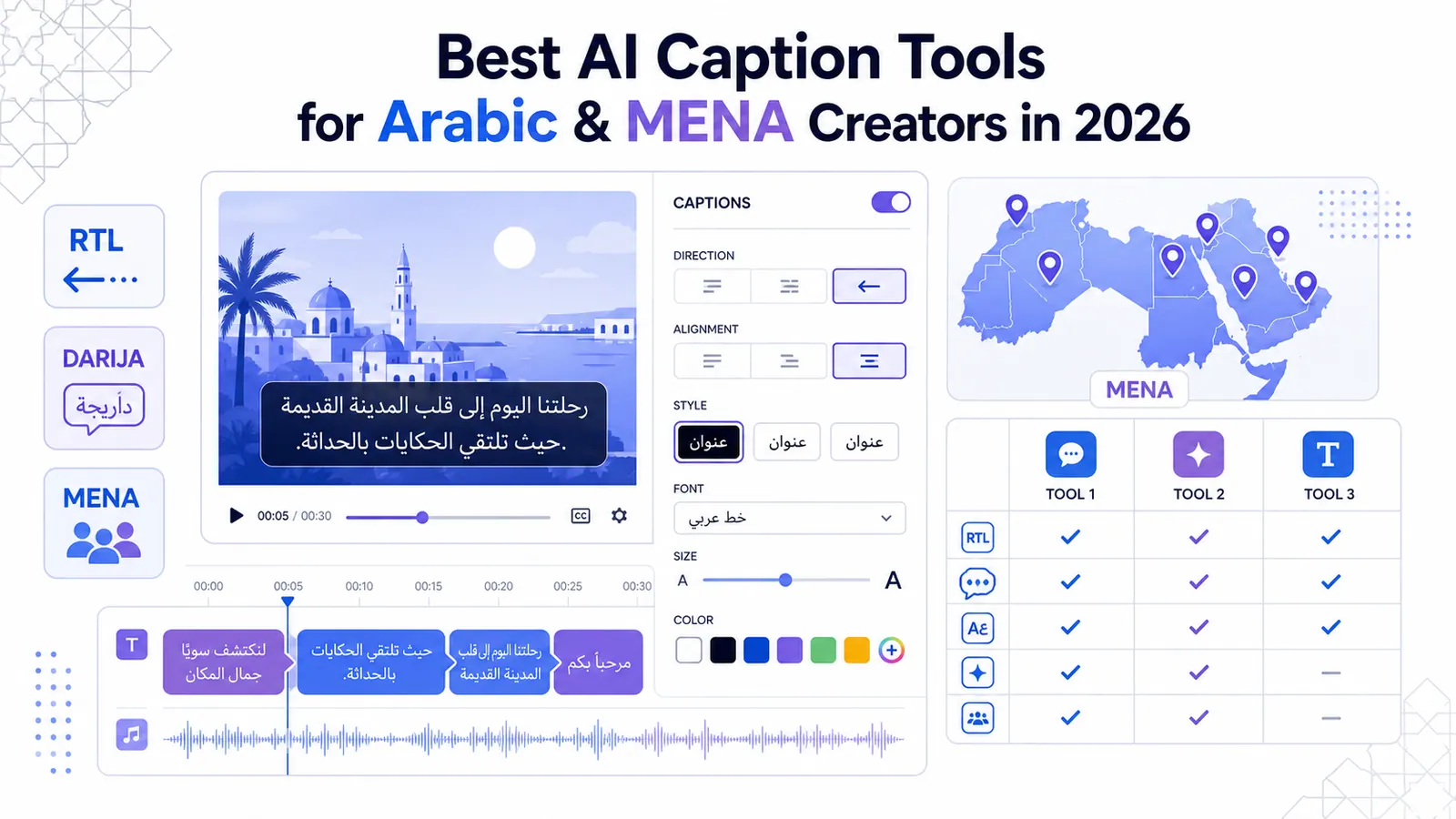
Best AI Caption Tools for Arabic & MENA Creators in 2026
Most video editing software ruins right-to-left text and misunderstands regional dialects. Here is an honest evaluation of the top AI caption tools for Arabic creators.
Read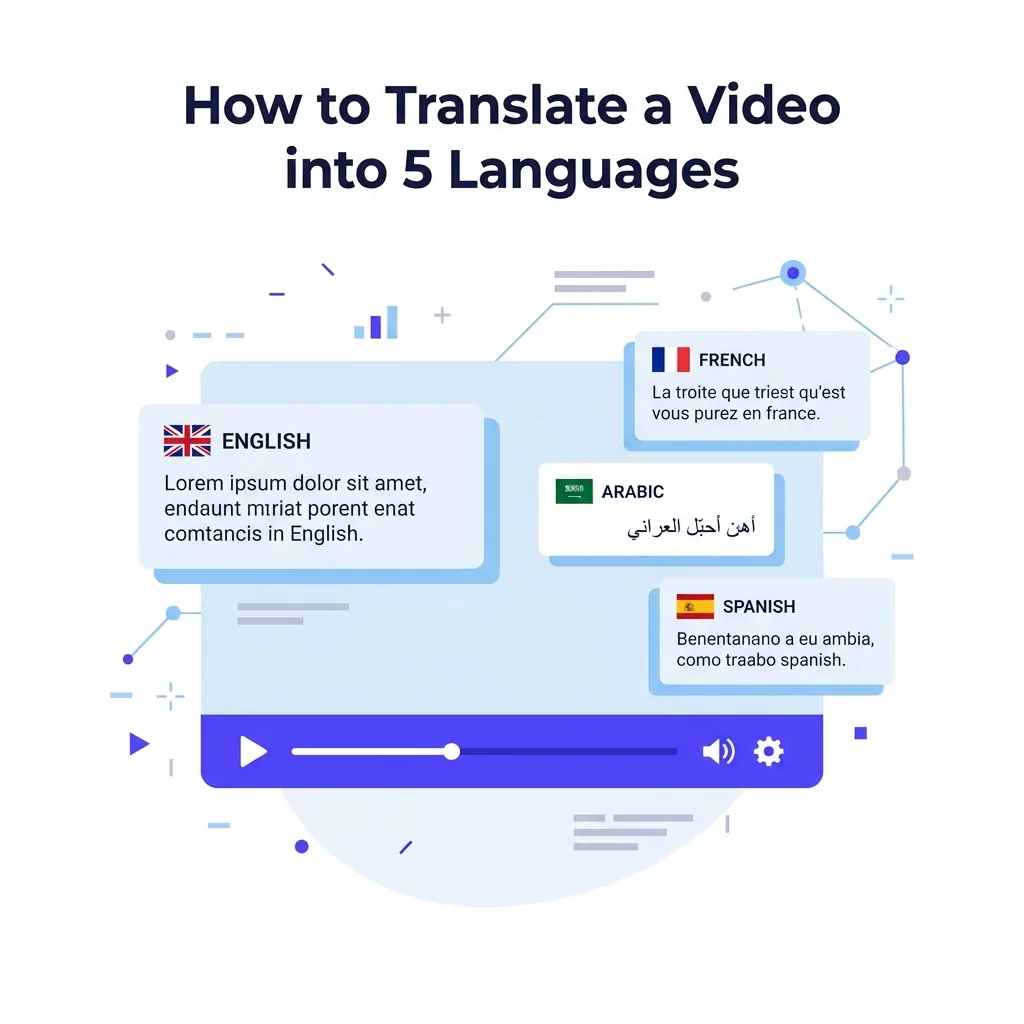
How to Translate Video Subtitles into 5 Languages in One Click
Expand your video reach to international markets by accurately translating subtitles into French, Spanish, Arabic, and Darija using CapzAi.
Read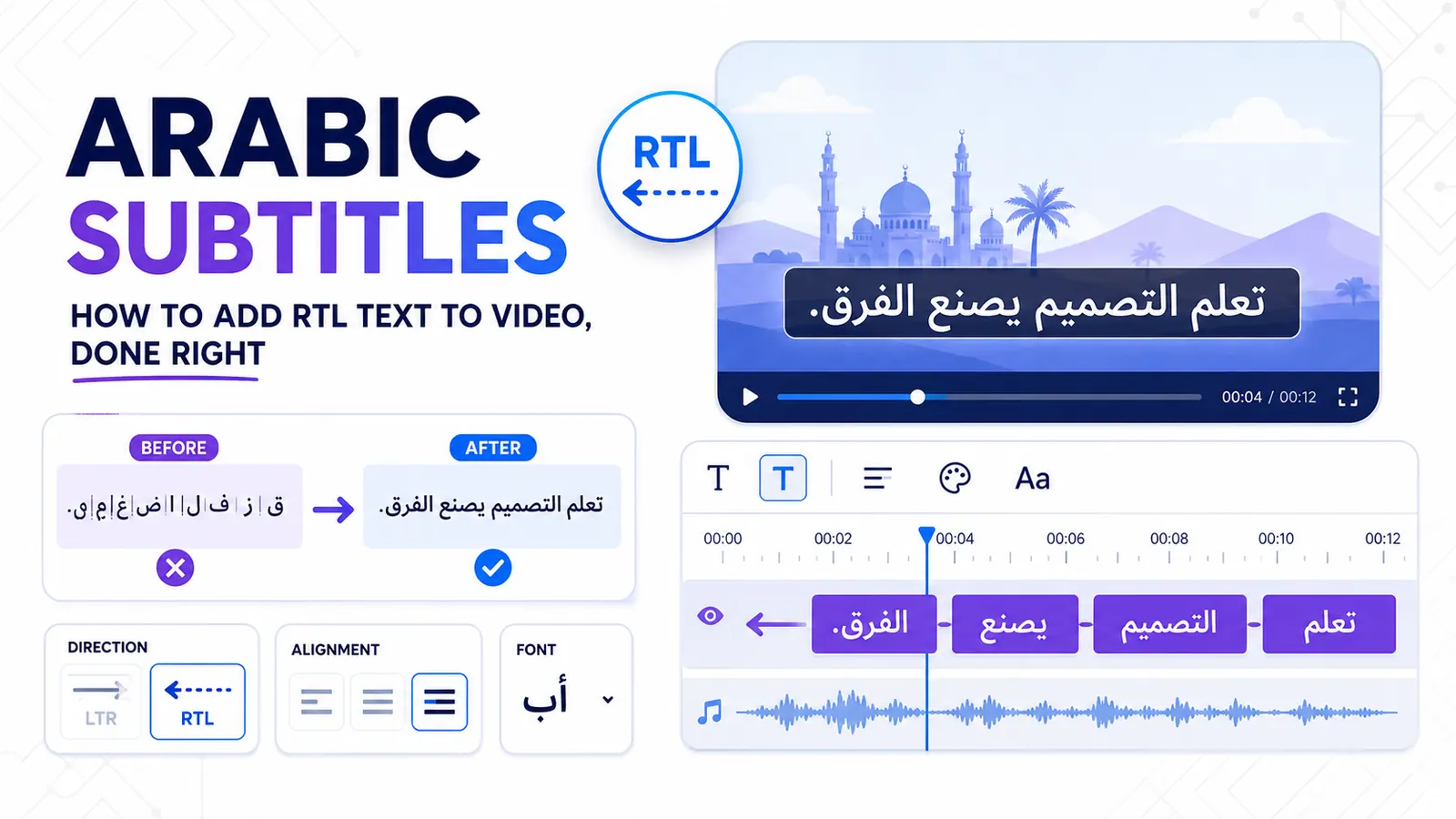
Arabic Subtitles: How to Add RTL Text to Video, Done Right
Stop fighting disconnected letters and misplaced punctuation with a workflow built for native Arabic text rendering.
Read