VEED vs CapzAi for Subtitles in 2026: Which Workflow Is Better for Short-Form Teams?
VEED's May 18, 2026 Subtitle API launch shows that burned-in captions are becoming infrastructure, but creators still need to decide whether a broad editor or a focused finishing workflow fits their content engine.
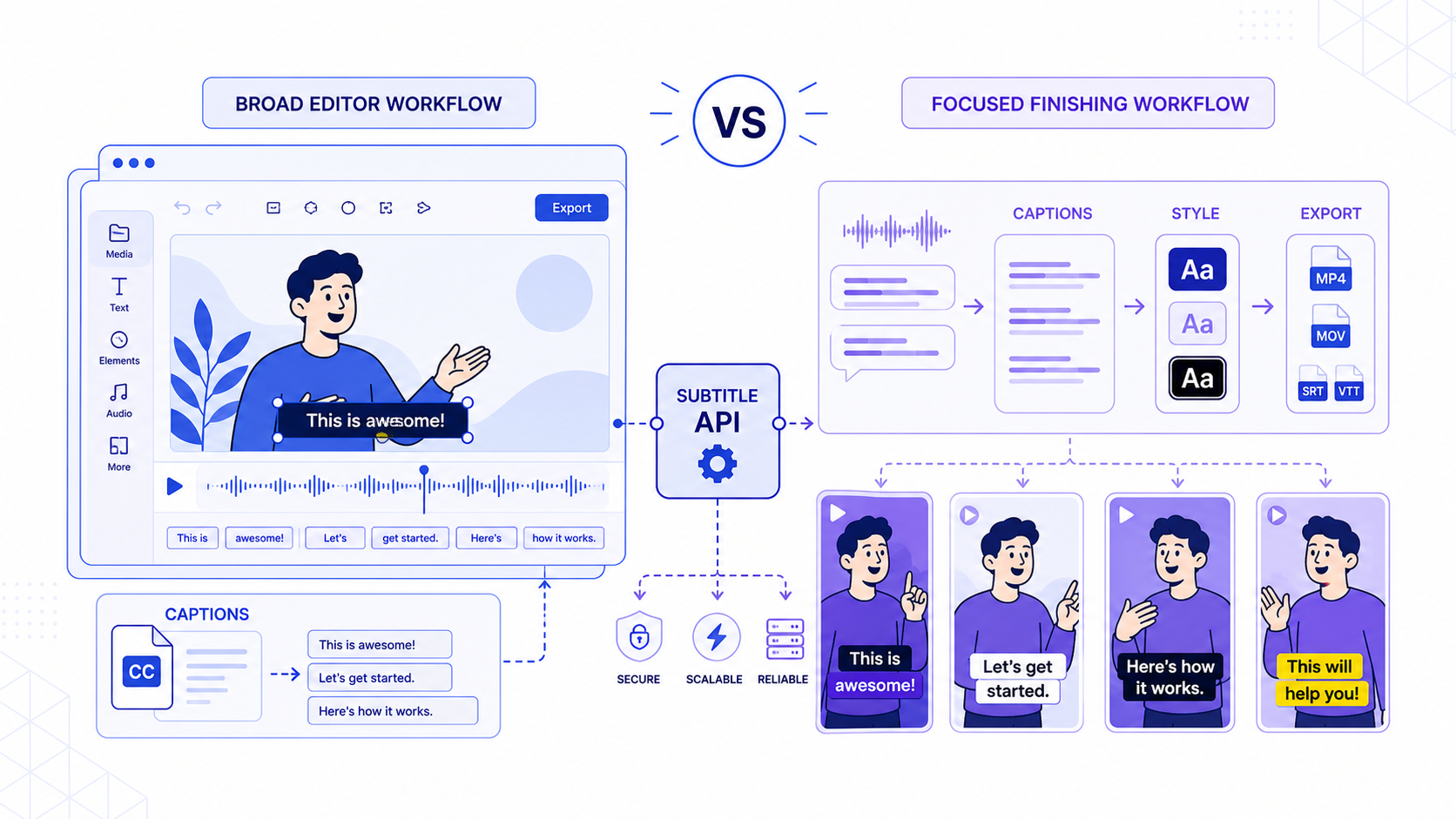
Subtitles are no longer a small feature inside a video editor. They are becoming infrastructure.
That shift became explicit on May 18, 2026, when VEED announced its Subtitle API. VEED described it as an end-to-end API for styled, burned-in subtitles, with automatic transcription, styling, rendering, word highlighting, and localization support. The company also positioned it as a fit for automated video pipelines, social media tools, and SaaS products. In VEED's own help documentation, the API starts at $0.10 per minute and scales by resolution and style complexity, which confirms the company is thinking about subtitles as an operational layer, not only an editor feature.
That is an important market signal for anyone building or publishing short-form video in 2026.
It also raises a practical buying question: if subtitles are now central enough to become infrastructure, should creators use a broad editor like VEED or a more focused short-form workflow like CapzAi?
The short answer
Choose VEED if you want a broad browser editor that can handle many different editing tasks in one place.
Choose CapzAi if your workflow is more specific:
- pull useful clips from longer source videos
- make captions readable and social-ready
- localize or dub the winning assets
- export polished short-form videos without living in a heavier timeline workspace
VEED is a broader workspace. CapzAi is a narrower but faster path for short-form finishing.
Why VEED matters more after May 18, 2026
VEED's Subtitle API announcement matters beyond developers.
When a major browser-based editor turns styled subtitles into an API product, it tells the market that subtitles are no longer just post-production cleanup. They are part of how platforms, agencies, and automation tools build content systems.
That aligns with what creators already know from experience:
- many viewers watch with sound off
- caption style affects retention
- highlighted words change pacing and emphasis
- multilingual subtitles expand distribution
VEED also says its main subtitle product can generate captions, burn them into video, translate them, and offer dynamic styles. That makes VEED a credible option when a team wants subtitle generation plus a wider editing environment in the same browser session.
Where VEED wins
VEED is attractive when the editing job is broad and messy.
If your team needs to mix subtitles with:
- multiple media layers
- timeline edits
- text overlays
- general browser-based production
- training or marketing video variants
then VEED makes sense. The product is designed as a fuller editor, not only a caption tool.
That is valuable for agencies, internal marketing teams, and creators who want one tab to cover many steps.
VEED also has a strong story for teams that think programmatically. The Subtitle API means the product can fit into larger automated video systems, not only manual editing sessions.
Where VEED becomes heavier than necessary
The tradeoff is focus.
A broad editor is useful when you need broad editing. But many creators do not actually need a browser NLE every time they publish a short clip. They need a faster answer to a simpler problem:
- which clip should I post
- do the captions read cleanly on mobile
- can I localize this version
- can I export the finished file now
When those are the main questions, a wide editor can become overhead. You spend more time inside a general workspace than you spend improving the actual short-form asset.
That is the main reason a focused tool like CapzAi exists.
VEED vs CapzAi
| Workflow area | VEED | CapzAi |
|---|---|---|
| Primary job | Broad browser-based video editing | Focused short-form finishing and localization |
| Subtitle capabilities | Strong caption generation, styling, translation, burn-in | Strong caption review, styling, safe-zone-aware short-form finishing |
| Best for | Teams that want editing plus subtitles in one workspace | Teams that need quick clip-to-caption-to-export flow |
| Clipping and repurposing | Possible within a broader editor | Core workflow emphasis |
| Localization | Available in subtitles and API flows | Integrated with short-form finishing and export review |
| Workspace shape | Wider, more general | Narrower, more focused |
Neither approach is universally better. The right choice depends on what work you are actually doing most often.
Subtitle quality is not only about transcription accuracy
This is where a lot of product comparisons stay too shallow.
Good subtitles are not only accurate words on screen. They also need:
- clean line breaks
- readable pacing
- emphasis that feels intentional
- placement that survives platform UI
- visual consistency across clips
VEED clearly understands this. Its product pages emphasize dynamic subtitles, styling options, burned-in exports, and translation support. That is part of why it has remained relevant.
But short-form teams also need the surrounding workflow to stay efficient. If the subtitle system is good but the path from raw source to published clip is still too heavy, the production engine slows down anyway.
CapzAi wins that narrower job more often.
Focus matters when the source is long-form
A lot of social content does not begin as a polished vertical video.
It begins as:
- a podcast
- a webinar
- a founder talking to camera
- a client testimonial
- a product demo
- a UGC recording session
From there, the team needs to find the right moment, shape the hook, style the subtitles, and publish a clean export. That is a workflow problem more than a timeline problem.
CapzAi is stronger when you want one path from source footage to publish-ready short clips without taking a detour through a broad editing suite.
Localization changes the decision
The moment your team serves more than one market, subtitles stop being a simple add-on.
Translated captions change line length. Different languages change reading speed. RTL text makes layout quality much more obvious. Audio dubbing may also become part of the same pipeline.
VEED can support multilingual subtitle workflows, and its API announcement reinforces that point.
CapzAi becomes more attractive when localization is tied directly to short-form distribution and review. The workflow is not only "translate the text." It is "ship a captioned, localized asset that still feels native on a phone."
That is a tighter brief, and focused products usually handle tight briefs better.
The hidden question is not features. It is operating model.
Most teams do not buy a subtitle tool once. They repeat the workflow every week.
That means the more useful question is:
What operating model fits your content engine?
VEED fits teams that want a fuller browser studio and can tolerate the extra surface area because they genuinely use it.
CapzAi fits teams that care more about:
- speed from source to clip
- clear subtitle finishing
- translation and dubbing tied to the same path
- exporting the exact versions that are worth shipping
That is why focused workflows can outperform feature-rich editors even when the editor looks more powerful on paper.
Should you choose VEED or CapzAi?
Choose VEED if:
- you want a browser editor that covers many jobs
- your team often needs general timeline editing
- you care about API-level subtitle infrastructure for larger systems
Choose CapzAi if:
- subtitles are mainly part of your short-form growth workflow
- you want less workspace overhead
- clipping, caption finishing, and localization belong in one faster path
- you prefer reviewing and exporting only the assets that are ready
VEED's May 18, 2026 Subtitle API launch was an important signal. It showed that caption styling is no longer a side feature. It is now important enough to be sold as infrastructure.
But infrastructure is not the same thing as workflow fit.
If you need a broad browser studio, VEED is a serious option. If you need a cleaner path from source footage to captioned, localized short-form exports, CapzAi is the better workflow in 2026.
Get Started with CapzAi
If your team mostly wins by shipping clean captioned clips, not by spending time in a broad editor, CapzAi is the practical choice. Use it to turn long-form footage into short social assets, apply readable captions, localize the winners, and export only the versions worth posting.
Related articles
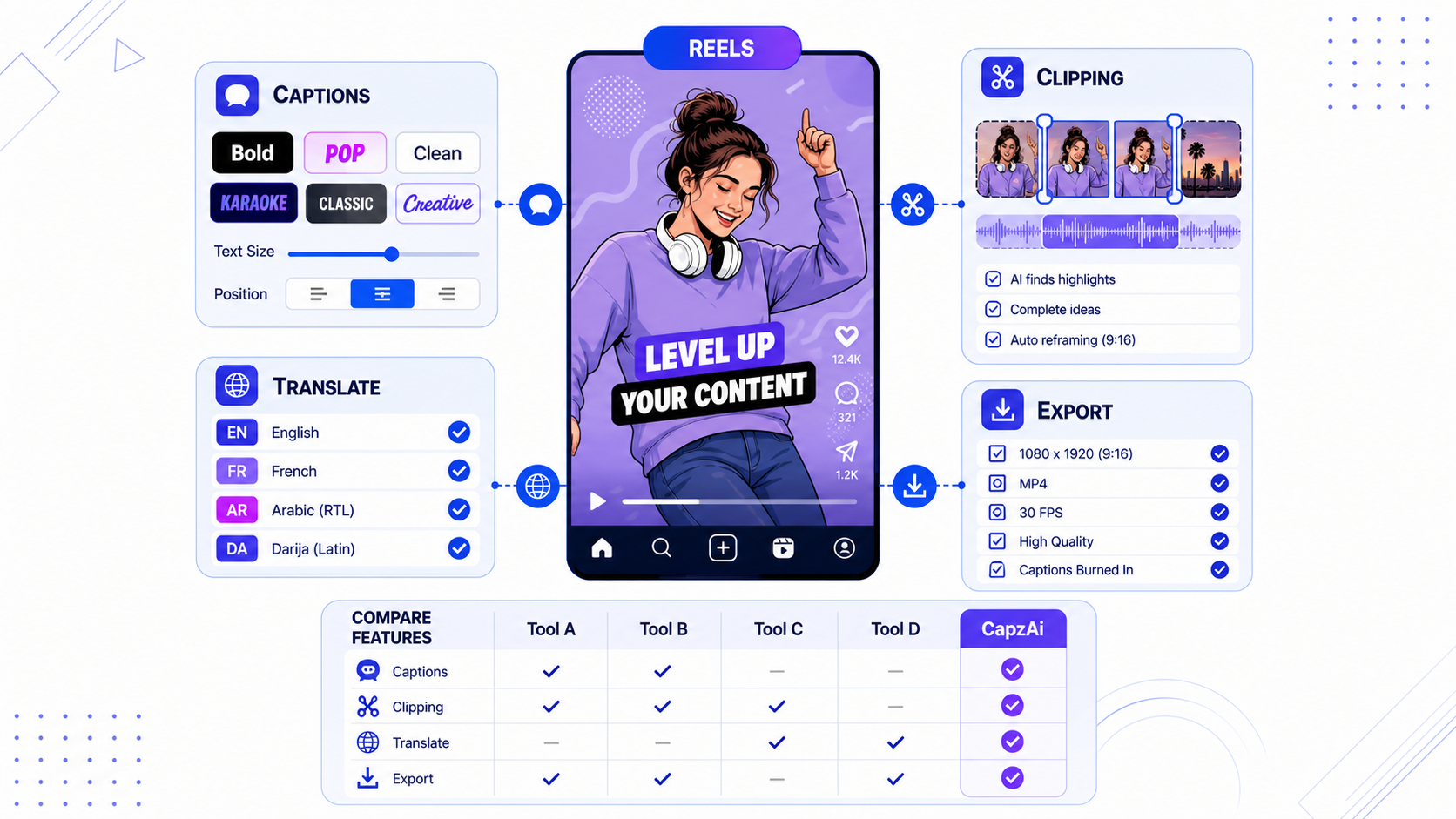
Best Instagram Edits Alternatives for Reels Creators
Instagram Edits is improving fast, but Reels creators still need stronger caption styling, translation, clipping, and export workflows.
Read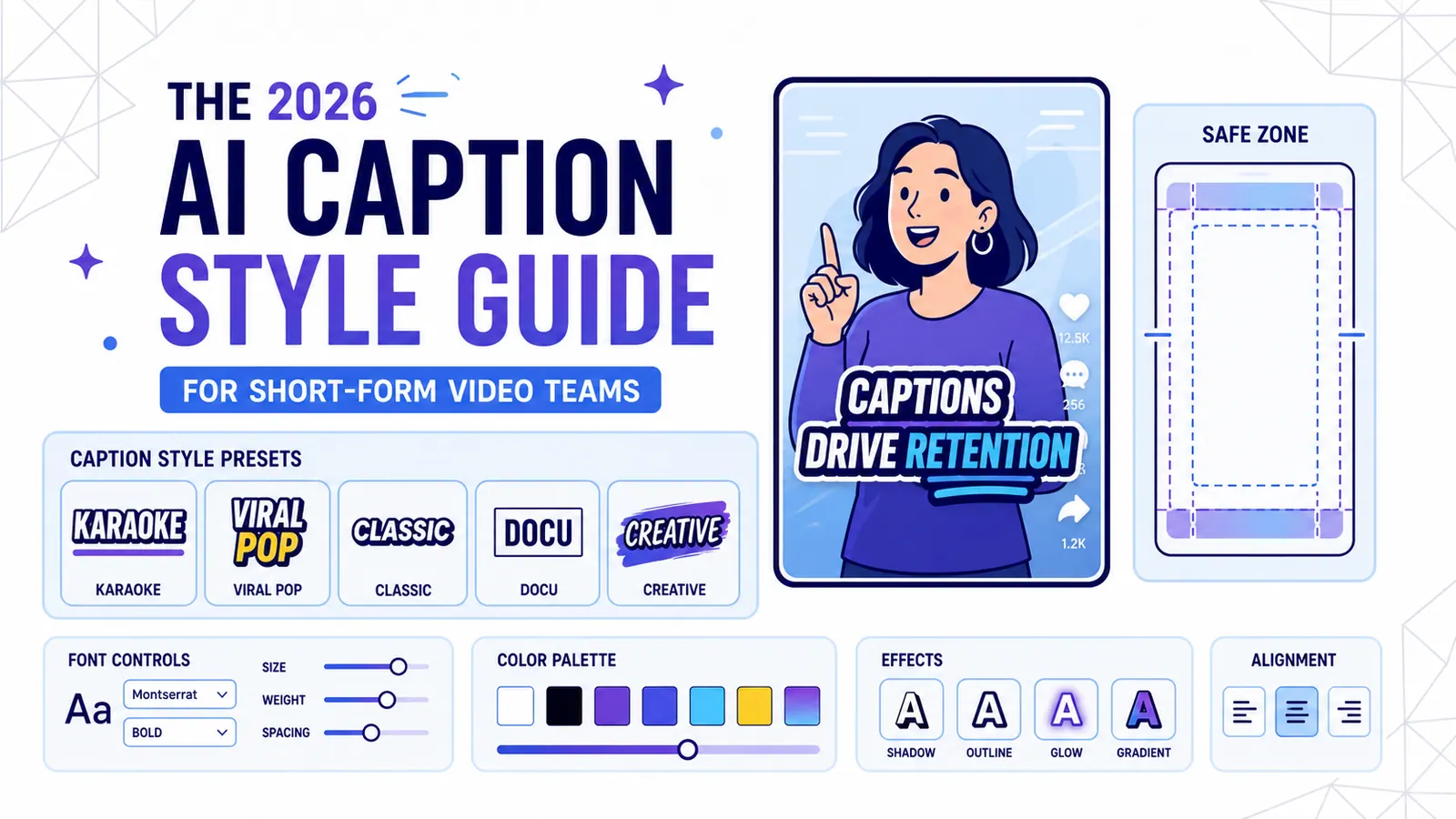
The 2026 AI Caption Style Guide for Short-Form Video Teams
A practical style system for creators and marketing teams who want captions that improve retention without turning every video into visual noise.
Read
Adobe Firefly Video Editor vs CapzAi in 2026
Adobe is pushing agentic video creation and first-cut editing inside Firefly, but short-form teams still need a faster system for clipping, captions, localization, and export.
Read