
TikTok Local Feed for Small Businesses: What to Change in Your Video Workflow in 2026
TikTok's Local Feed changes how nearby customers discover creators and businesses. Here is the short-form workflow local teams should use now.
Quick answer
TikTok's Local Feed is not just another tab. It is a signal that local discovery is becoming a first-class short-form behavior.
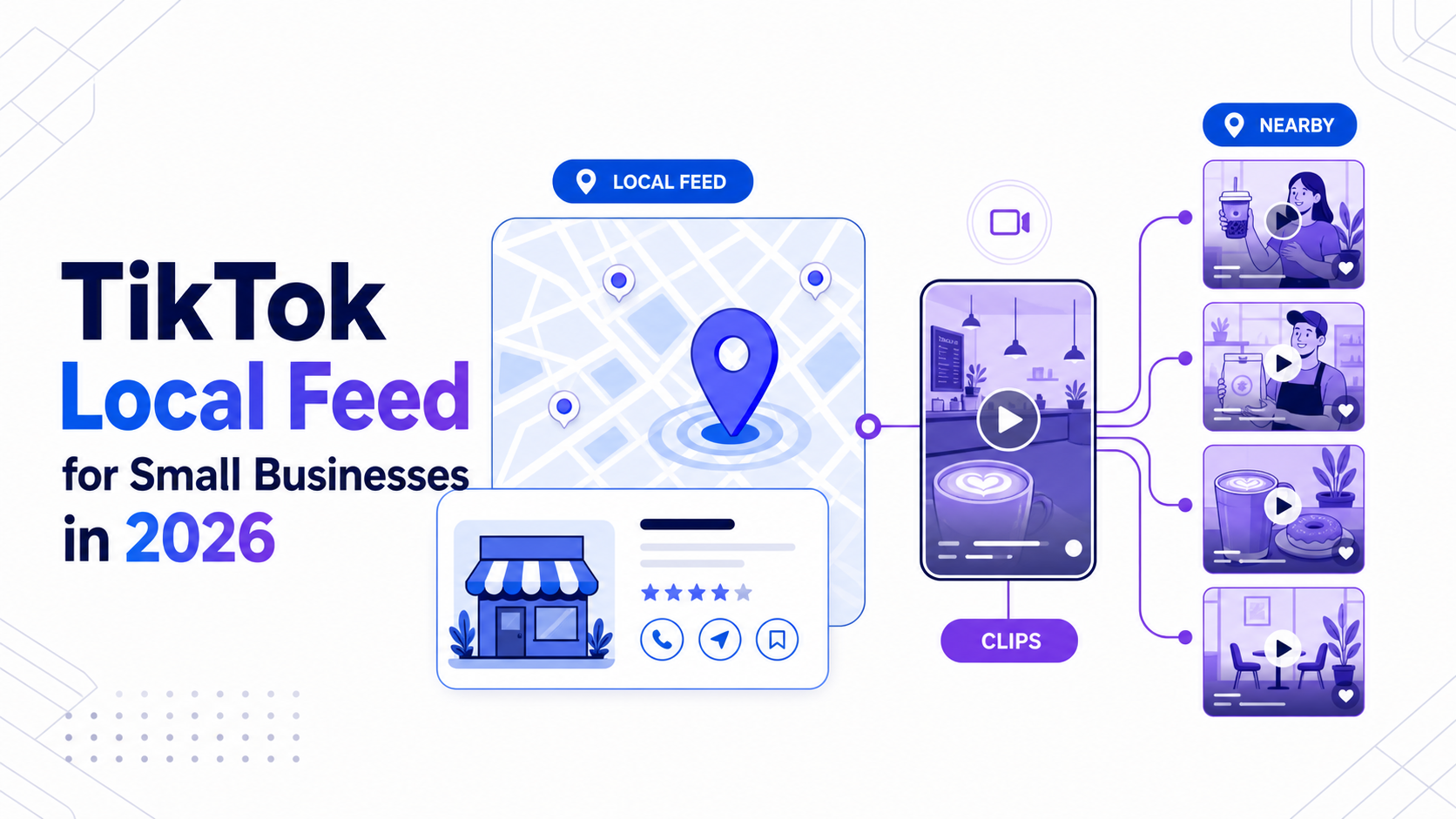
On February 11, 2026, TikTok announced the Local Feed, a home-screen tab built to help people discover nearby content, businesses, services, events, and creators. TikTok said posts in that feed are shown based on location, topic, and when the content was posted.
If you run a restaurant, gym, clinic, salon, shop, agency, or creator-led local brand, that changes the editing brief. Your videos now need to do two jobs at once:
- stop the scroll
- prove local relevance fast
That is exactly why generic caption templates and vague hooks start underperforming.
Why this matters now
TikTok has been moving toward stronger business discovery for a while, but the 2026 updates make the direction hard to ignore.
In the Local Feed announcement, TikTok said:
- 7.5 million businesses use TikTok in the U.S.
- 84% of TikTok small business users say the platform helped grow their business
- 74% say TikTok helps them connect with their local community
Then on May 19, 2026, TikTok said in its Built on TikTok small business post that searches for "small business" increased 479% during Q1 2026. The same post says over 57% of users bought from a newly discovered brand within days, and almost 90% of users who discovered a new brand made a purchase within a month.
That is not a minor product experiment. It is a discovery and conversion signal.
What Local Feed changes in the actual edit
Local Feed does not mean every business should paste a city name onto the screen and call it strategy.
It means the edit itself needs to carry local proof.
The strongest local short-form videos usually make four things obvious early:
- where this business or creator is
- who the content is for
- what problem or experience is being shown
- why someone nearby should care today
If those signals arrive too late, the clip feels broad and forgettable.
The workflow shift local teams should make
Most local businesses still create one polished brand video and hope it works everywhere.
That is the wrong shape for Local Feed.
A better workflow is:
- record one source video with clean speech and several location-specific moments
- clip it into multiple short angles, each built around a single neighborhood, problem, product, or offer
- add captions that keep the place and action clear without covering the frame
- export variants for TikTok, Reels, and Shorts instead of treating TikTok as the only endpoint
CapzAi fits here because the bottleneck is usually not filming. It is turning one source into several readable, local, publish-ready assets.
What to say in the first three seconds
For Local Feed, the first line should usually anchor place or intent.
Examples:
- "Best post-workout meal in downtown Austin."
- "If you live in Brooklyn and need a fast skin-fade, watch this."
- "Three things parents in Casablanca ask before booking swim lessons."
Those are better than generic openings like:
- "Come with me today"
- "You won't believe this"
- "POV: running a business"
Broad hooks can still go viral. They are just weaker when the platform is creating a dedicated path for nearby discovery.
Caption strategy for Local Feed
Captions matter more in local discovery than many teams expect.
They help in three ways:
- they make the location context visible with sound off
- they keep offers, landmarks, and service names understandable
- they make the clip easier to repurpose into Instagram Reels and YouTube Shorts
For local business clips, good captions are usually:
- short
- high contrast
- placed above TikTok UI pressure zones
- built around one idea per subtitle block
Bad local captions usually fail in the opposite direction. They are dense, centered too low, or stuffed with too many words that bury the local point.
What to show on screen
The strongest Local Feed edits usually include at least two kinds of place proof:
- visual proof
- language proof
Visual proof includes storefronts, street context, neighborhood details, menus, interior shots, or recognizable landmarks.
Language proof includes local phrasing, local problem statements, community references, and direct mention of area names when they are genuinely useful.
This does not mean keyword stuffing a city into every sentence. It means editing the clip so a nearby viewer can instantly tell, "this is for people like me, in a place like mine."
Why local teams should publish more variants, not longer videos
TikTok's October 28, 2025 Smart Split announcement showed where the tooling is heading: more clipping, reframing, transcribing, and structured creation help.
TikTok also said AI Outline can generate hooks, titles, hashtags, and a six-part structure from a prompt or a highly searched topic. That is useful for ideation.
But ideation is not the same as finishing.
For local businesses, the value is rarely one long polished explainer. The value is multiple short assets such as:
- one neighborhood-specific hook
- one offer-specific clip
- one testimonial clip
- one "how to find us" clip
- one event or inventory update
That gives you more shots at matching local intent.
A practical Local Feed publishing stack
Use TikTok's native tools for trend context and local posting behavior. Use a specialist finishing layer when you need the videos to stay readable, reusable, and consistent.
A practical stack looks like this:
| Stage | Best tool | Why it matters |
|---|---|---|
| Planning | TikTok search, comments, AI Outline | Find local phrasing and current demand |
| Filming | Phone camera or native app | Capture authentic local context |
| Clipping | CapzAi | Turn one source into several targeted variants |
| Captions | CapzAi | Keep service names, offers, and place references readable |
| Publishing | TikTok | Post natively with local timing and context |
| Repurposing | CapzAi exports | Reuse the same asset for Reels and Shorts |
Where CapzAi helps most
CapzAi is not the Local Feed itself. It is the production layer that makes Local Feed content easier to ship well.
That matters when your team needs to:
- create multiple local cuts from one source video
- keep caption placement clean across busy storefront footage
- export versions for TikTok, Reels, and Shorts
- test one message across several neighborhoods, languages, or audience segments
If you serve bilingual or multilingual markets, the advantage gets bigger. A local business in Morocco, Miami, Montreal, or Dubai often needs content that travels across language context without turning into caption clutter.
What to do this week
If you want a simple operational change, do this:
- Pick one existing long video or talking-head clip.
- Cut three versions, each aimed at one local intent.
- Rewrite the opening line so place or audience is clear by second three.
- Keep subtitle blocks short and above the lower interface area.
- Publish natively, then review which local angle gets comments, saves, and profile visits.
That is a better Local Feed test than making one generic "about us" video.
Final take
TikTok's February 11, 2026 Local Feed launch matters because it gives local relevance more product support than before. TikTok's May 19, 2026 small-business post strengthens the same conclusion: local discovery is becoming a serious growth channel, not a side effect.
For small businesses and local creators, the winning move is not just to post more. It is to publish sharper local variants with cleaner hooks, clearer captions, and stronger place proof.
If your team already has source footage, CapzAi helps turn that footage into the kind of short, readable, location-aware assets that Local Feed is more likely to reward.
Fast facts
- TikTok Newsroom: on February 11, 2026, TikTok announced Local Feed, a tab that highlights nearby creators, businesses, services, and events based on location, topic, and recency.
- TikTok Newsroom: TikTok says 84% of small business users say the platform helped grow their business and 74% say it helps them connect with their local community.
- TikTok Newsroom: on May 19, 2026, TikTok said searches for "small business" rose 479% in Q1 2026, over 57% of users bought within days of discovery, and almost 90% bought within a month.
FAQ
What is TikTok Local Feed?
It is a TikTok tab announced on February 11, 2026 that surfaces nearby creators, businesses, services, and events using signals such as location, topic, and posting recency.
How should local businesses change their short-form workflow?
Create more local variants from one source video, put place or audience context in the first three seconds, and keep captions short and readable so the clip works with sound off.
Why does this matter beyond TikTok?
Because strong local hooks and clean captions also make the same asset easier to repurpose into Instagram Reels and YouTube Shorts without rebuilding the edit from scratch.
Related articles
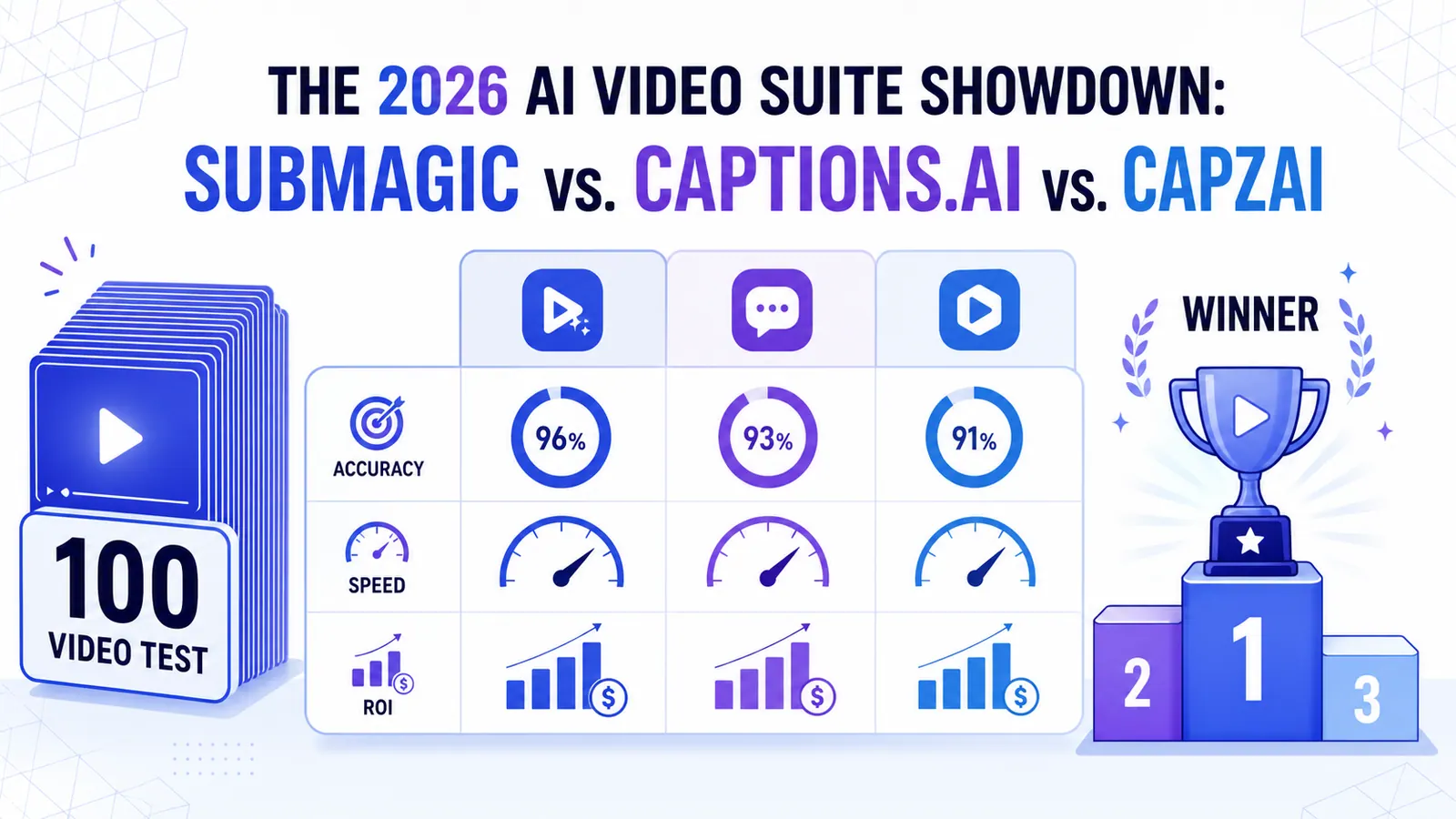
The 2026 AI Video Suite Showdown: Submagic vs. Captions.ai vs. CapzAi
We put the top AI video tools through a 100-video stress test. Here is how Submagic, Captions.ai, and CapzAi actually compare when it comes to accuracy, speed, and ROI.
Read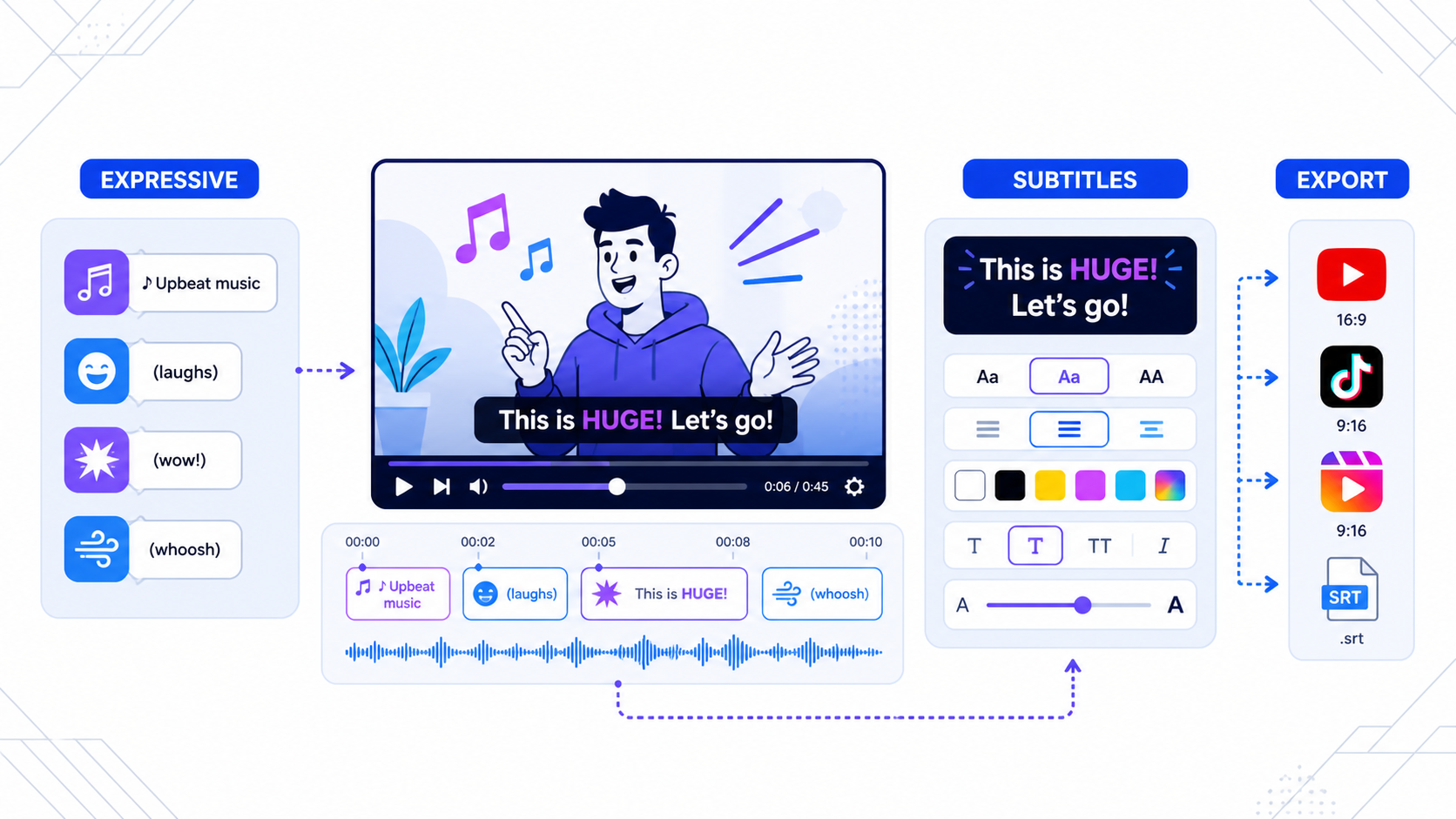
YouTube Expressive Captions vs Custom Subtitles: What Creators Should Use in 2026
YouTube's expressive captions improve accessibility, but they do not replace creator-controlled subtitle design for Shorts, Reels, and TikTok.
Read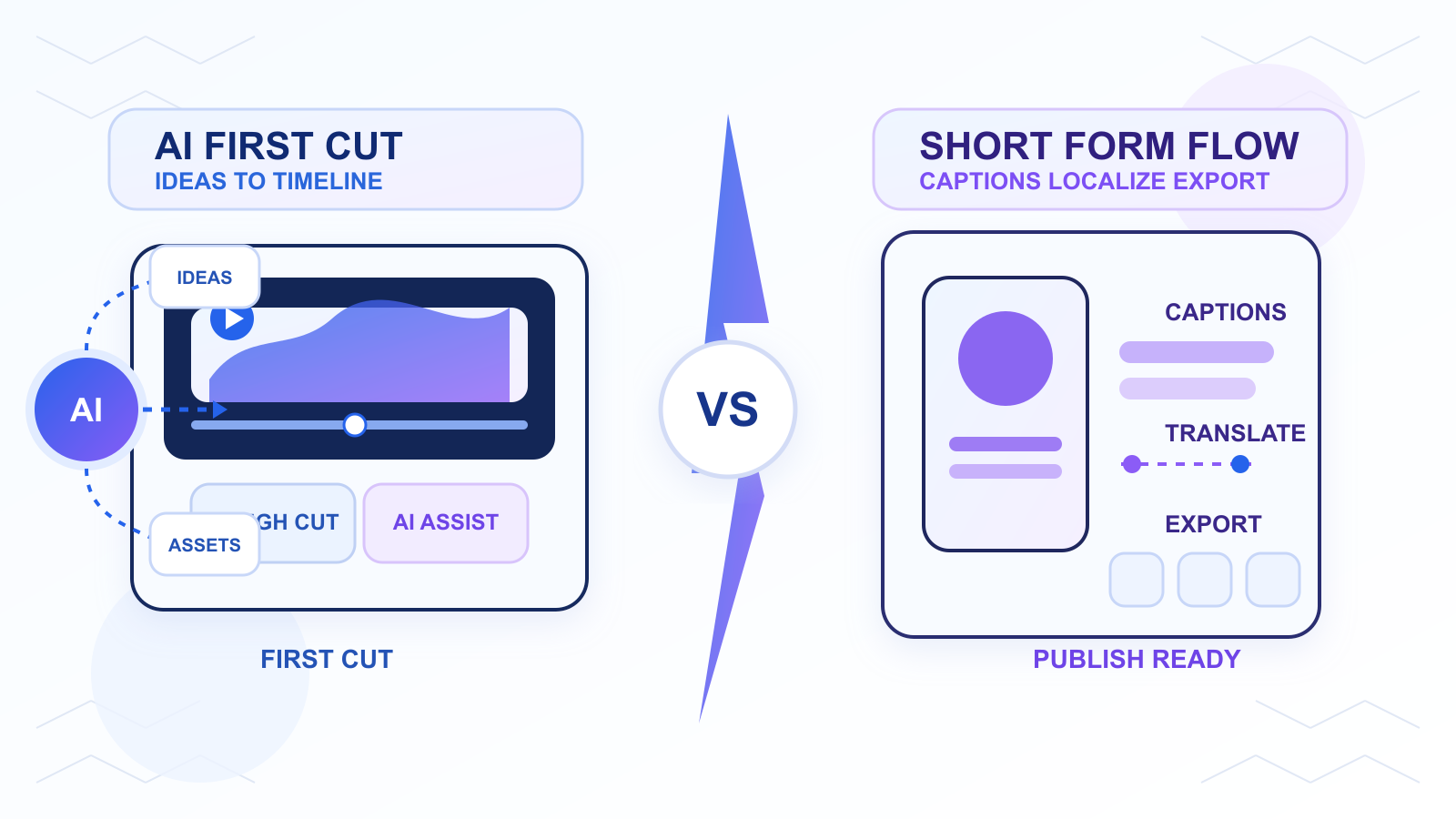
Adobe Firefly Video Editor vs CapzAi in 2026
Adobe is pushing agentic video creation and first-cut editing inside Firefly, but short-form teams still need a faster system for clipping, captions, localization, and export.
Read