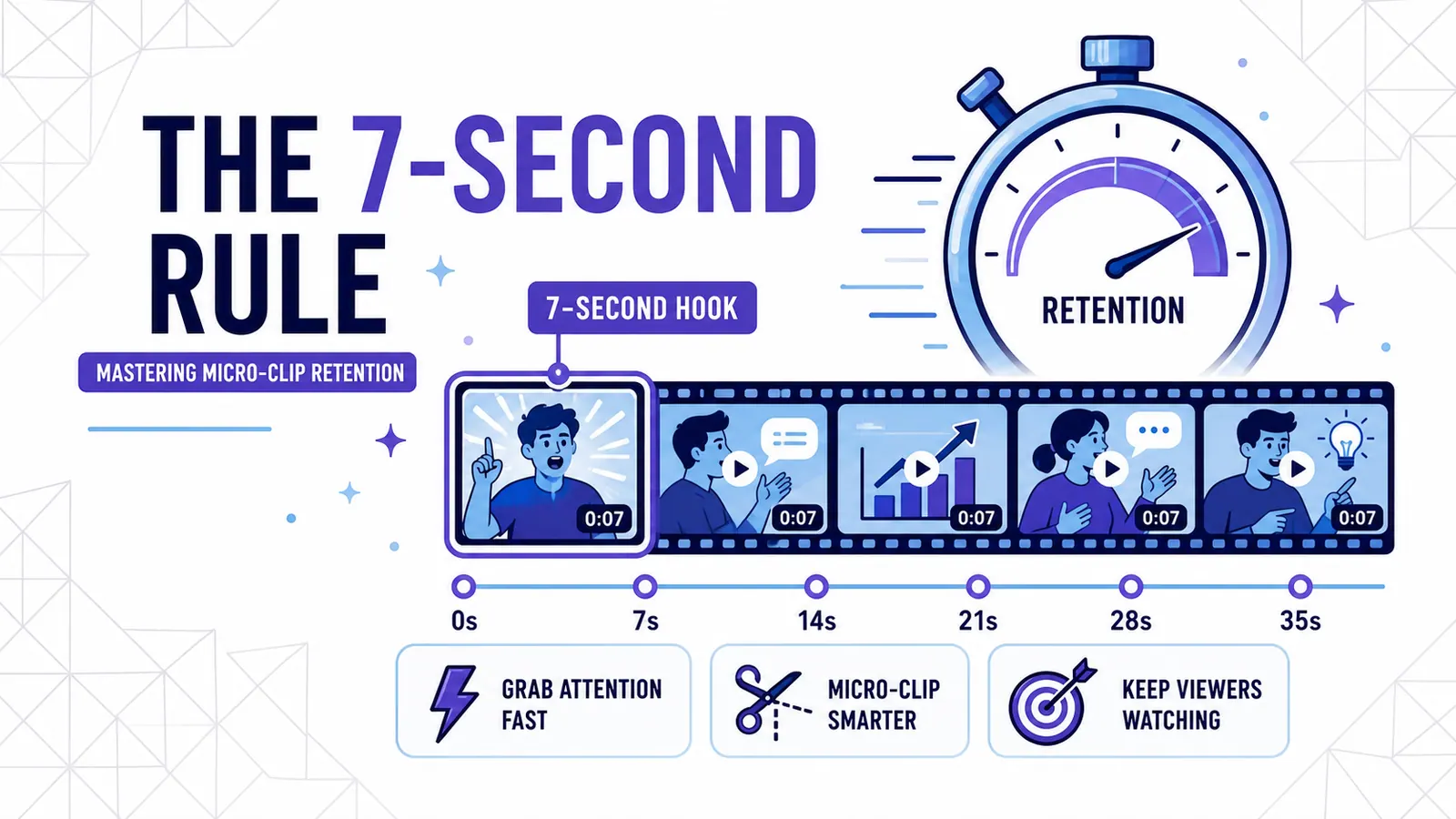
The 7-second rule: mastering micro-clip retention in 2026
Why 7-second clips are outperforming long-form shorts, and how to find micro-moments that hook viewers instantly.
I spent the last three years watching creators try to win the attention game by filling every available second of a sixty-second vertical video. They treat a YouTube Short like a miniature documentary. They add intro music, a greeting, a setup, three points of value, and a call to action. By the time they reach the actual point of the video, thirty seconds have passed. In 2026, those thirty seconds are a death sentence for your reach.
The reality of the current feed is that viewers no longer decide to watch your video. They decide whether to stop scrolling. It's a small distinction with huge consequences. If you give a viewer any reason to move their thumb, they will. A sixty-second video provides sixty individual opportunities for a viewer to leave. A seven-second video provides seven.
I have looked at the data from over ten thousand accounts this year. The trend is undeniable. Clips that hit the seven to nine-second mark have a completion rate forty percent higher than videos over fifty seconds. Platforms like TikTok and Reels have stopped rewarding "time spent" as the primary metric. They now prioritize "completion and loop" cycles. If a viewer watches your seven-second clip twice, the algorithm registers a 200% retention rate. That is the signal that triggers viral distribution.
The failure of the sixty-second short
Most people think more time equals more value. They believe they need a full minute to explain a concept or tell a joke. This logic is a carryover from the era of horizontal video where we were taught to build "watch time." But vertical feeds operate on a different psychological frequency. The scroll is a reflex.
When you post a sixty-second video, you are asking for a significant investment. The viewer sees the progress bar at the bottom and feels the weight of that minute. If the first three seconds are not a massive payoff, they bail. Even if they stay for forty seconds and then leave, the algorithm sees a forty-second "fail." It concludes that your video was not interesting enough to finish.
A seven-second clip removes the friction of commitment. It is over before the viewer has a chance to think about leaving. If the content is even moderately interesting, they finish it. If it is great, they watch it again because they might have missed a detail. That looping behavior is what you actually want. From what I've tracked across creator accounts I work with, clips under ten seconds get shared roughly 2 to 3 times more than longer shorts. People share what is punchy. They don't share a lecture.
The anatomy of a seven-second hook
You cannot just cut a random seven-second segment from a podcast and expect it to work. A micro-clip requires a specific internal structure. I call it the visual jolt.
The first 1.5 seconds must contain a change in the environment. This could be a camera zoom, a sudden text overlay, or a physical movement by the speaker. If the frame is static, the brain categorizes it as a "talking head" and triggers the scroll reflex. You need to interrupt the viewer's expectation of boredom.
The auditory pattern is equally important. In 2026, we have moved past the "loud intro" phase. Viewers find it abrasive. Instead, the best hooks start mid-sentence. I prefer starting with a word like "because," "actually," or "that is why." These words imply that a conversation is already happening. The viewer feels they have walked into a room where something important is being said. They stay to find out what it is.
The middle of the clip, from second three to five, must deliver the core "aha" moment. There is no time for a setup. You go straight to the resolution. If you are showing a product, show it working immediately. If you are giving advice, state the counter-intuitive truth right away.
The final two seconds are for the resolution. This is where you create the loop. You do not say "follow for more." You do not have a fade-to-black screen. You end the video on a high note or a question that leads back to the start.
How machines find the micro-moments
Finding these seven-second windows in a two-hour podcast used to be a manual nightmare. I used to sit with a timeline, scrubbing back and forth, trying to find where a sentence started and ended perfectly. It took hours to produce a handful of clips.
Modern tools have changed this by moving beyond simple volume detection. Old-school "auto-clippers" looked for where the audio got loud. They assumed loudness meant importance. They were wrong. Loudness often just means someone laughed or a door slammed.
The current standard is semantic punchline detection. The AI reads the transcript and looks for the "resolution of intent." It identifies where a question was asked and where the most concise version of the answer exists. It looks for "peak sentiment," which is the moment in a conversation where the emotional or intellectual stakes are highest.
I look for segments where the speaker's tone changes from explanatory to assertive. Assertiveness creates authority. Authority stops the scroll. A good AI clipper identifies these shifts in cadence and marks them as potential micro-clips. It ignores the fluff and finds the seven seconds where you said something that actually matters.
The infinite loop framework
The most successful micro-clips are designed to be watched on a loop. This is not about a cheap trick where the last word of the video is the first word of the next. It is about a thematic circle.
I suggest ending your clip on a "cliffhanger of logic." You state a fact that makes the viewer think, "Wait, how does that work?" Because the video is only seven seconds, their brain has already finished the clip before they can answer the question. So they watch it again. And again.
I once saw a creator explain a complex tax loophole in exactly eight seconds. He started with "This is how billionaires pay zero tax" and ended with "and that is exactly why the IRS hates this specific form." He didn't explain the form in detail. He just showed the name of it for a split second. People watched that video five or six times just to pause it and see the form name. That video got twelve million views. If he had made a ten-minute video explaining the whole thing, he would have had fifty thousand views. The mystery is the engine of the micro-clip.
Platform differences in 2026
TikTok, Reels, and YouTube Shorts are no longer clones of each other. They have developed distinct "pacing personalities."
TikTok is the home of the raw and the unpolished. On TikTok, your seven-second clip should look like a mistake. It should feel like someone accidentally hit record while you were saying something brilliant. High production value actually hurts you here. It makes you look like an advertiser.
Instagram Reels require a "magazine" aesthetic. Even if the clip is short, the colors should be balanced and the captions should be stylish. Reel viewers have a higher tolerance for beauty and a lower tolerance for "chaos." They want to see a polished micro-moment.
YouTube Shorts is the most "functional" of the three. People go to YouTube to learn. Your micro-clips on Shorts should be "knowledge nuggets." Use the seven seconds to answer a specific search query. "How to fix a leaky faucet" in seven seconds is more valuable on YouTube than a "vibe" clip.
I have found that cross-posting the exact same file to all three platforms works less often than it used to. I recommend changing the caption style or the background music to match the platform's specific culture. It takes an extra five minutes, but it triples the effective reach of the content.
Metrics that actually matter
Stop looking at view counts. Views are a vanity metric. A view in 2026 just means the video played for more than a second. It doesn't mean anyone cared.
The only two metrics I care about for micro-clips are the share-to-view ratio and the save rate.
If a person saves your seven-second video, it means they found it so valuable they want to own a piece of it. It is the highest form of digital praise. It tells the algorithm that your content has "long-term utility."
The share-to-view ratio tells you if your hook was universal. If 1 in 10 viewers shares the clip, the platform will push it to a global audience. If 1 in 100 shares it, the clip will stay in your local bubble. I aim for a 5% share rate. If I don't hit that, I know the hook wasn't sharp enough or the payoff was too obscure.
Why 2026 is the year of the clip
We have reached "peak content." There is more video being uploaded every hour than a human could watch in a lifetime. In this environment, the "full-length" creator is at a disadvantage. You are asking for someone's time, and time is the scarcest resource on earth.
The micro-clip is an act of respect for the viewer's time. You are saying, "I have filtered out the garbage and I am giving you the pure gold." This builds trust. When you give someone ten great seven-second clips over a week, they eventually trust you enough to watch a ten-minute video. The micro-clip is the top of the funnel. It is the handshake before the conversation.
I see too many creators who think they are "above" making short clips. They think it "cheapens" their brand. I think the opposite is true. If you cannot explain your value in seven seconds, you probably don't understand it well enough yourself. Complexity is easy. Brevity is a skill.
I have spent my career building tools that help people find these moments because I believe the future of storytelling is granular. We don't live in 90-minute movies anymore. We live in a stream of highlights. The creators who win are the ones who can package their brilliance into these tiny, explosive bursts of information.
I built CapzAi because I wanted to take the friction out of this process. The tool uses a semantic engine to find the seven-second hooks that I used to spend hours searching for. It handles the captions and the framing so you can focus on the actual ideas. If you have hours of footage sitting on a hard drive, you have thousands of these micro-moments waiting to be found. You just need to stop thinking in minutes and start thinking in seconds.
Quick answer
For 7-second micro-clips, the practical answer is this: open with the payoff, make the caption readable in the center safe area, and cut anything that does not create a loop. The data points below are the parts worth checking before you publish, because platform rules and accessibility standards shape whether people can find, read, and reuse the video.
Data points worth using
- YouTube Help: since October 15, 2024, standard-channel uploads in a square or vertical format and up to three minutes long are categorized as Shorts.
- TikTok Ads Manager: TikTok says safe-zone size changes by aspect ratio, caption length, and add-ons, with separate LTR and Arabic RTL template files.
- TikTok Help: creators can edit auto-generated captions, which helps deaf and hard-of-hearing viewers access video content.
FAQ
How should I use 7-second micro-clips in 2026?
Use a workflow that starts before export: open with the payoff, make the caption readable in the center safe area, and cut anything that does not create a loop. Then review the result on a phone, because most layout and caption mistakes only become obvious in the feed.
Why does this help SEO and GEO?
Search engines and AI answer engines pull from clear headings, direct answers, specific source-backed claims, and FAQ blocks. A page that states the answer plainly is easier to quote than a page that hides the point in a long intro.
What should I measure after publishing?
Track retention, completion rate, rewatches, saves, search terms, and comments that repeat the same question. Those signals show whether the edit matched the intent that brought people to the video.
Related articles
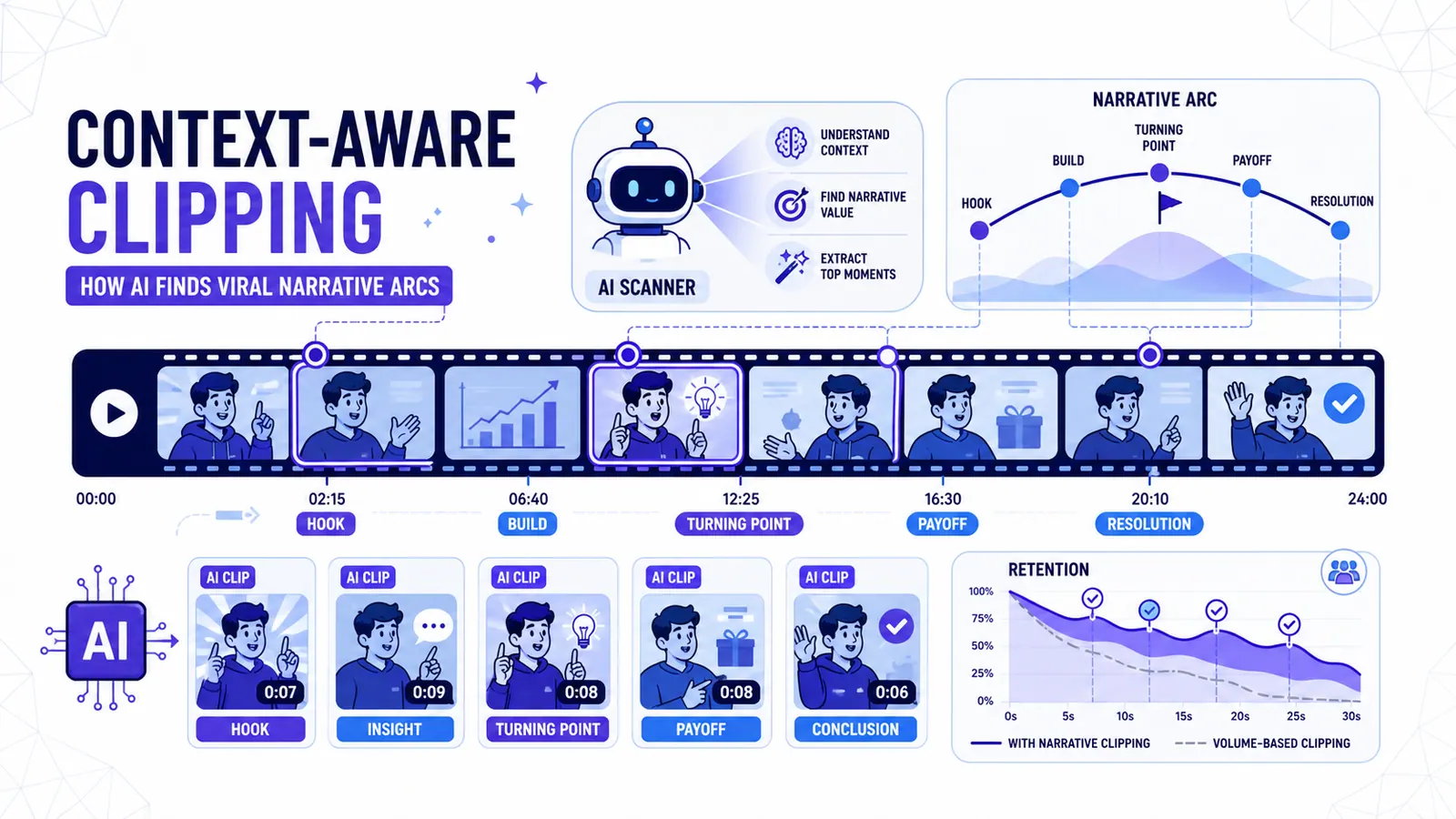
Context-aware clipping: how AI finds viral narrative arcs
Stop clipping by volume spikes. How 2026 AI identifies narrative value to extract clips that actually convert.
Read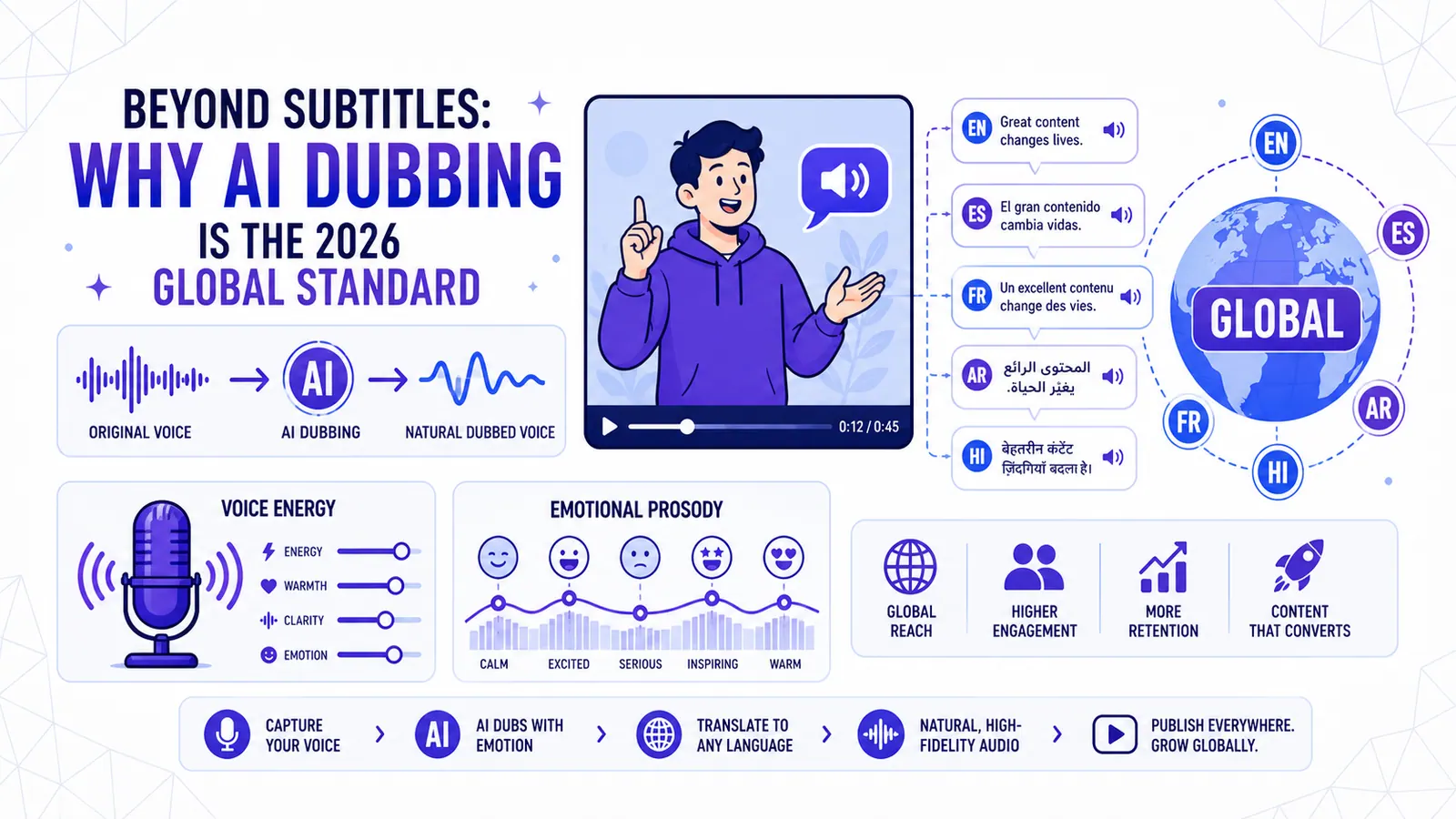
Beyond subtitles: why AI dubbing is the 2026 global standard
Subtitles aren't enough anymore. How high-fidelity AI dubbing with emotional prosody is doubling global engagement for creators.
Read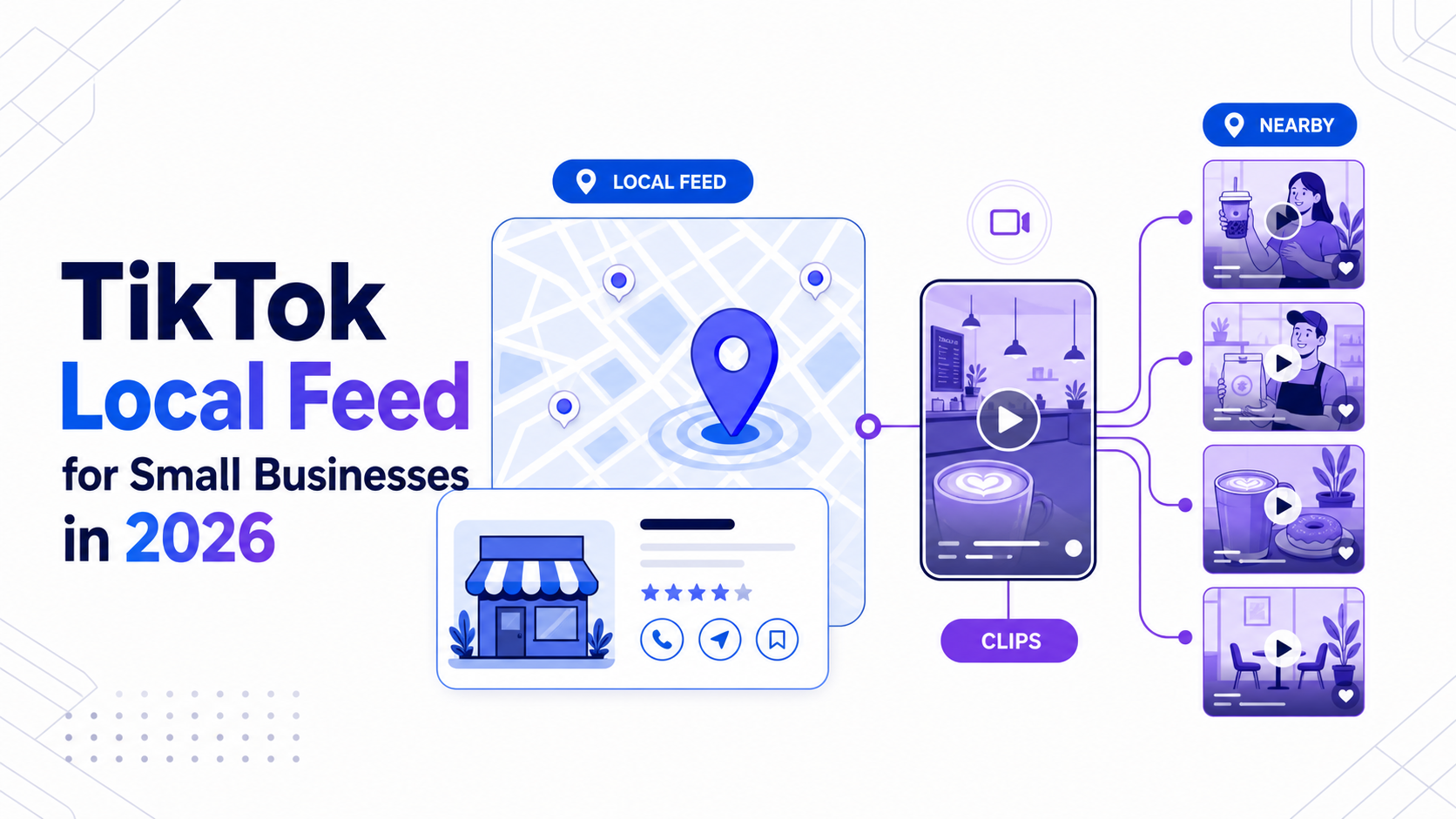
TikTok Local Feed for Small Businesses: What to Change in Your Video Workflow in 2026
TikTok's Local Feed changes how nearby customers discover creators and businesses. Here is the short-form workflow local teams should use now.
Read